Olmert’s Choice
When historical shifts take place before your eyes, it’s tough to pick out the single event that marks the moment of transformation. In the case of Israel’s move toward compromise and separation from the Palestinians, the shift has come in a cascading series of events over the last four months or so. The collapse of last summer’s cease-fire in a series of suicide bombings, after a glorious six weeks of normalcy, created a critical shift in Israeli opinion by reminding Israelis of what life used to be like before it turned to hell.
Then a series of political and military leaders began speaking out and declaring that the current situation was neither necessary nor inevitable. First came the bombshell essay by the former Knesset speaker Avraham Burg, published in August in Yediot Aharonot and the Forward, then reprinted around the world, arguing that continuing occupation of the West Bank and Gaza would eventually lead to a binational state and the tragic end of Zionism.
Then came the interview with Israel’s military chief of staff, Lieutenant General Moshe Ya’alon, in which he declared that Israel’s harsh actions were fueling Palestinian hatred and terrorism. A week later came the four-way interview with those four former chiefs of the Shin Bet security service. That was followed in close order by the release of the so-called Geneva Understandings, showing that there is an end-game possible that could satisfy the basic needs of most Israelis and most Palestinians. Its impact on world public opinion had one other result: It showed Israel’s current leadership how rapidly the world’s patience is running out. The Israeli-Palestinian crisis is no longer just Israel’s business. It’s inflaming politics and security around the globe.
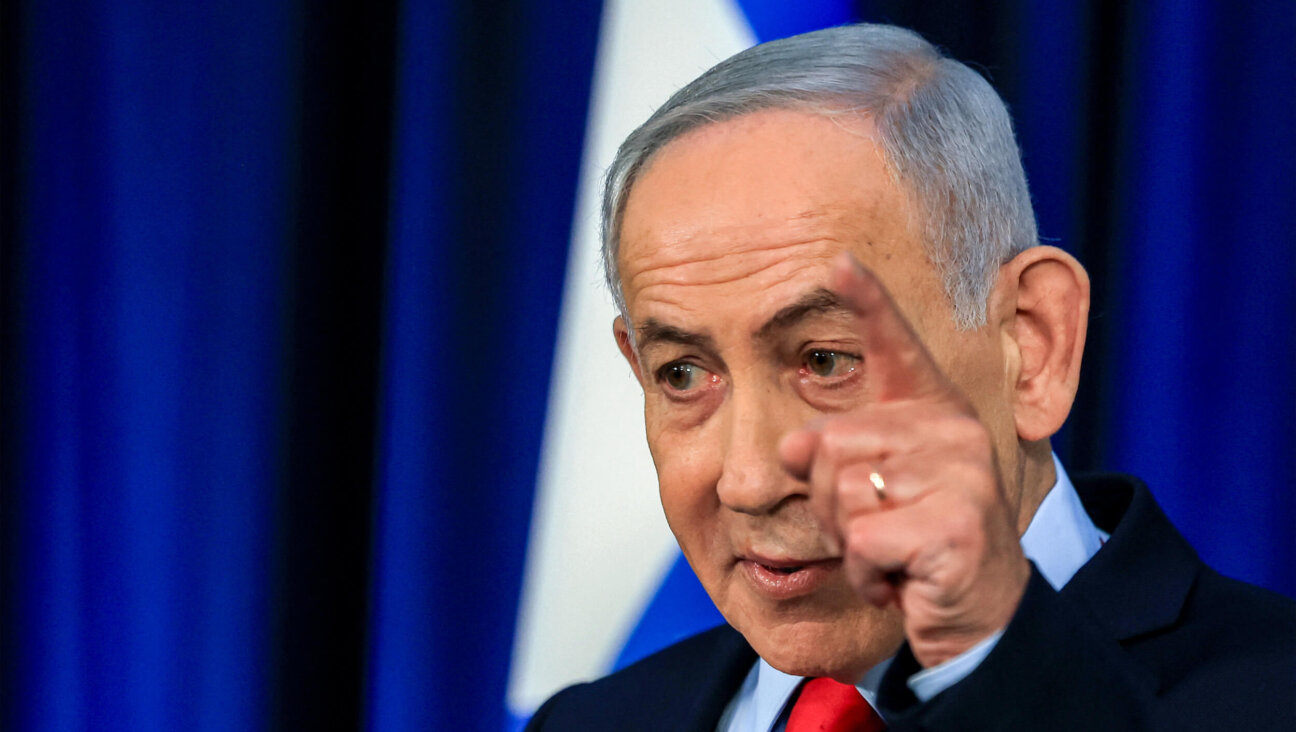
That was the background to the decision by Ehud Olmert, Israel’s deputy prime minister, to speak out last week in favor of a unilateral withdrawal from most of the territories. In saying what he said, Olmert was adopting the same arguments — and much of the same language — as Burg and the Shin Bet chiefs. Yes, Israelis and Jews are attached to those biblical hills. But no, they cannot stay there forever.
Opponents of unilateral withdrawal argue that it would close off options for peace by setting borders without negotiations. In fact, every step that either side takes, from setting up a roadblock to blowing up a pizzeria, is unilateral. The unilateral acts that Olmert proposed this week, and the more limited ones that Prime Minister Sharon has been discussing recently, would not close off anything. They would merely stabilize the situation by separating the sides and giving everyone a breathing space, so negotiations can start again with a cleaner slate.
A negotiated deal would be preferable. Israel would be better off with a demilitarized Palestinian state that had sworn off further conflict, as the Geneva document envisions. But until that becomes possible, separation is better than the status quo.
This is a moment of great uncertainty. Here’s what you can do about it.
We hope you appreciated this article. Before you go, we’d like to ask you to please support the Forward’s independent Jewish news this Passover. All donations are being matched by the Forward Board - up to $100,000.
This is a moment of great uncertainty for the news media, for the Jewish people, and for our sacred democracy. It is a time of confusion and declining trust in public institutions. An era in which we need humans to report facts, conduct investigations that hold power to account, tell stories that matter and share honest discourse on all that divides us.
With no paywall or subscriptions, the Forward is entirely supported by readers like you. Every dollar you give this Passover is invested in the future of the Forward — and telling the American Jewish story fully and fairly.
The Forward doesn’t rely on funding from institutions like governments or your local Jewish federation. There are thousands of readers like you who give us $18 or $36 or $100 each month or year.
Support our mission to tell the Jewish story fully and fairly.