Netanyahu’s pardon request is a staggering act of hypocrisy — and it should be granted, with one condition
Expect President Donald Trump to now pressure Israel’s president to help Netanyahu escape justice
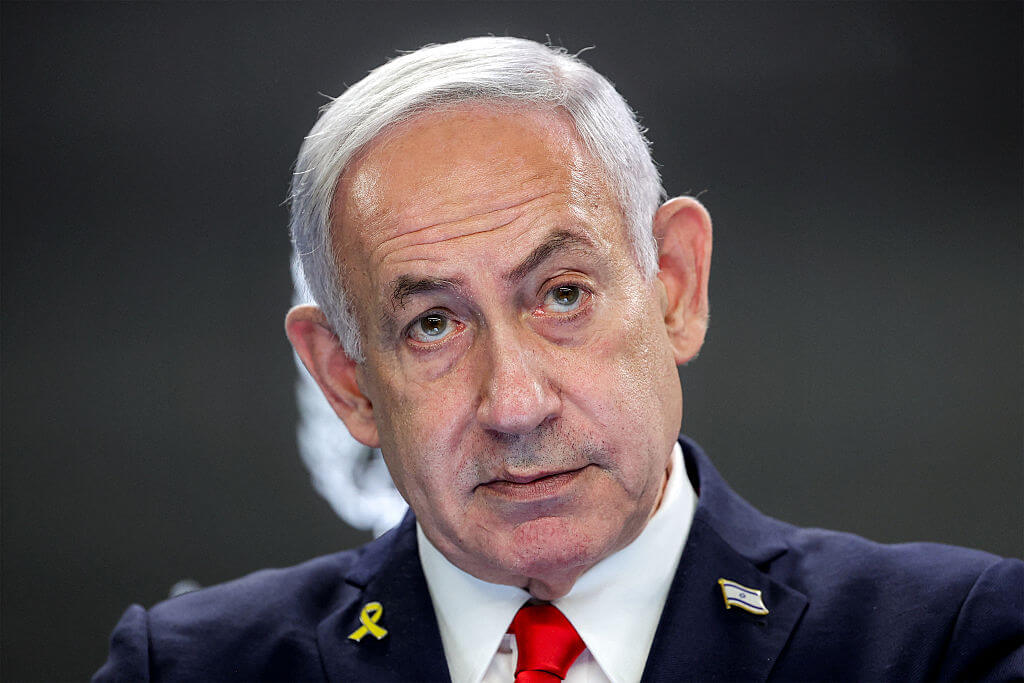
Israeli Prime Minister Benjamin Netanyahu gives a press conference in Jerusalem in August 2025. Photo by Abir Sultan/AFP via Getty Images

Columnist Dan Perry December 1, 2025
It’s hard to imagine a more staggering act of hypocrisy than Israeli Prime Minister Benjamin Netanyahu’s request for a pardon, given his own public and legal arguments over the past several years. This is the same man who stood before Israel’s Supreme Court and declared there was no problem with serving as prime minister while under criminal indictment — insisting he’d have “no issues” running the country during a trial, if allowed to run for the job.
Now, in documents submitted to President Isaac Herzog Sunday, he wants the very same trial paused so he can focus on running the country. The audacity is jaw-dropping.
Worse still, the request is wrapped in the claim that a pardon would “heal the national divide” — a divide he personally ignited the moment indictments were filed in 2019, when he unleashed a furious campaign against the police, prosecutors, judges and then-Attorney General Avichai Mandelblit. This isn’t merely gaslighting but a form of extortion. Until Netanyahu launched his demonization campaign against the courts, the Supreme Court was one of Israel’s most trusted institutions. He poisoned that trust — and now plays peacemaker.
At the core of this crisis stands a simple principle: equality before the law. No Israeli — not a general, not a mayor, not a cabinet minister — is exempt from accountability. And yet one man now tries to rewrite the rules because he can weaponize politics and public pressure.
Some may cite the 1980s “Bus 300 Affair,” when President Chaim Herzog — the current president’s father — pardoned senior officials from the Shin Bet security agency involved in executing captured terrorists. But the comparison collapses immediately: those officials admitted guilt, resigned their posts, and accepted responsibility.
Netanyahu — who is standing trial for bribery, fraud and breach of trust — has not yet agreed to admit anything.
His allies, meanwhile, are waving around President Donald Trump’s pressure on Israel’s president as if it were helpful. It is, of course, an outrageous intrusion into Israel’s sovereignty — though Trump, volatile and vulgar as ever, will not care. We should expect escalation: threats about military aid, tariffs on Israeli exports — whatever suits his fancy. He slapped illegal tariffs on Canada in October because of a commercial he disliked. It is not paranoid to assume Netanyahu is coordinating the playbook — which could add treason to the list of crimes.
A clear and present danger
The implications stretch far beyond Netanyahu. If a sitting leader can wage a domestic and international campaign to pardon himself, then accountability collapses. How can any citizen believe the justice system exists for the public, rather than for the powerful? In Russia and Turkey, they cannot. Israel cannot allow itself to join that list.
Yet the question is unavoidable: Should Israel consider a pardon in exchange for Netanyahu’s permanent retirement from public life? Opposition voices have floated the idea. It deserves consideration — but it comes with massive pitfalls. Such a deal would spare Netanyahu a verdict and spare Israel the catharsis of a resounding election defeat next fall — a defeat every credible poll suggests is on the horizon.
It could crown his fraudulent narrative of victimhood: Netanyahu the martyr, crucified by elites. That risks deepening the national wound rather than healing it. After all, a resounding Likud loss — a party now reeking with historically global levels of corruption — is oxygen Israel desperately needs.
There’s also a practical problem: Israeli law offers no clean mechanism to tie a pardon to a permanent political ban. One could sign a document or make a declaration — but enforcement would rely entirely on trust. And who trusts Netanyahu? The only reliable barrier would be a formal “moral turpitude” finding — until his loyalists rewrite that statute too.
There’s another reason not to wait for an electoral loss: It is obvious to anyone paying attention that Netanyahu’s camp will try to skew or even falsify the results of an election. The obsession with power is absolute. They will surely attempt to disqualify Arab parties that are an important element of the opposition. Expect efforts to suppress Arab turnout, perhaps even stoking street violence to frighten voters away from the polls. Those who think this warning is cynical simply do not know the players involved. They have no limits.
The venom Netanyahu has injected into Israel’s civic bloodstream is a clear and present danger to the state’s future.
Which is why I reluctantly believe a pardon should be considered, but on one immovable condition: a full personal admission of guilt — spoken aloud by Netanyahu himself. Only that could puncture the cultish bubble sustaining him. And absolutely, under no circumstances, should a pardon allow him to retain or regain power. A leader cannot be pardoned for abusing power and then allowed to keep the very same power.
Years ago, between Israel’s endless election cycles, Netanyahu went on TV and swore he would never weaken the judiciary or interfere in his own trial. “No tricks and no shticks,” he promised — an immortal phrase. We got tsunamis of tricks, and rivers of shticks, and this was no surprise. Now comes Olympic-level hypocrisy as the cherry on top.
This same Netanyahu once claimed, in the 1990s, that prime ministers must be term-limited because power corrupts. And in 2008, attacking then-Prime Minister Ehud Olmert, he said: “A prime minister who is up to his neck in investigations has no moral or public mandate to make such fateful decisions for the State of Israel. There is a real and well-founded fear he will make decisions based on political survival, not the national interest.”
The only thing that has changed since then is the identity of the man up to his neck. Israel must not permit this man to stand above the law.