I was interrogated by Israeli authorities — I know why they’re terrified of peace activists like me
I’ve been traveling to Israel and the West Bank for years. A brief detention at Ben-Gurion Airport made the fight for justice and equality even more resonant
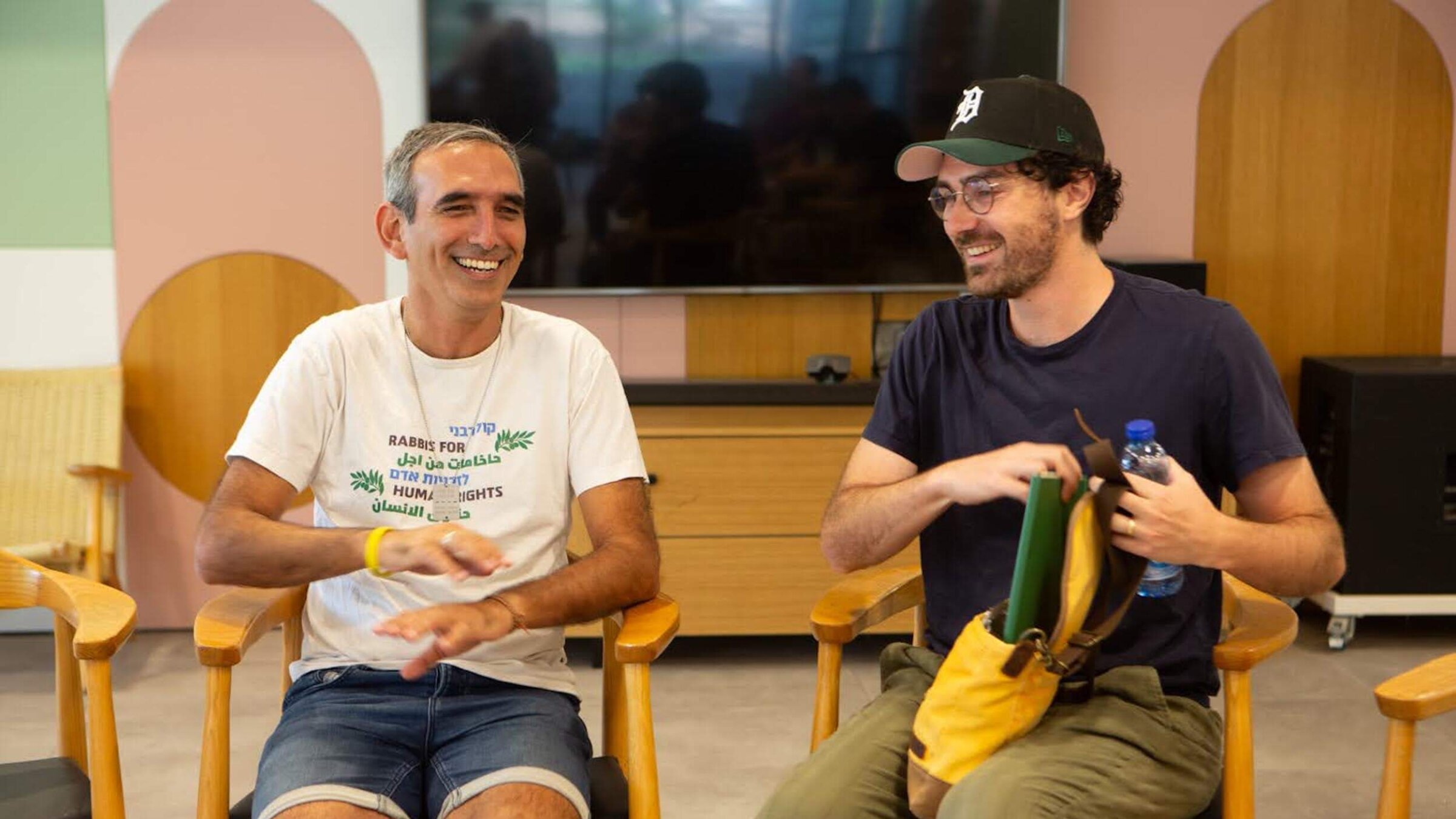
The author, right, with Rabbi Avi Dabush, a survivor of the Oct. 7 attack and head of Rabbis for Human Rights. Photo by Mati Milstein
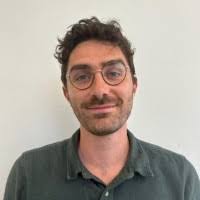
Zak Witus December 2, 2025
Two weeks ago, I was on my way home from Israel after leading young Jewish activists across the country to meet with Israelis and Palestinians fighting for peace and justice. But just as my plane at Ben-Gurion Airport was beginning to board, I was called to the gate desk, where I was told that I would be further questioned by airport security.
I was interrogated and searched for the next hour; one security agent accused me of having suspect political motivations because my checked luggage contained materials sympathetic to Israeli pro-democracy protesters and Palestinians living under Israeli military occupation. They were trying to scare me. I felt, viscerally, how much Prime Minister Benjamin Netanyahu’s government wants to deter American Jews from aiding Israelis and Palestinians working toward peace and shared security.
But it didn’t intimidate me. Instead, it left me feeling more convinced than ever that it’s crucial for Jews around the world to take direct action for equality and justice in Israel and the West Bank. Because for every American Jew who, like me, has to endure a little ordeal with airport security, there are millions of Palestinians and Israelis facing far worse repression. And it is our duty to stand with them.
As the director of young leadership and education at the New Israel Fund, an organization that has spent decades building movements that advance freedom, security and equality for all people under Israeli control, I had led a delegation of young people on a trip through Israel and the West Bank, where we met with Israeli peace activists who survived the Hamas attack of Oct. 7, 2023; Negev Bedouin communities demanding the government give them access to water and electricity; and humanitarian organizations fighting to bring desperately needed aid into Gaza.
In my luggage were materials that reflected my politics, among them a poster I had gotten at a protest in Tel Aviv that said, “Only peace will bring security,” and two books — the graphic novel Jerusalem: Chronicles from the Holy City and Daybreak in Gaza: Stories of Palestinian Lives and Culture — that I had purchased at The Educational Bookshop, a renowned Palestinian cultural center in East Jerusalem that Israeli authorities have raided multiple times since Oct. 7.
The first agent to examine me asked about those materials, as well as some T-shirts that referred to Israel’s far-right minister of national security, Itamar Ben-Gvir, with a profanity. “If you believe in peace and human rights for all people, then why are these messages so one-sided?” the security agent asked.
I said that I didn’t think they were. Israelis want peace: At well-attended protests led by the Hostage Families’ Forum throughout the war in Gaza, attendees demanded a deal to end the fighting in exchange for a return of the hostages. And most Israelis oppose Ben-Gvir, viewing his Jewish supremacist vision — which would see Israel annex the vast majority of the West Bank, and violent Jewish extremists given a pass — as a major threat to the future of their country.
Then, two agents led me into another room with an array of scanners and equipment. I started to sweat. Just before my trip, two Jewish American activists were deported after volunteering in the West Bank. They were slapped with a 10-year ban from entering Israel. Could that happen to me?
One agent asked me if I visited the West Bank, and who I’d met with. I thought of my friend Awdah Hathaleen, a Palestinian peace activist murdered by an internationally sanctioned settler in July.
As soon as I had landed in Israel, I’d rented a car and drove to Awdah’s village of Umm al Khair to visit his family, whom I’d gotten to know when I lived and worked there as a human rights activist in 2022. As Awdah’s three children, all under 5, ran around our feet, I handed a bouquet of flowers to his widow. Awdah’s cousin recounted how he and a dozen other members of the community had been arrested and tortured for days immediately after Awdah’s killing. With tears in his eyes, he told me how he had been forced to miss Awdah’s funeral — which took place only after a bureaucratic standoff with the authorities, who held Awdah’s body for 10 days before finally releasing it to his family.
His killer, in contrast, was detained for a single day. Upon his release, his gun was returned to him. The police claimed that they couldn’t pursue further investigation for lack of evidence, even though there were multiple videos of the shooting, including Awdah’s own.
Yes, I had visited the West Bank, I told the agent. I’d met with some friends who are struggling to be free.
What I didn’t say: Despite my fury over Awdah’s murder, when I visited Umm al Khair, and stood over the stain of Awdah’s blood on the concrete where he was killed, I felt an odd sense of calm wash over me.
Violence and hatred are magnetic: They have the power to call out the evil in all of us. I’ve felt that disturbing call myself. But I’ve also felt how nonviolence can counteract that dark magnetism. I’ve seen thousands of Jews from Israel and the diaspora choose to intercede in situations of oppression, to be a protective presence against settler and state violence, and to try to use our bodies to repel cruelty and domination. I’ve seen it work in places like Umm al Khair, and that’s why I have hope.
More people who believe in freedom, equality and security for all people need to engage in this work on the ground. Because the authoritarians and Jewish supremacists who wish to repress our movement are, in fact, scared of Jews and Palestinians who partner together. They’re scared because we are bonded not by blood and soil but values and visions of a shared future.
What we want is simple: a land where all Israelis and Palestinians can live free from repression and violence, build homes and watch their families flourish, and travel with whatever books they want. This is the future that my Israeli and Palestinian friends are fighting for. And I will, too, by any nonviolent means necessary.
This is a moment of great uncertainty. Here’s what you can do about it.
We hope you appreciated this article. Before you go, we’d like to ask you to please support the Forward’s independent Jewish news this Passover. All donations are being matched by the Forward Board - up to $100,000.
This is a moment of great uncertainty for the news media, for the Jewish people, and for our sacred democracy. It is a time of confusion and declining trust in public institutions. An era in which we need humans to report facts, conduct investigations that hold power to account, tell stories that matter and share honest discourse on all that divides us.
With no paywall or subscriptions, the Forward is entirely supported by readers like you. Every dollar you give this Passover is invested in the future of the Forward — and telling the American Jewish story fully and fairly.
The Forward doesn’t rely on funding from institutions like governments or your local Jewish federation. There are thousands of readers like you who give us $18 or $36 or $100 each month or year.
Support our mission to tell the Jewish story fully and fairly.