I grew up in Venezuela. Will Maduro’s ouster bring my Jewish community the security we need?
Venezuela’s Jews have been embattled for decades, and Maduro was the worst offender of all
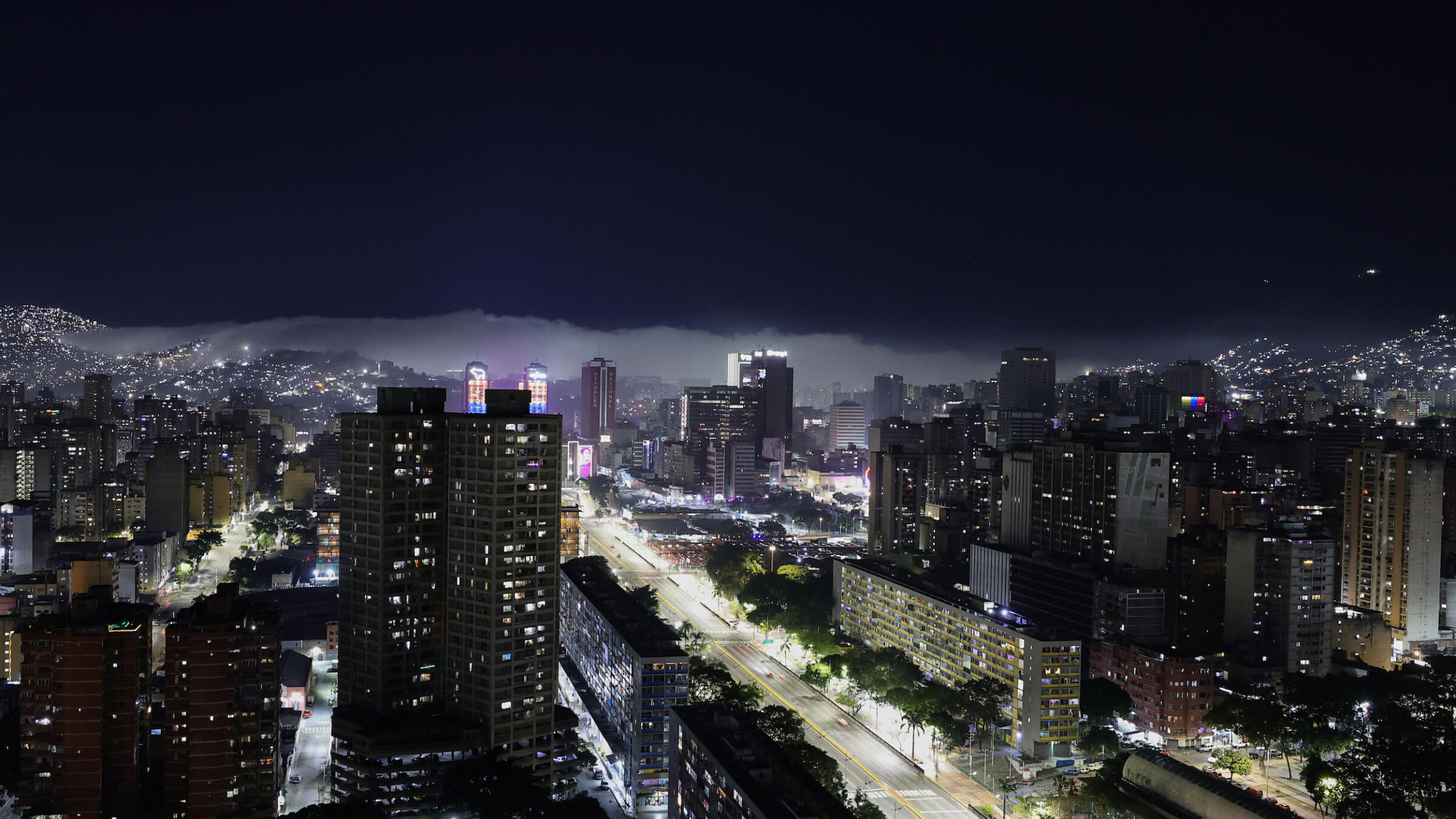
Caracas, Venezuela on Jan. 6. Photo by Jesus Vargas/Getty Images
Contributing Columnist Dany Bahar January 7, 2026
For Venezuelan Jews — inside the country and across the diaspora — the United States’ shocking removal of President Nicolás Maduro from power marks an inflection point in a long and painful chapter marked by vulnerability, fear and exile.
Venezuela was once home to one of Latin America’s most vibrant Jewish communities. I know this because I was raised there. A generation of Jews, including my own grandparents, found refuge from the Holocaust in Venezuela, at a time when many other countries closed their doors.
Venezuela’s relationship with the Jewish people was not only about providing a refuge for Jews following the Holocaust. It was also diplomatic. In November 1947, Venezuela voted in favor of United Nations resolution 181, which supported the creation of independent Jewish and Arab states in Palestine, leading to the creation of the State of Israel. For the Venezuelan Jewish community, this vote has long stood as a point of pride, and an affirmation of belonging.
For decades, Venezuela and Israel had a natural, mutually beneficial diplomatic relationship. For example, in 1961 the two signed a technical agricultural agreement as part of Venezuela’s push to modernize rural development.
High level visits between government officials between the two countries were common. I vividly remember shaking then-foreign minister Shimon Peres’s hand when he visited the Jewish Day School in Caracas in 1995 as part of a state visit. As a high school student, it was exciting to see firsthand how an Israeli statesman carved time out of his agenda to come see my distant country’s Jewish community. And, looking back, that visit underscored how normal and secure Jewish life once felt in Venezuela, in stark contrast to the fear and isolation that would follow years later.
All this began to change after Hugo Chávez came to power in 1999.
Under Chávez, relations with Israel steadily deteriorated, shaped by Chávez’s ideological commitment to global left-wing movements that, as a legacy of the Cold War, aligned themselves with Arab states and framed opposition to Israel as a core political stance. Diplomatic relations between the two nations were formally severed during the 2009 Israel-Hamas confrontation known as Operation Cast Lead.
That wasn’t just a major foreign policy shift; it also marked the onset of a political climate in which Venezuelan Jews felt increasingly exposed. That vulnerability reached a terrifying peak that same year, when armed assailants desecrated the Tiferet Israel synagogue in Caracas, ransacking sacred spaces; destroying religious objects; and scrawling threats and antisemitic slogans on the walls.
It was not an isolated act of vandalism. It was a message of hostility and intimidation, received as such by a community that already felt abandoned by the state.
In 2010, Chavez amped up his anti-Israel rhetoric in reaction to that year’s confrontation between the IDF and the Gaza Freedom Flotilla by declaring “maldito sea el Estado de Israel” — “cursed be the State of Israel” — on national television. When Maduro rose to power in 2013, following Chavez’ death, he did not reverse this trajectory. He accelerated it.
Under his rule, anti-Zionism repeatedly crossed into open antisemitism — both in language and in effect. Not long ago, while talking about Israel’s war in Gaza, Maduro claimed he had “real Jewish blood … unlike Israeli Jews” whom he described as “foreigners from Poland,” reviving classic tropes about authenticity, belonging and conspiracy that have long been used to delegitimize Jews and Israel.
After the Hamas attack of Oct. 7, 2023, Maduro’s regime openly embraced the “genocide” narrative against Israel. His government even compared Israel to Nazi Germany. The consequences of these statements touched Jews across Venezuela. Synagogues and Jewish institutions were often vandalized and defaced with hateful slogans. The targets were not Israeli diplomats — there were none — but Venezuelan Jews.
That distinction matters. Being Jewish has become more difficult in advanced democracies like the U.S. since the Oct. 7 attack. So imagine what it felt like in a country governed by an authoritarian regime that is openly anti-Zionist and routinely fails to distinguish between Jews and Israelis. The family and friends I still have in Venezuela navigate daily life with quiet caution, finding ways to remain Jewish while staying unnoticed, weighing every decision about when to gather, when to speak, and when silence feels safer.
But most of the Jewish community opted to be part of a wave of more than 8 million Venezuelan migrants — about 20% of the country’s population — who decided to seek a new life in other countries.
Will that wave of departures ebb now that Maduro has been forcibly removed from power by the U.S.? The honest answer is: we don’t know. Two decades of institutionalized hostility have left deep scars. And the early signs about the next era are discouraging. In her first televised addresses, new interim president Delcy Rodriguez — Maduro’s former second-in-command — blamed “Zionist” influences for the U.S. military operation. Old reflexes die hard.
And yet, Venezuelans, including Venezuelan Jews, are cautiously optimistic. Not celebratory. Not naïve. But hopeful that this may finally be the beginning of the end of a cruel dictatorship that devastated an entire nation — economically, socially and morally. If free and fair elections follow — still a significant “if”—Venezuela may have a chance to return to democracy, and with it, to its historical commitment to pluralism and coexistence.
That could also bring an opportunity to rethink Venezuela’s relationship with Israel — not only morally, but also strategically.
Israel could be a natural ally in Venezuela’s reconstruction. It is a global leader in water management, agriculture, health technology, cybersecurity, and energy innovation — precisely the areas in which Venezuela faces acute shortages after years of collapse.The building blocks are already there: Even amid today’s diplomatic wreckage, trade still exists at a small scale — evidence that the bridge can be rebuilt when politics allows it.
In fact, opposition leader (and 2025 Nobel Peace Prize winner) María Corina Machado has already stated that a democratic Venezuela would reopen its embassy in Israel — in Jerusalem, in fact. That is a clear signal that, in the eyes of at least some influential leaders, antisemitism has no place in the country’s future.
For Venezuelan Jews, this moment is not about geopolitics. It is about whether the country they once called home can again be a place where being Jewish is not a liability.
Hope, for now, is cautious. But after so many years of fear, even cautious hope is something new.