I’m a Zionist. I support Palestinian rights. My campus has no space for people who believe in peace
I’ve looked for others who eschew ideology in favor of pragmatism — and come up empty
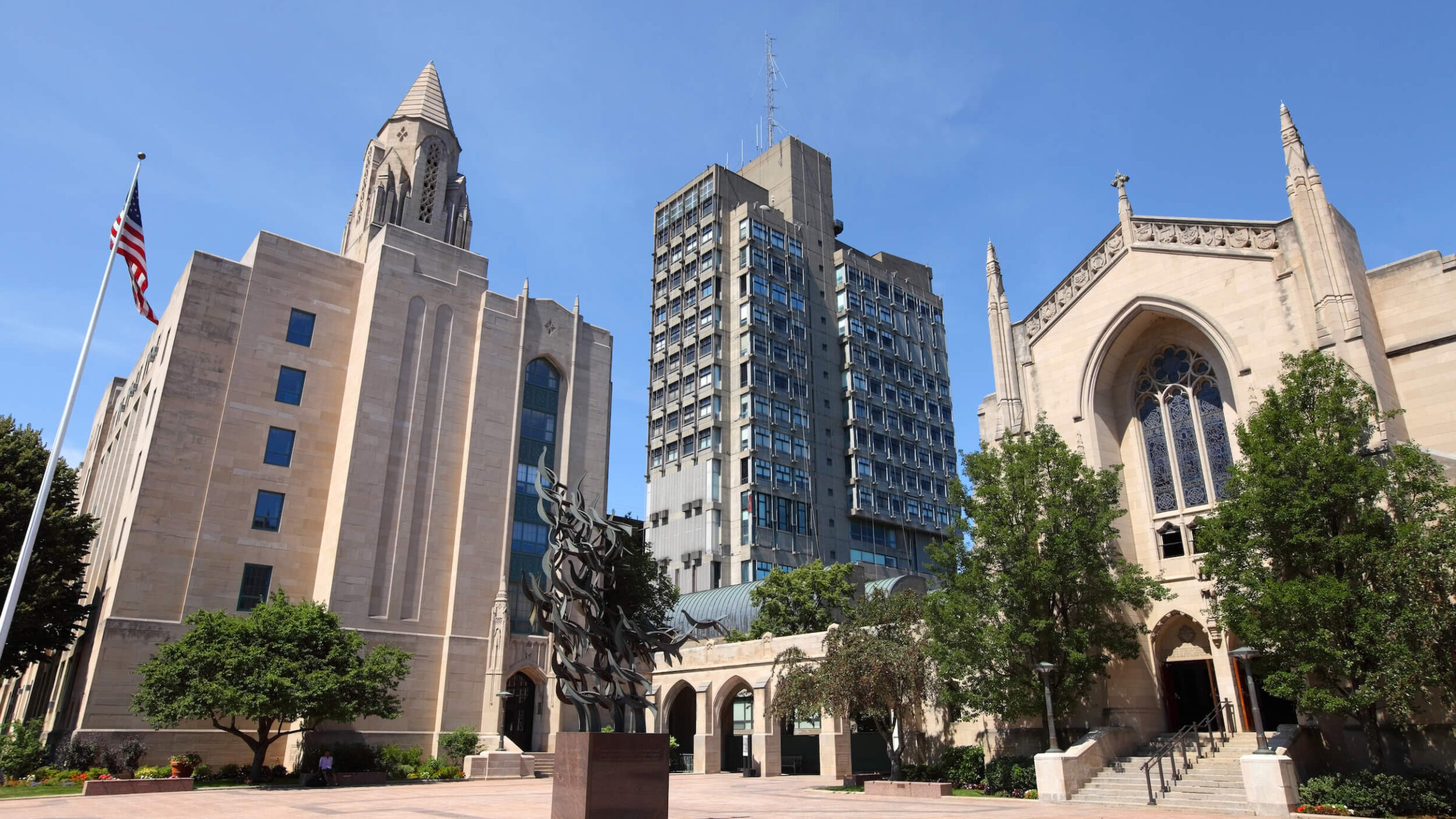
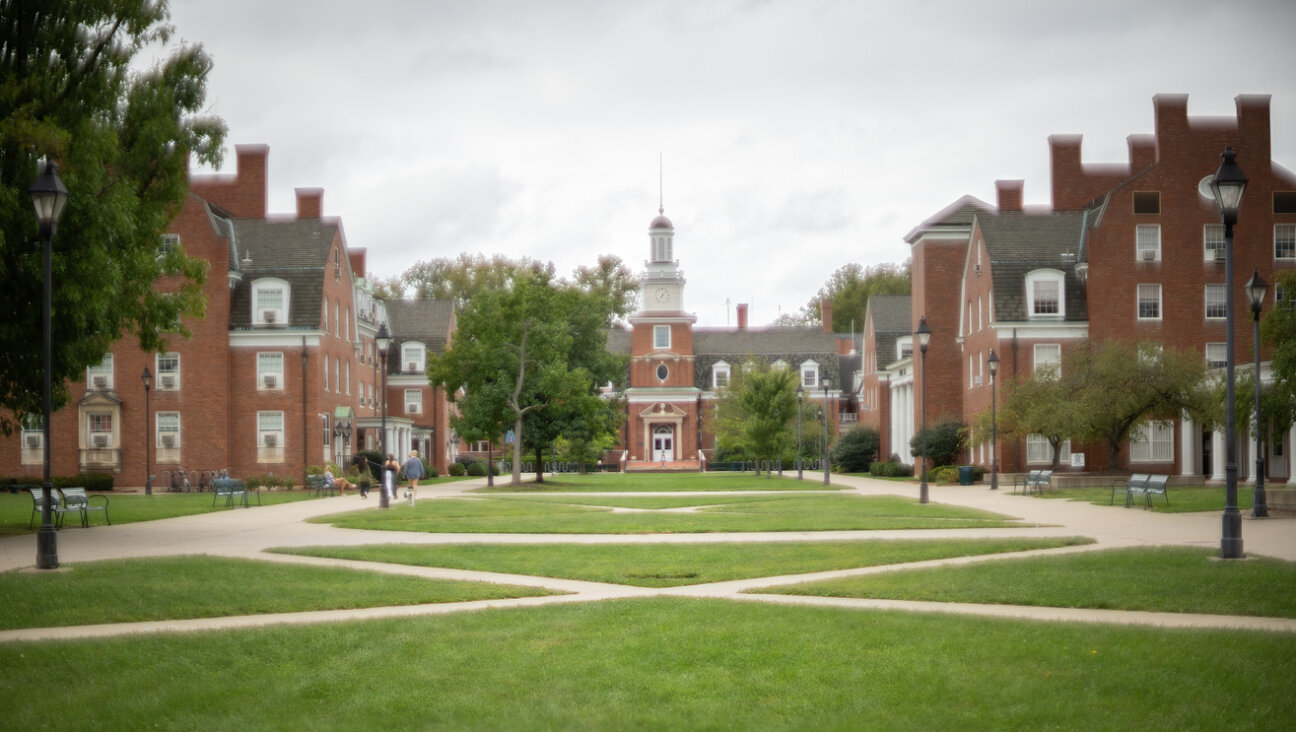
Boston University’s Charles River campus. Photo by Denis Tangney Jr./Getty Images
Our country’s political discourse tends to cast Zionism and the Palestinian quest for statehood as mutually exclusive moral commitments. But as a left-wing Zionist who has never lost his faith in the two-state solution, I don’t find it difficult to be simultaneously “pro-Israel” and “pro-Palestine.”
Unfortunately, there seems to be no space for this middle-ground perspective on my campus.
At Boston University, I’ve found that my peers on my political right share neither my belief in the rights of all peoples nor my understanding of the facts that underlie the Israeli–Palestinian conflict. And the anti-Zionists I know advocate the erasure of Israel’s Jewish identity through its merger with the Palestinian territories as the only just means of resolving that conflict — a stance that doesn’t square with my sense that the most peaceful way forward for the Middle East is for Israel to continue to exist as a Jewish state, and an independent Palestinian nation to be established in Gaza and the West Bank.
Life as an on-campus political outcast has taught me that it’s never been harder to maintain the broader ideal that peaceful coexistence is possible for all the world’s peoples. But it’s never been more important to do so, either.
Out of curiosity, I attended a BU College Republicans meeting last fall and took part in a discussion about Gaza. There, I heard two fellow Jews articulate positions that deeply alarmed me.
One high-ranking member expressed his hope that Israel would forcibly relocate the Palestinians in Gaza, but said he feared what would happen if they sought refuge in Europe. He joked about that potential refugee crisis in a way which made it clear that he saw Palestinians — and Arabs generally — as less deserving of moral consideration than Jews and white Europeans.
Another student with Israeli roots rejected his view, saying she hoped that Palestinians could one day have their own state alongside Israel. But Israel’s occupation of Palestinian land must continue indefinitely, she said, due to Arab rejectionism.
After she spoke, I pointed out that the leaders of the Palestinian Authority have supported the two-state solution for decades. Even more importantly, I said, the 2002 Arab peace initiative sets the enactment of that solution — along with some compromise on issues surrounding Palestinian refugees — as the Arab world’s only prerequisite for recognizing the Jewish state.
But my words fell on deaf ears. She maintained that the Palestinians and several of the Arab states were still devoted to destroying Israel and dismissed some of the sources I attempted to cite in support of my position as “antisemitic propaganda.”
The few Democrats I know on campus with similar views about Palestinians have responded in the same way. We simply cannot agree on the facts, so meaningful discussion proves impossible.
My conversations with anti-Zionists on the left have occurred with greater frequency and have generally run more smoothly. But those exchanges, too, are marked with frustration.
During a casual conversation, one friend told me that she had gotten involved in anti-Zionist activism through a church group called Episcopalians for Palestine and was curious about my opinion on the conflict. I told her that the Jews deserved their own country in Israel for all the hardships they have suffered throughout history, especially the Holocaust. The establishment of a Palestinian state in Gaza and the West Bank would be enough to meet the national aspirations of the Palestinians, I added, even if it wouldn’t be an ideal resolution for them.
But most Palestinians would never accept a compromise that limited their country to 1967 borders, she argued. I replied by informing her of a 2012 poll showing that a slight majority of Palestinians in the occupied territories supported the Arab peace initiative — from which the two-state solution would result. Even after a decade of Israeli intransigence and Palestinian Authority corruption, a significant minority of Palestinians still favor the two-state solution.
So by recommitting themselves to that settlement, I said, the United States and Israel could hopefully work to move Palestinian public opinion back to what it was about a decade ago and work with Palestinians to transform the occupied territories into a viable state.
Then another anti-Zionist joined the discussion. He condemned the two-state solution and advocated for the anti-Zionist alternative on purely moral grounds. Europeans largely left the lands they had colonized in Africa and other places, he said, meaning that the “settler-colonialists” living in Israel should do the same.
When I pointed out that decolonization in Africa was a ferociously violent process, he told me that no Jew would be forcibly expelled from Palestine under his solution — just that many of them would leave of their own volition rather than become minorities in an Arab-majority nation. The important question of whether or not Jews deserve their own state in a post-Holocaust world remained unaddressed.
I empathized with his argument. The Palestinian mass expulsion of 1948 would continue to sting; of course many Palestinians, and their supporters, would still dream of what it might be like if that land had never been lost, and still wish for its return. That’s why I believe that the Palestinians deserve a homeland in Gaza and the West Bank as much as the Israelis deserve the nation they created in 1948. Only with a two-state solution can these two bitterly divided peoples live beside one another in peace.
But the anti-Zionists I spoke with view the Israeli–Palestinian conflict as a zero-sum game in which one party must lose for the other to win. They can only imagine a future in which the Palestinians achieve statehood at Israel’s expense.
In that, they’re aligned with many of the students I spoke with on the right, who see things the same way, with the only distinction being that they want the Israeli side to triumph in the end.
Research shows that social isolation remains one of the most painful consequences of the campus rifts that have opened since Hamas’ Oct. 7, 2023 attack. I experience it firsthand. If a middle ground exists somewhere at BU, it has eluded me for years.
But I’ll keep looking, no matter how much my beliefs alienate me from those on the left and right of me on this issue. If we stand a chance of furthering peace in the Middle East, we have to believe that sane conversations between people of divergent views are possible.
This is a moment of great uncertainty. Here’s what you can do about it.
We hope you appreciated this article. Before you go, we’d like to ask you to please support the Forward’s independent Jewish news this Passover. All donations are being matched by the Forward Board - up to $100,000.
This is a moment of great uncertainty for the news media, for the Jewish people, and for our sacred democracy. It is a time of confusion and declining trust in public institutions. An era in which we need humans to report facts, conduct investigations that hold power to account, tell stories that matter and share honest discourse on all that divides us.
With no paywall or subscriptions, the Forward is entirely supported by readers like you. Every dollar you give this Passover is invested in the future of the Forward — and telling the American Jewish story fully and fairly.
The Forward doesn’t rely on funding from institutions like governments or your local Jewish federation. There are thousands of readers like you who give us $18 or $36 or $100 each month or year.
Support our mission to tell the Jewish story fully and fairly.