Like Trump, Hitler also wanted to build monuments to himself — so did Franco, Gaddafi and Alexander the Great
The current American president’s aspirations for America have predecessors in Berlin, Alexandria and Constantinople
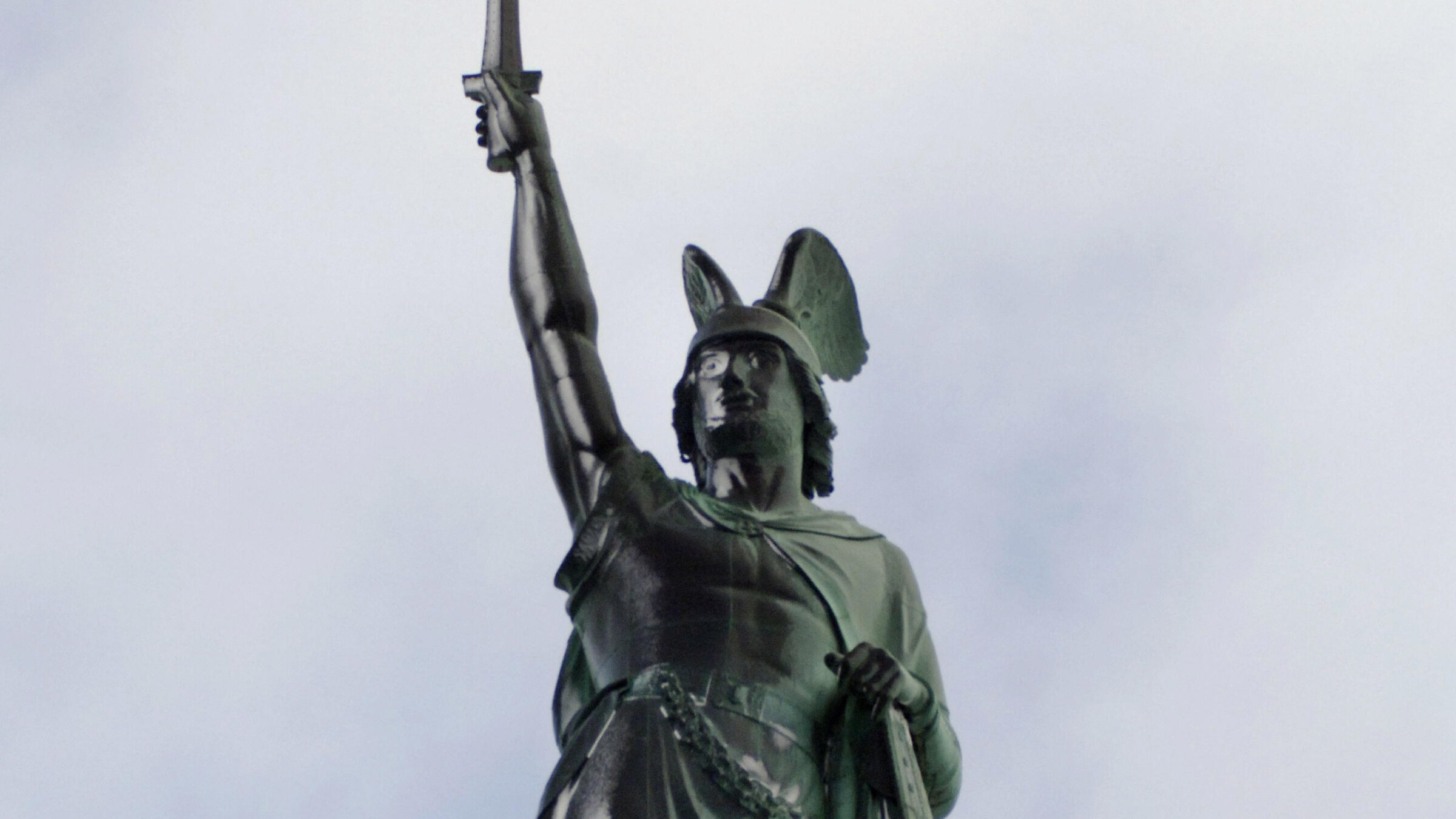
A monument to Herman, or Arminius, in Detmold, western Germany. Photo by Michael Gottschalk/DDP/AFP via Getty Images
Terrence Petty February 18, 2026
As the leader of Nazi Germany, Adolf Hitler laid out plans for structures that would serve as monuments to himself. His grandest scheme was predicated on his absolute certainty Germany would conquer the world: rebuilding Berlin into a Wagnerian monument to Teutonic superiority and renaming the city World Capital Germania.
Just as Hitler sought to inscribe himself onto Berlin’s skyline, Donald Trump has been pursuing his own form of self-mythologizing — having his name added to the Kennedy Center façade; proposing an arch larger than the Arc de Triomphe; floating other grandiose ideas meant to ensure the world doesn’t forget him.
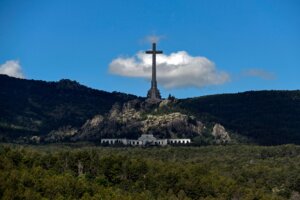
All around the globe, wherever you find megalomaniacs, you will find monuments to their egos. Among them are Francisco Franco’s “Valley of the Fallen,” a colossal bust of Ferdinand E. Marcos on a hillside in the Philippines, Joseph Stalin’s Stalingrad, streets in Syria named after the Assads, a Libyan square named after Moammar Gadhafi, North Korean streets and institutional buildings named after the Kim dynasty, and a Turin stadium that bore Mussolini’s name.
It is clear that Donald Trump envisions himself as a member of this rogue’s gallery.
Alexander the Great is among the best-known world figures to immortalize himself in this way, by founding a city in Egypt and naming it Alexandria. He was followed six centuries later by Constantine the Great, who founded a new Roman capital on the Bosporus Strait and named it Constantinople. A 100-foot column topped with a gold-encrusted statue of the emperor dominated the city’s forum.
European wars in the 18th and 19th centuries sprouted multitudes of monuments to victorious leaders — glorious and otherwise. After Kaiser Wilhelm I’s armies defeated Denmark, Austria and France, the Germans raised gargantuan memorials that blended modern triumph with mythic antiquity. Many are still standing: towering figures of Germania, medieval emperors and legendary warriors.
“Herman the German,” an 82-foot-tall tribal chieftain in a winged helmet, and mounted atop an 88-foot temple-like pedestal, looms over the north German countryside with his sword raised as if daring anyone to challenge him. The figure is actually Hermann — the Germanized name of Arminius, as the Romans called the Cheruscan leader who annihilated three legions in the Teutoburg Forest in 9 C.E.
At the Deutsches Eck in Koblenz, Germany, an enormous bronze statue of Kaiser Wilhelm I astride his horse rises above the confluence of the Rhine and Moselle, announcing Germany’s arrival as a great power. Forty miles upstream, on the east bank of the Rhine, stands the Niederwalddenkmal, a 125-foot colossus celebrating Germany’s victory over France and the founding of the Reich in 1871.
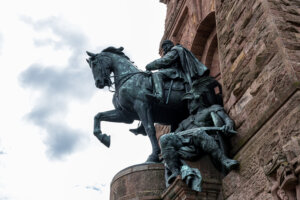
On the other side of Germany, perched on a mountain in Thuringia is the Kyffhäuserdenkmal — 266 feet of terraces, arches and towers built to celebrate Kaiser Wilhelm I and the new German Empire he presided over. At its base sits a massive stone figure of Emperor Frederick Barbarossa, the 12th-century ruler who, according to legend, never died but sleeps inside the mountain, waiting to return when Germany needs him.
All of these monuments, bespeaking the glory of Germans and their ancestors, were repurposed by the Nazis to project a sense of historical inevitability — as if Hitler’s regime were the next chapter in a lineage stretching from Arminius to Barbarossa to Wilhelm I.
Long before Hitler became chancellor, Berlin already possessed grandiose monuments to Teutonic greatness: the Siegessäule (Victory Column) and the Brandenburg Gate, crowned by a bronze quadriga driven by Victoria, the Roman goddess of victory. Hitler and his architect, Albert Speer, envisioned even grander transformations. The centerpiece of World Capital Germania was to be a structure called the Volkshalle (People’s Hall), a domed monstrosity that would be able to hold 180,000 people. Also on the drawing board was a Triumphal Arch, so large that the Arc de Triomphe would have fit within its opening.
After France’s defeat in 1940, Hitler signed a decree asserting: “In the shortest possible time Berlin must be redeveloped and acquire the form that is its due through the greatness of our victory as the capital of a powerful new empire.”
Hitler added: “I expect that it will be completed by the year 1950.”
Obviously, Hitler didn’t last that long. Neither did work on “World Capital Germania.” And all across defeated Germany, the thousands of street signs bearing Hitler’s name came down and were replaced.
Donald Trump, perhaps glimpsing his own mortality, seems to be in a hurry to leave an indelible and grandiose imprint on the nation’s capital and beyond. Much of the country watched in disbelief as heavy equipment tore into the White House East Wing to clear ground for a super-sized new ballroom designed in the gilded idiom of America’s 47th president. His name newly affixed beside JFK’s on the façade of the Kennedy Center only amplified the sense that Trump is racing to secure the permanence he has long craved.
And he is far from finished.
His most extravagant project is one reminiscent of Hitler’s ideas for World Capital Germania — that “triumphal arch” that the White House has cast as a defining pillar of Trump’s legacy.
“The arch is going to be one of the most iconic landmarks not only in Washington, D.C., but throughout the world,” White House spokesperson Davis Ingle declared.
But even as Trump pursues these monumental ambitions, he keeps running into the limits of democratic resistance. In one of the more brazen episodes, he told Senate Majority Leader Chuck Schumer that he would release long-delayed federal funds for a critical rail tunnel between New Jersey and New York if Dulles International Airport and Penn Station were renamed for him. Schumer refused, and the gambit collapsed.
The only way Trump managed to get his name onto the Kennedy Center was by replacing multiple board members with loyalists and then having himself appointed board chair. His newly installed board approved adding his name to the building’s façade — a move that cannot legally alter the institution’s official name, which only Congress can change. This particular gambit backfired, prompting a long list of prominent performers to cancel appearances in protest.
Trump’s plans for a grand arch could also face some obstacles, because of laws designed to protect the capital’s commemorative landscape.
Who knows how much of Trump’s ambitions to remake Washington, D.C., in his own image will come to fruition. But even if a Trumpian analog of Germania never arises, with the way he has disrupted this country and the world, he’s already molded himself into something like a menacing monument in human form.
This is a moment of great uncertainty. Here’s what you can do about it.
We hope you appreciated this article. Before you go, we’d like to ask you to please support the Forward’s independent Jewish news this Passover. All donations are being matched by the Forward Board - up to $100,000.
This is a moment of great uncertainty for the news media, for the Jewish people, and for our sacred democracy. It is a time of confusion and declining trust in public institutions. An era in which we need humans to report facts, conduct investigations that hold power to account, tell stories that matter and share honest discourse on all that divides us.
With no paywall or subscriptions, the Forward is entirely supported by readers like you. Every dollar you give this Passover is invested in the future of the Forward — and telling the American Jewish story fully and fairly.
The Forward doesn’t rely on funding from institutions like governments or your local Jewish federation. There are thousands of readers like you who give us $18 or $36 or $100 each month or year.
Support our mission to tell the Jewish story fully and fairly.