How Jesse Jackson changed his mind about Jews — and what Abe Foxman made of it
The late civil rights leader ‘was the guy who couldn’t pass the synagogue without going in,’ the longtime ADL director said in a new interview with the Forward
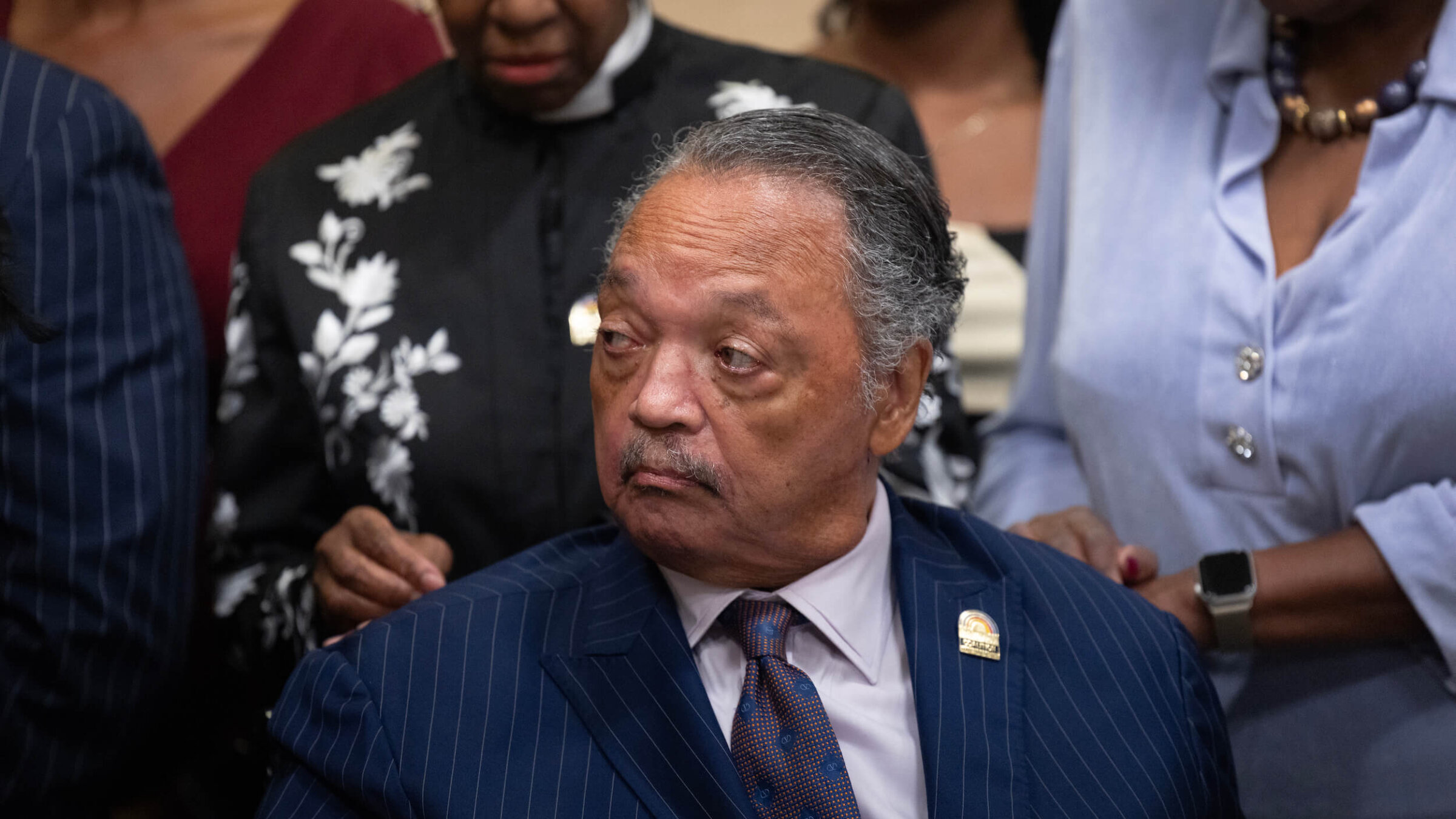
Civil rights leader Rev. Jesse Jackson at the National Bar Association’s annual convention on July 31, 2025 in Chicago, Illinois. Photo by Scott Olson/Getty Images

Opinion Editor Talya Zax February 19, 2026
As Reverend Jesse Jackson navigated a tricky relationship with the Jewish community in the late 1980s and early 1990s, former ADL chief Abraham Foxman had a front-row seat.
“I was very critical of him publicly, with his meeting with Arafat, with Farrakhan,” Foxman told me in a phone call, referring to Jackson’s public meetings with PLO leader Yasser Arafat in 1979 and Nation of Islam Minister Louis Farrakhan in 1984. And “with ‘Hymietown'” — Jackson’s infamous reference to New York City using a slur for Jews during his ’84 presidential campaign.
But as Jackson changed in the face of Jewish uproar, so did Foxman’s criticism of him. In the late 1980s, when the Jewish Telegraphic Agency reported that Jackson had been taking pains to grow closer to the Jewish community, Foxman told them that “It is a different Jackson in 1988 than in 1984.”
“One has to recognize and welcome that certain sensitivity he is now showing,” he said.
Things still weren’t always rosy between the duo. In 1990, Foxman accused Jackson of using a prayer service for then-New York Mayor David Dinkins as an occasion to “attack Israel”; at the event, Jackson had said “the birthplace of Jesus the Christ is under occupation.” But still, the two leaders developed a cordial relationship over the years — so much so that Jackson spoke at a 2015 dinner marking Foxman’s retirement.
In a phone interview after Jackson’s death this week at age 84, Foxman held much the same line as he expressed in 1987. The following conversation has been edited for length and clarity.
What did you make of the arc of Jackson’s relationship with the Jewish community?
Look, we’re a strange people. We want people to love us. We want people to come around, and when they do, we don’t trust them, and we’re not always willing to accept people’s change of heart. Now, people would always say to me, you don’t know what’s in the kishkes. True. You don’t know. But it’s also very important what’s on the tongue.
He was a politician, and as a politician, he was smart. At least pragmatically, not only did he say the right things, but you know, he was the guy who couldn’t pass the synagogue without going in. He was available to the Jewish community. He stood up on Soviet Jewry, on Iranian Jewry, on Syrian Jewry, on Ethiopian Jewry. He couldn’t miss a minyan.
He was there for us, which was very important. Because in the struggle to get freedom for Jews in all these places, we needed more than just the Jewish community.
What lessons do you think we as a community should take from his turnaround?
We have to learn that people can change their minds and hearts. I think Jesse Jackson is a great example for us, having gone from “Hymietown” to Arafat, when Arafat was really a terrorist, and to Farrakhan, who was probably the most significant antisemite all these years. If people can understand that they can come around from being a bigot, then I think it serves us. It serves them. It serves the community.
What was your personal relationship like?
Basically, when we needed him, I would pick up the phone and say, “Listen, can you be at such and such a rally on behalf of Soviet Jewry,” or “we need you to reach out to the president of Syria.” He said to me, “Abe, if you need me, call me.” And so when I felt we needed him, I called him. And there were no excuses. He said, “I’ll look on my calendar, if I can be there, I’ll be there.” And most of the time, he was there.
What would you say to people who are still skeptical about whether he really did change his perspective on Jews?
We’ll never know. The fact is, he was a symbol. People would ask me, “well, how do you know what he really feels?” And I’d answer, “I don’t know.” I don’t know what a lot of people think, you know, especially when they’re politicians, but it’s important that they’re on your side.
We live now in a time where there’s no civility. There’s no truth. If you get people to be civil to each other, to respect each other, to stand with each other, we’re ahead.
I think these are tougher times to get people to change their minds and hearts, because we don’t talk to each other. But we shouldn’t hesitate to reach out if we think there is a chance to change people’s hearts and minds.
This is a moment of great uncertainty. Here’s what you can do about it.
We hope you appreciated this article. Before you go, we’d like to ask you to please support the Forward’s independent Jewish news this Passover. All donations are being matched by the Forward Board - up to $100,000.
This is a moment of great uncertainty for the news media, for the Jewish people, and for our sacred democracy. It is a time of confusion and declining trust in public institutions. An era in which we need humans to report facts, conduct investigations that hold power to account, tell stories that matter and share honest discourse on all that divides us.
With no paywall or subscriptions, the Forward is entirely supported by readers like you. Every dollar you give this Passover is invested in the future of the Forward — and telling the American Jewish story fully and fairly.
The Forward doesn’t rely on funding from institutions like governments or your local Jewish federation. There are thousands of readers like you who give us $18 or $36 or $100 each month or year.
Support our mission to tell the Jewish story fully and fairly.