What we get wrong about how Germany has reckoned with its Nazi past
In Germany’s eagerness to whitewash the crimes of the WWII era, there are sobering lessons for a post-Trump America

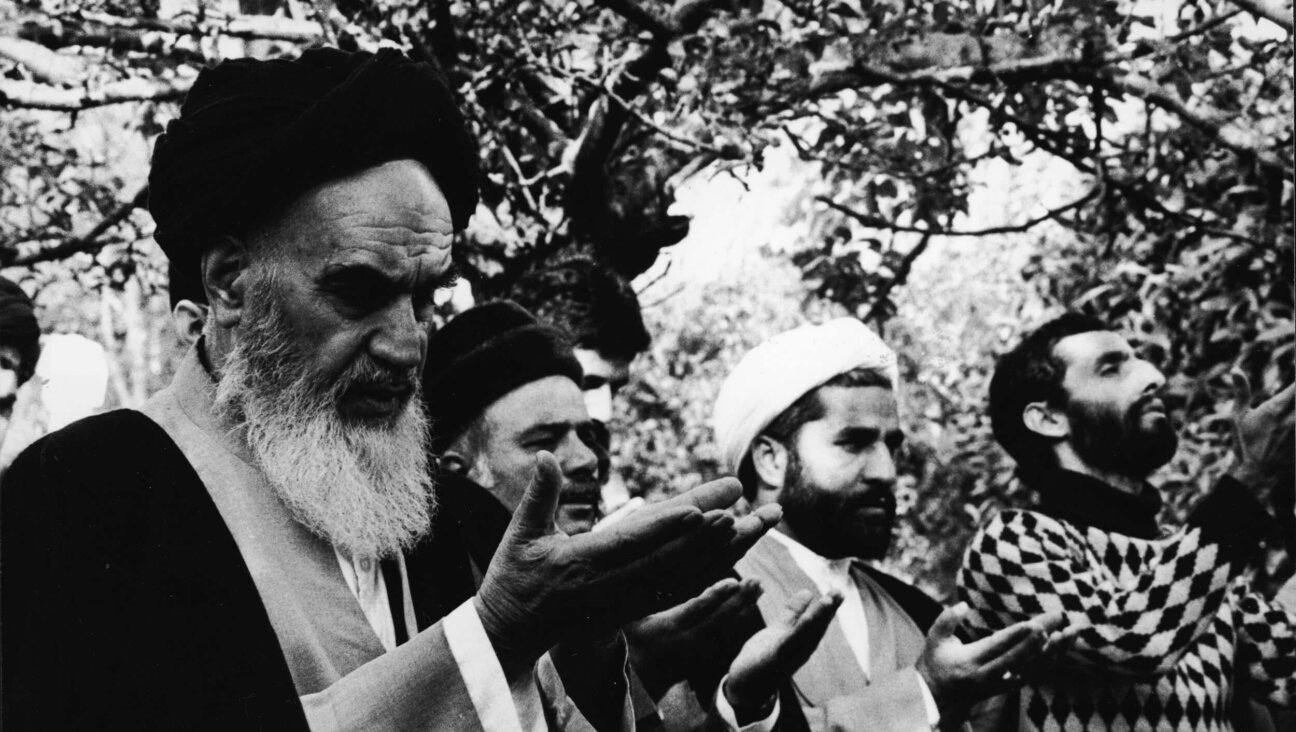
A 2018 Interior Ministry report exposed networks of ex-Nazi administrators who resumed their careers with the help of testimonials they wrote for one another. These testimonials were dubbed Persilscheine, or “Persil notes,” after a popular laundry detergent (above). Photo by Getty Images

Terrence Petty March 14, 2026
On a recent Freakonomics episode about the German film director Werner Herzog, host Stephen Dubner voiced a familiar assertion about postwar Germany’s confrontation with the Nazi past — an assertion shared by many Americans but one that is, in fact, a partial myth.
“It’s always impressed me,” Dubner said to Herzog, “the way that Germany, after the Second World War, assessed what had happened and in its schools and its institutions tried to come to grips with why and how, and to educate its successive generations.”
What’s wrong with this statement? At its core, it recycles a narrative crafted by the United States and its anti-Soviet allies during the Cold War — one designed for geopolitical purposes and carried into the 21st century.
Though it’s true that German schools have been admirably rigorous in teaching the history of the Third Reich and the Holocaust, and Germany has taken many other historic steps to make amends, German government agencies spent decades avoiding a full confrontation with their own past. Files documenting the depth of Nazi continuity within the postwar civil service were kept under lock and key well into the new century.
In my book, Nazis at the Watercooler: War Criminals in Postwar German Government Agencies, I reveal how West Germany hired seriously incriminated ex-Nazis for civil service positions and tell the story of a reckoning that took nearly six decades to begin — a chapter in Germany’s confrontation with its past that still receives too little recognition.
For decades, ministries shielded their records from public view. The first major breakthrough came in 2005, when Foreign Minister Joschka Fischer, appalled to discover that his ministry’s internal newsletter had been publishing glowing obituaries for diplomats implicated in Nazi crimes, established an independent team of historians to examine the Foreign Office archives. Their report, released five years later, documented not only the involvement of German diplomats in the machinery of the Third Reich but also the ease with which many resumed their careers in the West German state.
Over the past two decades, virtually every major German government institution has followed the Foreign Office’s lead — commissioning historians to examine old files and arriving at similarly disturbing conclusions. There was foot-dragging along the way; the Chancellor’s Office, the nerve center of the German government, did not release the findings of its own self-examination until last year.
These long delays raise a question that reaches beyond Germany. If a nation widely praised for its moral clarity took more than half a century to confront the actions of its institutions, what might that suggest about how the United States will one day confront the legacy of Donald Trump and the MAGA movement?
Of all the West German government agencies in the first postwar decade, none — with the exception of the foreign intelligence service — was a more welcoming harbor for ex-Nazis with blood on their hands than the Bundeskriminalamt, or Federal Criminal Police Office, a German version of the FBI known by its initials, BKA. The depth of this infiltration was exposed by Dieter Schenk, a security specialist at the BKA who quit over the West German government’s cozy relationships with right-wing dictators.
While at the BKA, Schenk heard hushed rumors about investigators with dark pasts. After resigning, he began to dig. He uncovered documents that exposed about two dozen of the BKA’s top employees who had served with Nazi units that committed war crimes and were never put on trial.
Schenk published his findings in a 2001 bestseller titled Auf dem rechten Auge blind: Die braunen Wurzeln des BKA (Turning a Blind Eye to the Right: The Brown Roots of the BKA). Several years later, the BKA commissioned its own panel of historians, who reached conclusions similar to Schenk’s. Their findings were published in 2011.
More inquiries followed.
Even the super-secretive Federal Intelligence Service, the BND, opened up about former SS officers who landed jobs at the West German spy agency, some with the assistance of American intelligence, despite having served in Nazi units that committed war crimes. One of the most stunning revelations was that in the late 1950s and early 60s the BND had on its payroll one of the most sought-after war criminals — Walter Rauff, hiding out in Chile.
Historians hired by the Justice Ministry found that in the late 1950s about half the senior employees had been card-carrying Nazis, including lawyers who attended meetings planning the Holocaust. A 2016 report documented how senior officials helped former Third Reich jurists paper over their pasts.
A 2018 Interior Ministry report exposed networks of ex-Nazi administrators who resumed their careers with the help of testimonials they wrote for one another. These testimonials were dubbed Persilscheine, or “Persil notes,” after a popular laundry detergent — making an ex-Nazi’s past appear as clean as fresh laundry.
One section of the report catalogues the excuses job candidates used to whitewash their wartime acts: They were coerced into joining the party; they needed a steady income; they had worked for the Third Reich to protect Jews; they were secretly in the resistance; they looked like loyal Nazis on the outside but hated Hitler on the inside. In the Interior Ministry’s culture department, researchers found that 43% of reviewed employees had concealed incriminating elements. They found no evidence that anyone was disciplined for lying.
Which brings us to Trump’s America.
America in 2026 and West Germany in the early postwar years are very different. The German democracy was just getting started; American democracy has existed for 250 years. Still, it would be a mistake to dismiss the German experience as offering no lessons. In the early 1950s, there was no certainty that the new German democracy would take root. In Trump’s America, there is no certainty that democracy will endure in the form we have known.
West Germany was still reeling from the war in the 1950s. A top priority of the victorious allies was capturing and punishing Nazi perpetrators — through the Nuremberg trials, denazification, and the imprisonment of thousands of soldiers and Nazi officials. But the populace rebelled against what they called “victors’ justice,” placing massive political pressure on Chancellor Konrad Adenauer. The United States and West Germany struck an unspoken bargain: suspending the pursuit of war criminals in exchange for Adenauer’s alignment with the United States and NATO in their emerging Cold War confrontation with the Soviet bloc.
Backing away from punishing Germans for the crimes of the Third Reich may have been a factor in the new democracy’s eventual success. But it came at a price. Adenauer was certainly no Nazi, but he was not above employing tactics reminiscent of those of the old regime — including using the foreign intelligence service to spy on his political opponents. And while an untold number of Germans complicit in Nazi abuses were able to resume their lives without consequence, including postwar civil servants who concealed their Third Reich misdeeds during the hiring process, their victims and victims’ families were never given the justice they deserved.
There will be a post-Trump era, but we have no idea what it will look like. What is clear is that calls for accountability are already accumulating — for corruption, for intimidating federal judges, for using the Justice Department to pursue Trump’s political enemies, for obstructing congressional oversight, and for violating migrants’ due-process rights in his sweeping deportation campaign, among other alleged abuses. The question is not whether a reckoning will be demanded, but how it might be pursued.
Like West Germany in its formative years, America will face difficult choices: whom to punish, how they should be punished, and how to keep the coming reckoning from deepening fractures within the country rather than healing them.