Temple Israel was my home — and what I learned there can help us get through this difficult moment
Growing up in the West Bloomfield, Michigan, a congregation that came under attack teaches the power of connection with each other and with neighbors
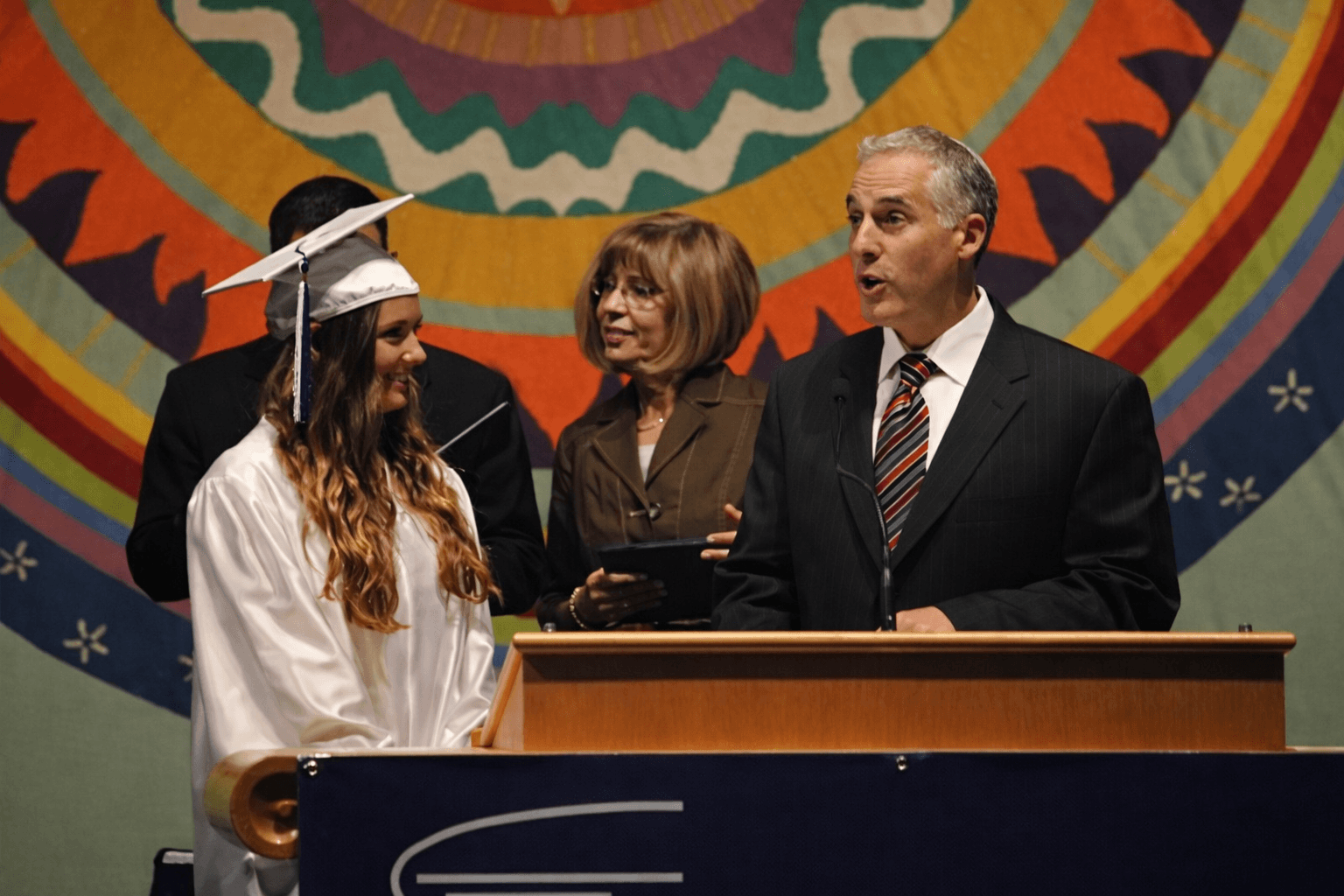
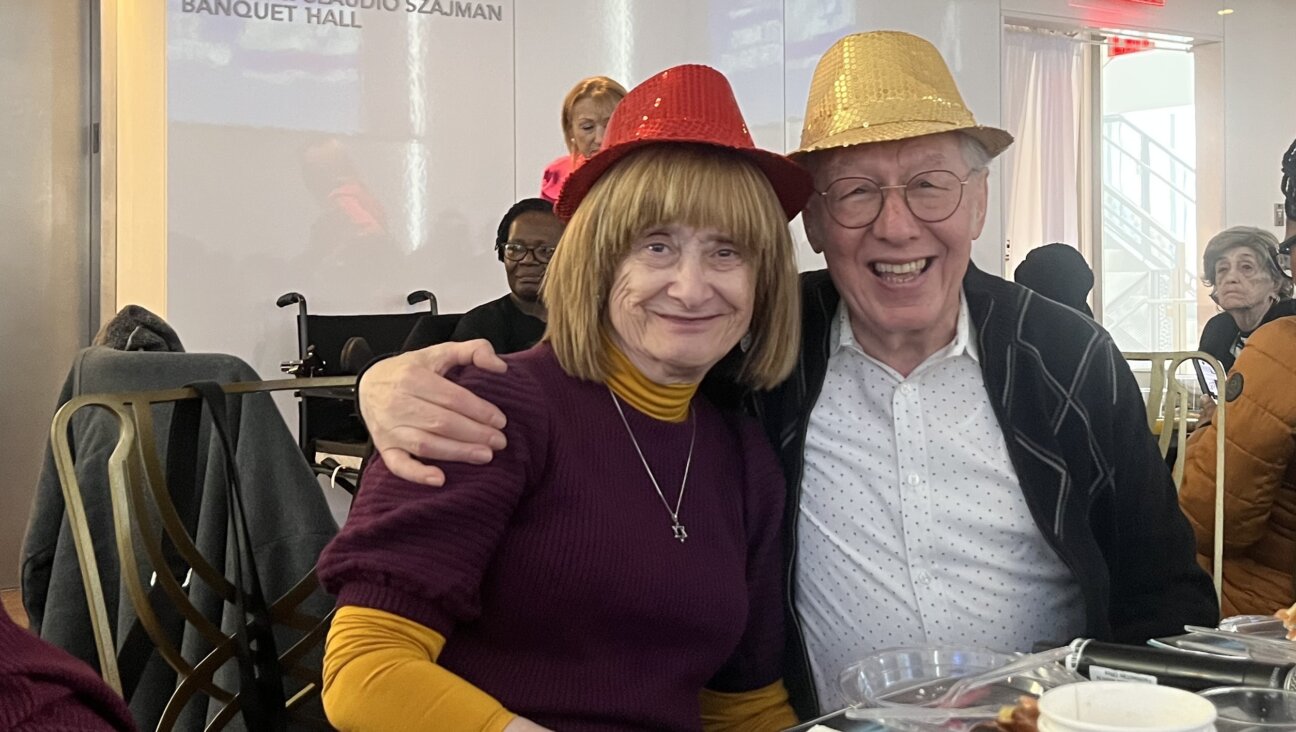
The author, left, with Temple Israel rabbi Josh Bennett, at her graduation from Frankel Jewish Academy in 2011. Photo by Marc Brodsky
This column was adapted from a sermon to be delivered on Shabbat, March 14, 2026.
Temple Israel has long been a staple of the Detroit Jewish community — and in many ways, it has been a cornerstone of my own life. My connection to that synagogue stretches back to my earliest musical memories.
My first voice teacher, in 8th grade, was the wife of Temple Israel’s cantor, Neil Michaels. As a teenager, I sang in their choir, the Teen T’filah Team, where I was first exposed to the music of the Reform movement and where I first experienced the use of instrumentation in services. It was there that I first learned the song Kehilah Kedoshah by Dan Nichols, a piece I now frequently sing with our own East End Temple choir. As a high school student, I even sang alongside the cantors there during High Holiday services. Throughout childhood I remained close with all three of Rabbi Paul Yedwab’s children, as we attended school together, were in theatre together, and travelled to Israel together.
Temple Israel is where my mother studied for her adult bat mitzvah which was officiated by Rabbi Harold Loss. And it was Temple Israel that took me on my first and second trips to Israel — experiences that profoundly changed the trajectory of my life, deepening and reframing my relationship with Judaism, and ultimately inspiring me to devote my life to the Jewish people. I still vividly remember our 2010 Teen Mission to Israel, led by Rabbi Josh Bennett. On that trip, I realized something transformative: that clergy could be more than just symbolic exemplars of a community, but also fun, adventurous, relatable, deeply present in the lives of young people, and powerful influences on their willingness to engage in Jewish life.
That trip had an unquantifiable impact on me. It was on that drive home from the airport that I decided Judaism needed to once again become a more central part of my life. Two weeks later, for my senior year of high school, I made what felt at the time like a radical decision: I transferred from West Bloomfield High School to the Jewish Academy of Metropolitan Detroit (now the Frankel Jewish Academy).
During that year, I began seriously exploring whether I might pursue a career in the cantorate. I arranged an off-campus internship that allowed me to compare and contrast the life and role of the cantor in both the Conservative and Reform movements. Once a week, I studied privately with Cantor Meir Finkelstein at my family’s Conservative congregation, Shaarey Zedek, and another day each week, I studied with Cantor Michael Smolash at Temple Israel. Aside from my internship, my favorite class that year was a course called Denominational Differences, co-taught by rabbis from the Orthodox, Conservative, and Reform movements — including two of my own beloved rabbis, Aaron Starr (Shaarey Zedek) and Josh Bennett (Temple Israel). In fact, that very subject eventually became the topic of my master’s thesis in cantorial school.
Needless to say, it is unlikely that I would be standing here today as your cantor were it not for the profound influence that the Metro Detroit Jewish community—and Temple Israel in particular—had on me throughout my childhood.
It is for this reason that yesterday’s news struck me so deeply. Learning of antisemitic attacks in the news is always painful and disturbing. Yet, as the frequency of these attacks across the globe becomes evermore pervasive, it’s difficult not to become slightly jaded or emotionally hardened — a natural coping mechanism to deal with ongoing trauma. People are not meant to live in a state of perpetual anxiety and hypervigilance.
But yesterday’s attack on Temple Israel shook me to my core. It is impossible not to experience antisemitism differently when it touches your own community. Realizing that one of my childhood synagogues was the target of a terrorist attack feels surreal. We know intellectually that terrible things happen in the world — but we rarely expect them to happen to us. We must, therefore, remain forever mindful that tragedy is always personal to someone.
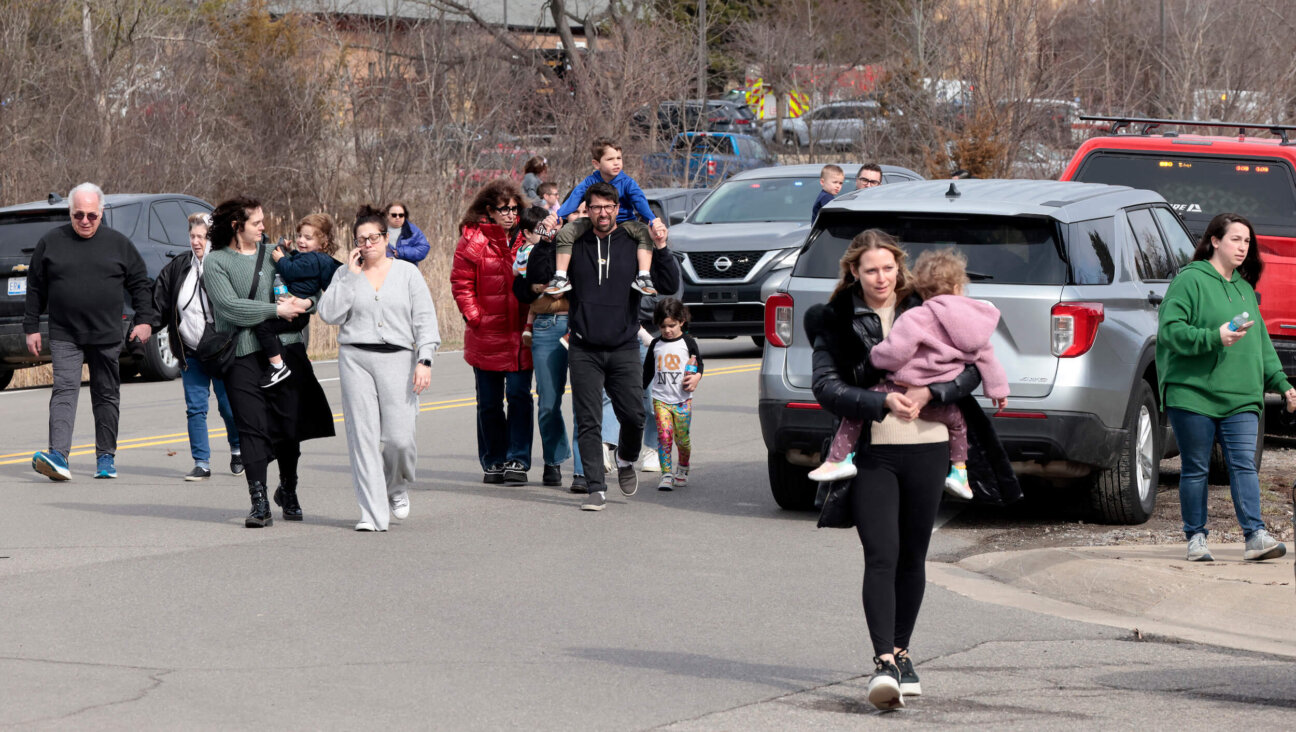
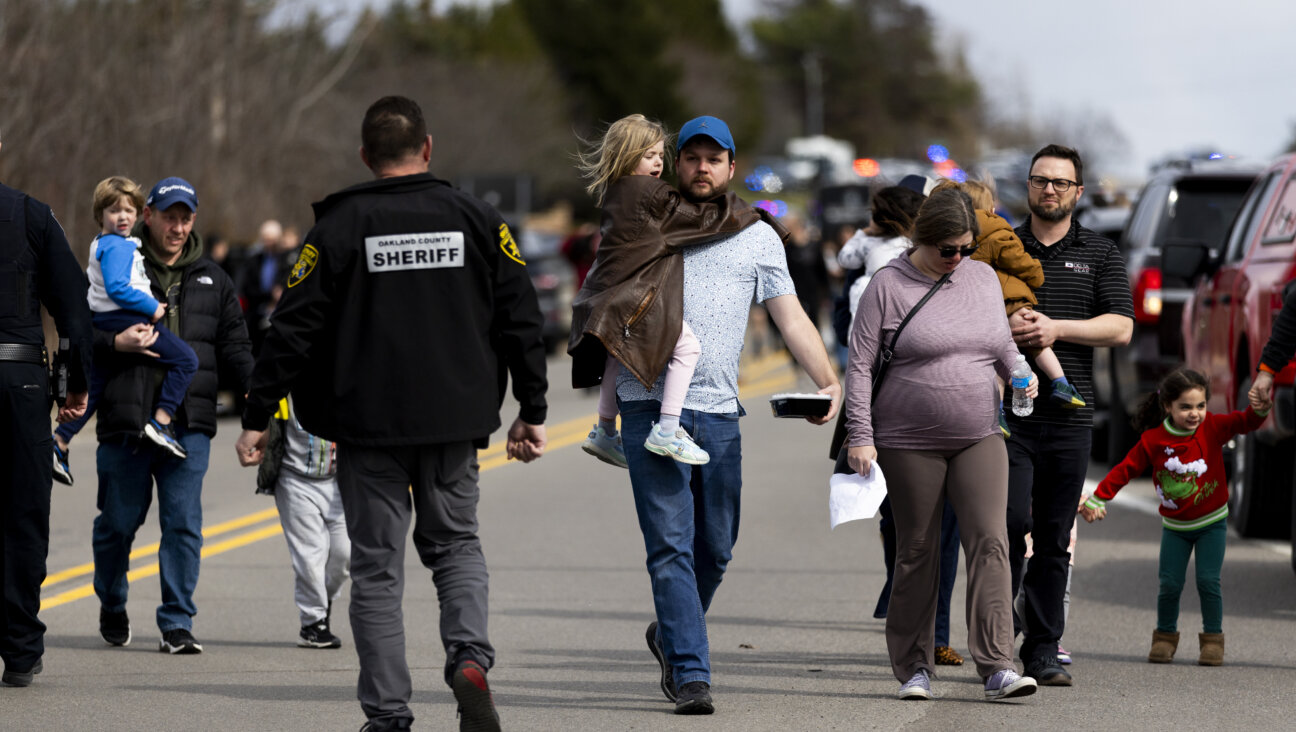
Even amid this frightening event, I am profoundly grateful for the brave security personnel at Temple Israel — especially their director of security, Danny — who quite literally put his life on the line to protect everyone inside the building, including the 106 preschool children and teachers who were in class at the time. We pray for the swift and complete physical and emotional healing of those officers, and we hold them in our hearts. It is truly miraculous that no civilians were injured during this attack. And the outpouring of support from the broader Metro Detroit community has been extraordinary — especially from our non-Jewish friends and neighbors who did not hesitate to help in our time of need.
We are particularly grateful to the Chaldean (Iraqi-Christian) community who opened their homes and businesses to shelter those fleeing the scene. The Chaldean-owned Shenandoah country club, museum, and cultural center across the street immediately welcomed and protected those seeking refuge. The fact that Shenandoah — the largest Chaldean community center in the United States — stands directly across the street from Temple Israel — the largest Reform synagogue in the United States — is no coincidence. It reflects the deep personal and communal ties between our communities.
When I was a student there, West Bloomfield High School was comprised of roughly one-third Jewish and one-fifth Chaldean students. Our communities shared classrooms, neighborhoods, friendships — and often cultural similarities. Both Jews and Chaldeans are Middle Eastern peoples whose identities weave together religion, culture, and ancestry. Both communities carry histories shaped by persecution and resilience. Both place profound emphasis on family, education, and tradition. In fact, back home I became somewhat known as the Chaldean community’s Jewish wedding singer, singing at numerous Chaldean churches as the bride walked down the aisle.
In moments like this, we see those shared bonds revealed in the most powerful of ways. I have no doubt that from this tragic incident something meaningful will emerge: our communities will grow stronger, more resilient, more deeply connected, and even more outspokenly proud of our identities. Hatred seeks to isolate and intimidate, but solidarity, courage, and compassion remind us that we are never alone. When neighbors protect neighbors, when communities stand together in the face of fear, we transform even the darkest moments into opportunities for unity, strength and hope.
Olivia Brodsky is the cantor and co-clergy of East End Temple in Manhattan.