Trump has forced an impossible choice on American synagogues amid antisemitic attacks
New conditions on federal security grants pit Jews’ safety against that of immigrants
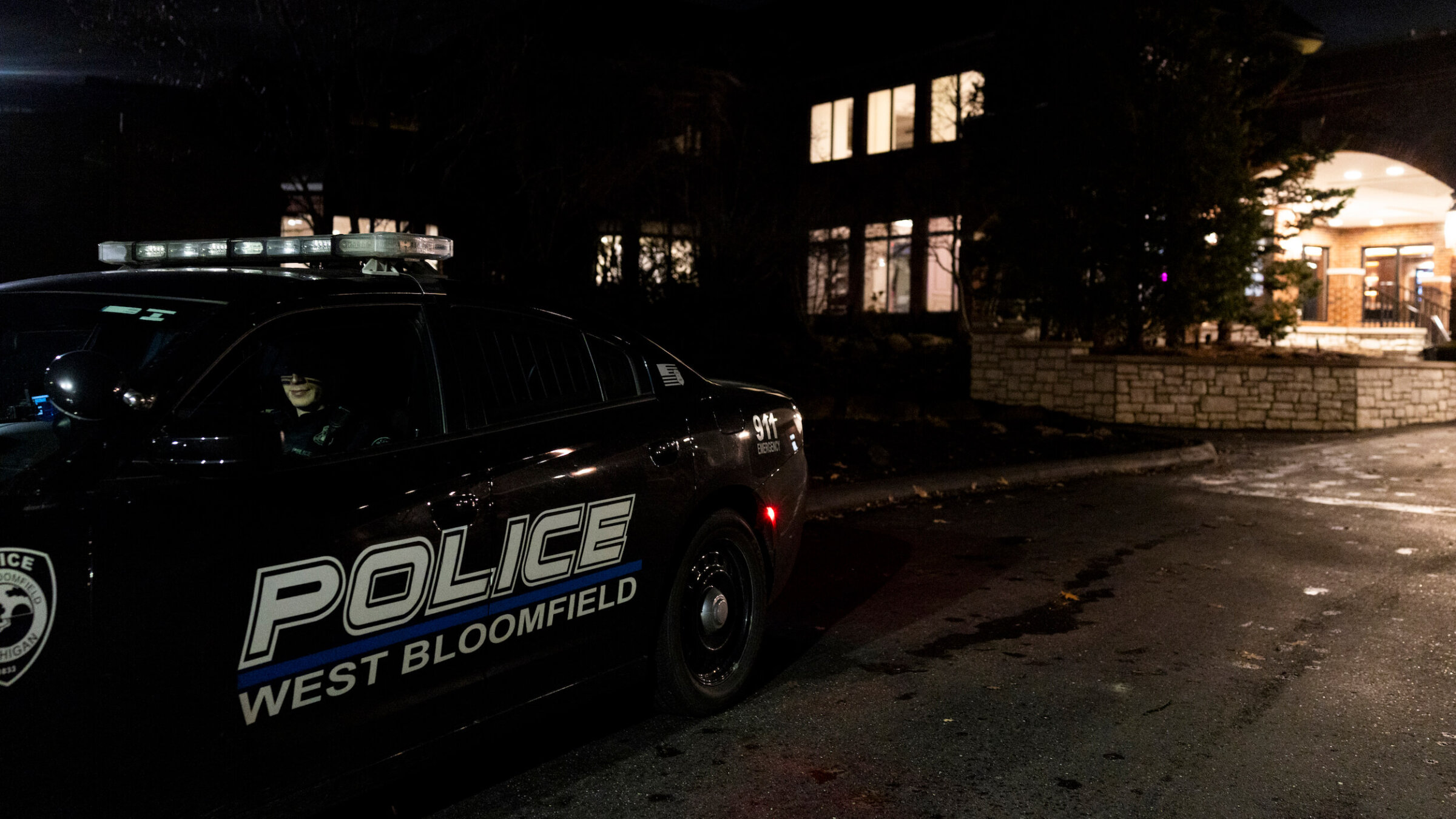
A police officer patrols outside of a Bat Mitzvah at Tam O’Shanter Country Club on March 13 in West Bloomfield, Michigan. The ceremony was moved from Temple Israel after a gunman rammed a vehicle into the synagogue and opened fire on Thursday. Photo by Emily Elconin/Getty Images

Joel Swanson March 14, 2026
The Thursday attack on Temple Israel in West Bloomfield, Michigan, did not occur in a vacuum.
In the past few months, shots were fired at three congregations in Toronto; an explosion rocked a synagogue in Belgium; and an arsonist caused massive damage to Beth Israel Congregation in Mississippi. Antisemitic incidents in the United States have reached historic highs. The threat is real, it is escalating, and American Jews know it.
Which is why the federal government’s decision to use this moment in history to force Jewish communities to choose between their own safety and that of immigrants is so unforgivable.
That choice is being created as part of the government’s Nonprofit Security Grant Program, which under President Donald Trump has instituted troubling new changes.
The program was established in 2004 to help houses of worship pay for cameras, barriers, armed guards and alarm systems, then expanded after the Pittsburgh synagogue massacre in 2018. It has perhaps never mattered more than it does right now. It provides, quite literally, life-saving money. The demand for grants vastly outpaces the supply, with thousands of organizations competing for a fraction of the security funds they need.
Now, those funds come with new strings attached.
Beginning in 2025, the Department of Homeland Security attached sweeping ideological conditions to new security grants. Recipients of new awards must cooperate with Immigration and Customs Enforcement operations, and must also agree not to “operate any programs that advance or promote DEI, DEIA, or discriminatory equity ideology.” They additionally must not run any aid program which “benefits illegal immigrants or incentivizes illegal immigration.”
When asked to clarify what those conditions mean in practice — whether a synagogue that declares itself a sanctuary for refugees would be disqualified, or whether a congregation offering programming for Jews of color or LGBTQ+ Jews would run afoul of the anti-DEI clause — the federal government’s answer has been months of contradictory guidance and confusion.
The terrifying potential consequences of that muddle were thrown into sharp relief by Thursday’s attack.
A man armed with a rifle rammed his truck through the doors of Temple Israel, driving down a hallway before being killed by the synagogue’s security staff. Thankfully, no congregants were hurt, and the children in the preschool run by the synagogue all made it home safely.
Many congregations do not have the independent resources to support security protocols as effective as Temple Israel’s proved to be. Instead, they rely on the government to help bridge the gap.
But under Trump’s second administration, security funding — the money that pays for the tools that may one day save lives — is now a lever to use to force political compliance.
This is of particular significance for Reform Judaism, the largest Jewish denomination in the U.S. and that to which Temple Israel belongs. The movement’s commitment to welcoming the stranger, hachnasat orchim — stemming from the commandment to love the stranger, repeated no fewer than 36 times in the Torah — is core to its identity. It is no coincidence that many Reform congregations have declared themselves sanctuaries for refugees.
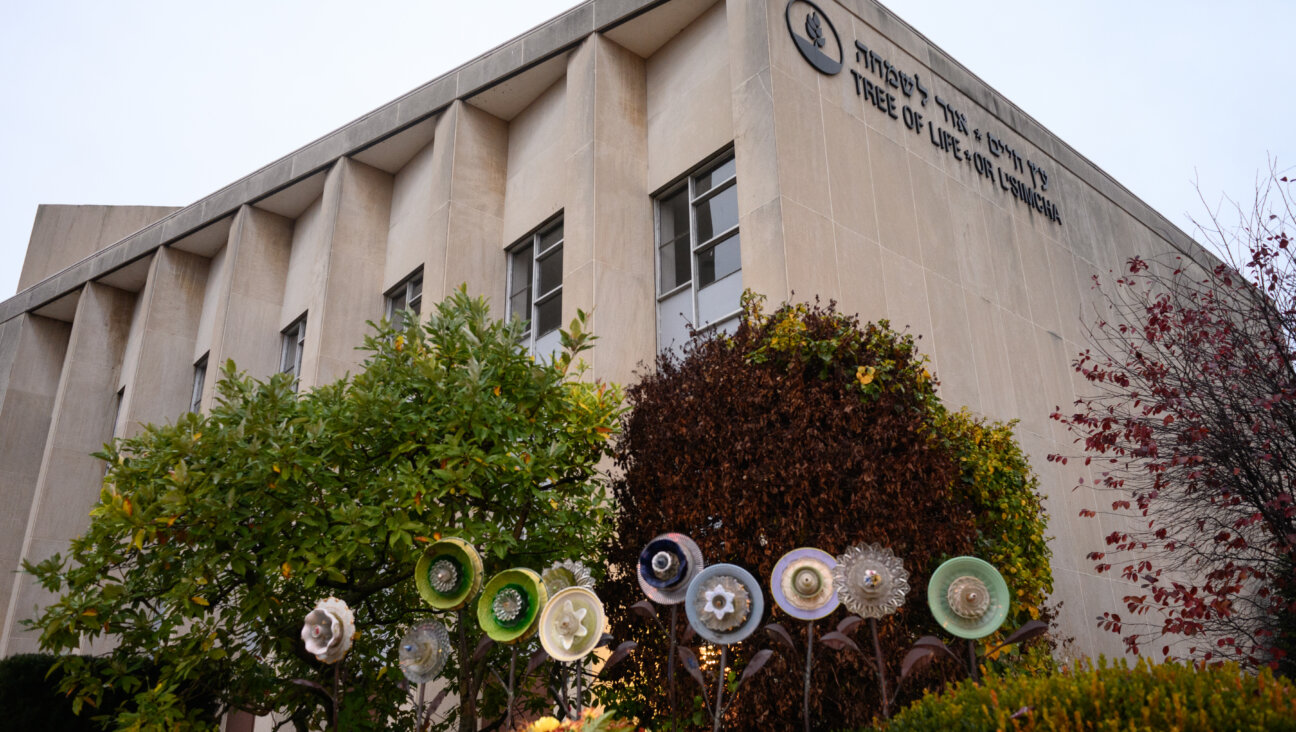
And it’s of particular significance because antisemitic violence is often linked to anti-immigrant sentiment. The deadliest act of antisemitic violence in U.S. history, the 2018 Pittsburgh synagogue shooting, was motivated by hatred toward immigrants, and toward Jewish programs that aid them.
The Trump administration’s demand that liberal American Jews choose between a foundational Jewish value and basic safety from violence is heartbreaking. One anonymous rabbi described the dilemma with devastating clarity to JTA: “Money is being given to us on condition that we violate a specific mitzvah. I don’t see how we can possibly accept that money.”
Rabbi Jill Maderer in Philadelphia put it even more bluntly, saying “Jewish safety requires inclusive democracy and inclusive democracy requires Jewish safety. We do not comply so we will not apply.”
These are communities under armed threat — as Thursday clearly reminded us — forced to choose between their physical safety and their moral integrity. That is a choice that no American religious community should ever have to make. The government’s obligation to protect its citizens, especially its most targeted minorities, must not come with an ideological price tag.
What makes this especially galling is the timing. A government shutdown of the Department of Homeland Security, born out of a political standoff over immigration enforcement, is currently halting the review of security grant applications. Synagogues that applied for funding months ago are waiting for approvals that may not come.
They are waiting, in many cases, to find out whether the security upgrades that might have made the difference under circumstances like those that unfolded in Michigan will be funded or not.
There is a word for demanding that a persecuted minority community abandon its values in exchange for protection: extortion. The Trump administration would no doubt dispute that framing. After all, the administration claims to care deeply about Jewish safety. Thursday’s attack makes clear that it is not enough for the administration to make that claim; it must prove its commitment through action.
It must remove the political conditions from the Nonprofit Security Grant Program. It must let houses of worship be what they are: sanctuaries, not instruments of federal policy.
This is a moment of great uncertainty. Here’s what you can do about it.
We hope you appreciated this article. Before you go, we’d like to ask you to please support the Forward’s independent Jewish news this Passover. All donations are being matched by the Forward Board - up to $100,000.
This is a moment of great uncertainty for the news media, for the Jewish people, and for our sacred democracy. It is a time of confusion and declining trust in public institutions. An era in which we need humans to report facts, conduct investigations that hold power to account, tell stories that matter and share honest discourse on all that divides us.
With no paywall or subscriptions, the Forward is entirely supported by readers like you. Every dollar you give this Passover is invested in the future of the Forward — and telling the American Jewish story fully and fairly.
The Forward doesn’t rely on funding from institutions like governments or your local Jewish federation. There are thousands of readers like you who give us $18 or $36 or $100 each month or year.
Support our mission to tell the Jewish story fully and fairly.