An abominable new Israeli law is a death warrant for democracy
Mandating the death penalty for Palestinian terrorists will weaken Israel in profound ways

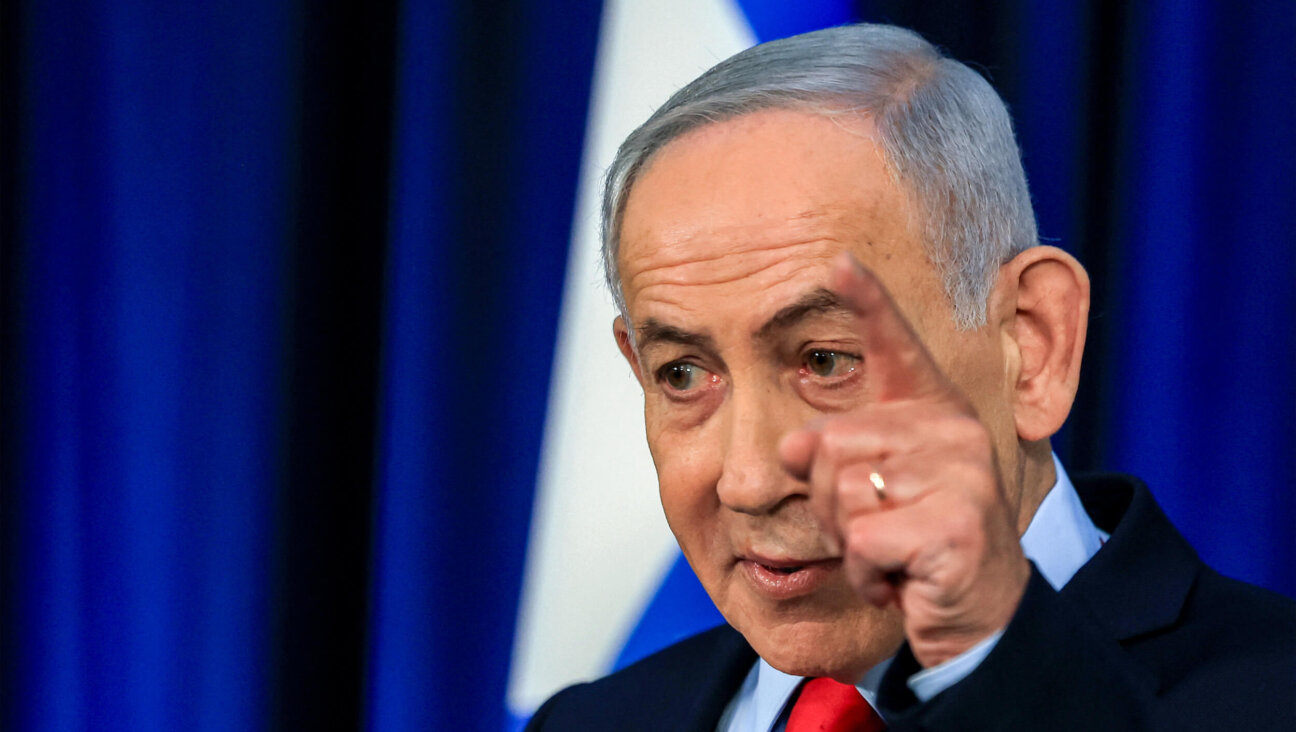
Israeli Prime Minister Benjamin Netanyahu gives a press conference in Jerusalem on March 19. Photo by Ronen Zvulun/Pool/AFP/Getty Images

Columnist Dan Perry March 30, 2026
A bill mandating the death penalty for terrorists, which the Knesset passed into law on Monday, is the latest dismal illustration of Israel’s democratic decline.
Promoted by the ultranationalist firebrand National Security Minister Itamar Ben-Gvir — whose resume includes convictions for supporting terrorism of the Jewish kind — the bill is plainly aimed at Palestinians only. It specifically targets West Bank residents, who are tried in military courts, which Jews are not. It will drag Israel another few steps further away from the democratic world, almost all of which — with the notable exception of the United States — has abandoned the death penalty as inhumane and flawed in its irreversibility.
This abomination passed by 62 to 48 votes, rejected by the key parties of the moderate opposition.
It’s part of a last-ditch effort by Prime Minister Benjamin Netanyahu’s coalition to hang onto power in upcoming elections, and illustrates just how dangerous that coalition’s continuing grip on Israeli politics is to the country’s soul.
The bill mandates that Israeli courts treat the death penalty as the default in the cases of those who have committed a “nationalistically motivated” murder of a citizen of Israel. Government critics like the Public Committee Against Torture in Israel called it an “imminent threat to the human rights of Palestinians.”
You do not need to be a leftist activist or an apologist for terrorism to share that concern. So it’s all but certain that the Supreme Court will strike the act down on the basis of equality under the law — or at the very least demand changes. The bill’s design — which features expedited executions and weakened legal safeguards — virtually guarantees it, and the Association for Civil Rights in Israel has already filed a petition demanding the act’s annulment.
And that is actually the point.
Netanyahu has spent years trying to weaken Israel’s judiciary and force it into compliance with his will, because he is on trial for bribery, fraud and breach of trust. His coalition has attempted to pass laws that would enable the government to appoint judges and also to overrule them by a simple majority in the Knesset. As he attempts to intimidate the legal system into letting him off the hook, Netanyahu has made an art of inciting his followers against prosecutors and judges, portraying them as part of a leftist deep-state conspiracy against him.
The public, which cannot be fooled all of the time, is generally aware of the trickery, and broadly opposes the judicial overhaul. With this act, Netanyahu and his allies are betting that while voters may hate his plans for creating an elected autocracy, they hate terrorists even more. He’s setting up a showdown with the Supreme Court to, effectively, make them choose.
After the Oct. 7 massacre by Hamas, and after calamitous years of war, there are decent odds that the public — despite Netanyahu’s unpopularity — will take his side. And if he foments enough outrage at the courts, then perhaps he might erase his considerable deficit in the polls, ahead of an election that must be held by October.
If he wins that election, he could claim to truly have a mandate for pushing through his effort to incapacitate Israel’s independent judiciary, turning Israel into a Jewish version of authoritarian Turkey.
In general, Netanyahu is betting that he stands to benefit by focusing the campaign on conflict with the Arabs — as opposed to domestic issues, like his hugely unpopular coddling of the Haredim, including vast funding and military draft evasions. That too may be a decent bet: Netanyahu is expert at framing opposition to his war policies as unpatriotic.
What of the fact that a death penalty for Arab terrorists is all but certain to further mar Israel’s international standing? In an extraordinary development, the foreign ministers of Germany, France, Italy and Britain — some of Israel’s most significant trading partners — all urged Israel to abandon the bill, saying, “We are particularly worried about the de facto discriminatory character of the bill.”
“The adoption of this bill would risk undermining Israel’s commitments with regards to democratic principles,” they added.
Alas, that appears to be intentional. Ignoring the experts — most Israeli juridical and security experts also oppose the bill — is a feature in the playbook of right-wing populists, in Israel as in the U.S. And while further reputational damage should hardly be a welcome prospect, given the cratering of Israel’s standing in the world, especially in Europe, that is clearly not a concern for the coalition, which seems almost to fetishize an “us-against-the-world” pathology.
What makes this all the more sickening: Few expect the prospect of a death sentence to significantly deter the kind of terrorism Israel faces. There is a culture of martyrdom and fanaticism that embraces death in the context of jihad. That culture is visible in the inability of Israel — and now the Americans in Iran — to subdue rivals that are vastly overmatched in classic military terms.
In fact, it is likely to invite reprisal attacks and “executions” of captured Israeli soldiers as a matter of principle, as a tit-for-tat formal death penalty dynamic will start to somehow look legitimate.
But there is no easy way out of the new miseries this law will create. Should it somehow survive legal challenges, it would calamitously tie the hands of any future government that manages to oust Netanyahu. Any efforts to repeal this act would hand valuable talking points to a right-wing opposition, helping portray the new leaders as soft on terror — a major political liability.
In this tense situation, Netanyahu’s rivals are bracing for a series of further desperate measures in the spring parliamentary session, which will begin in about a month.
The coalition is expected to try to ram through several authoritarian reform bills, including one that would weaken the authority of the attorney general. And many people fear that Netanyahu will try to invoke emergency measures to put off the elections altogether if the polls remain low — a well-earned cynicism that is, obviously, devastating to morale at a time of war. It is not only crackpots and extremists who suspect he may try to prolong the wars in Iran and Lebanon, at least partly for this reason.
If the election does proceed, Netanyahu is widely expected to contest any close outcome, claiming fraud. If the Electoral Commission backs him but the Supreme Court does not, the result would be a constitutional crisis that Netanyahu will try to exploit to his advantage.
Here, too, Netanyahu’s close relationship with President Donald Trump can be seen as more than a matter of policy. It is about a wholesale upending of the political culture, as Trump has somehow made false charges of electoral fraud and naked attempts to game the system seem like a legitimate strategy.
The direction of travel is clear, as is the danger that all this will lead to violence in the streets. Israel is in grave, immediate peril — a problem this new bill will exacerbate.
This is a moment of great uncertainty. Here’s what you can do about it.
We hope you appreciated this article. Before you go, we’d like to ask you to please support the Forward’s independent Jewish news this Passover. All donations are being matched by the Forward Board - up to $100,000.
This is a moment of great uncertainty for the news media, for the Jewish people, and for our sacred democracy. It is a time of confusion and declining trust in public institutions. An era in which we need humans to report facts, conduct investigations that hold power to account, tell stories that matter and share honest discourse on all that divides us.
With no paywall or subscriptions, the Forward is entirely supported by readers like you. Every dollar you give this Passover is invested in the future of the Forward — and telling the American Jewish story fully and fairly.
The Forward doesn’t rely on funding from institutions like governments or your local Jewish federation. There are thousands of readers like you who give us $18 or $36 or $100 each month or year.
Support our mission to tell the Jewish story fully and fairly.