Mahmoud Khalil’s reassurances are bad for Jews but even worse for Palestinians
History shows the path pursued by the campus activist leader results in perpetual misery
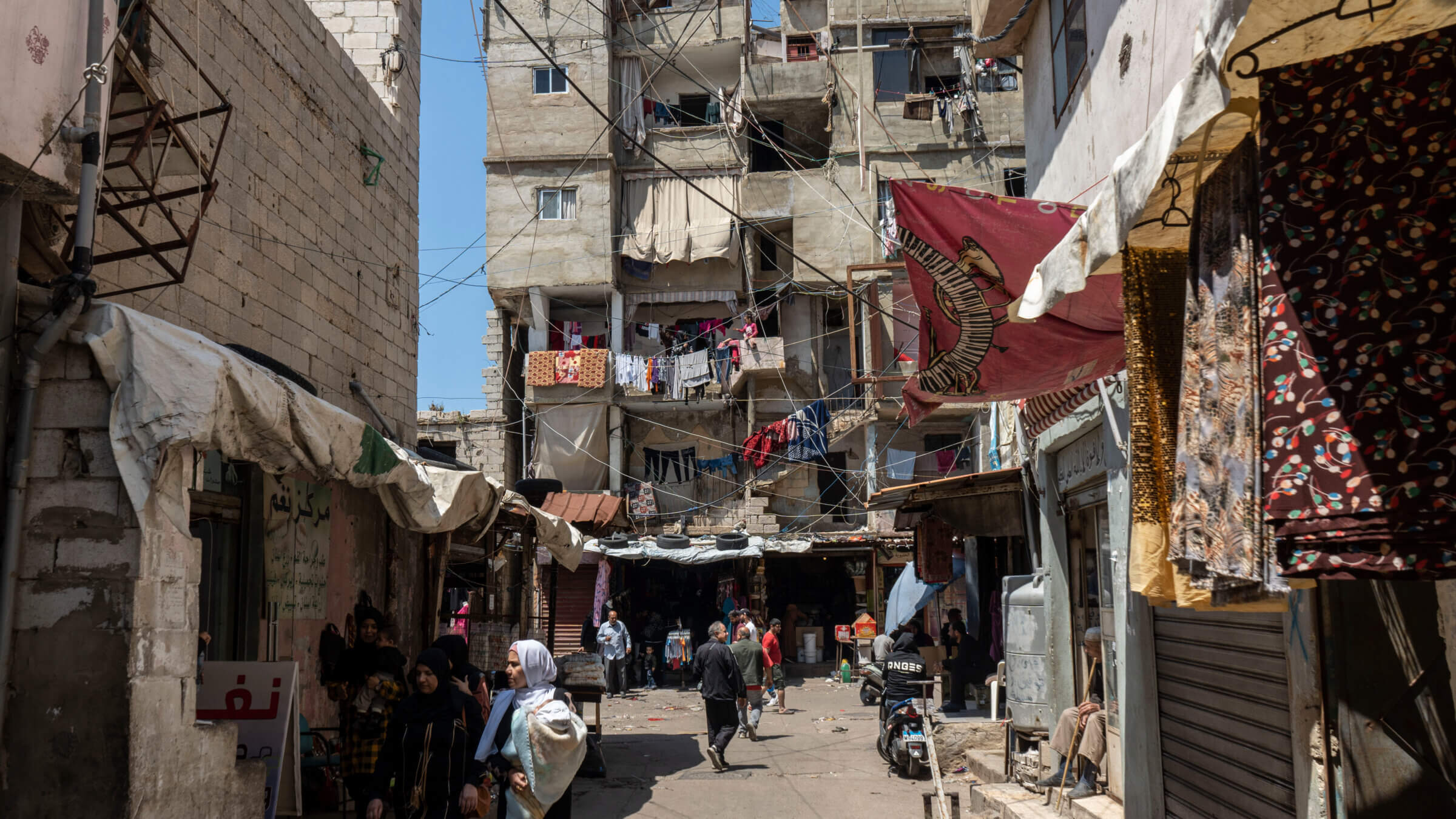
Laundry hangs to dry on washing lines across a street in the Shatila Palestinian refugee camp in Beirut, Lebanon, on Monday, May 1, 2023. Photo by Francesca Volpi/Bloomberg via Getty Images
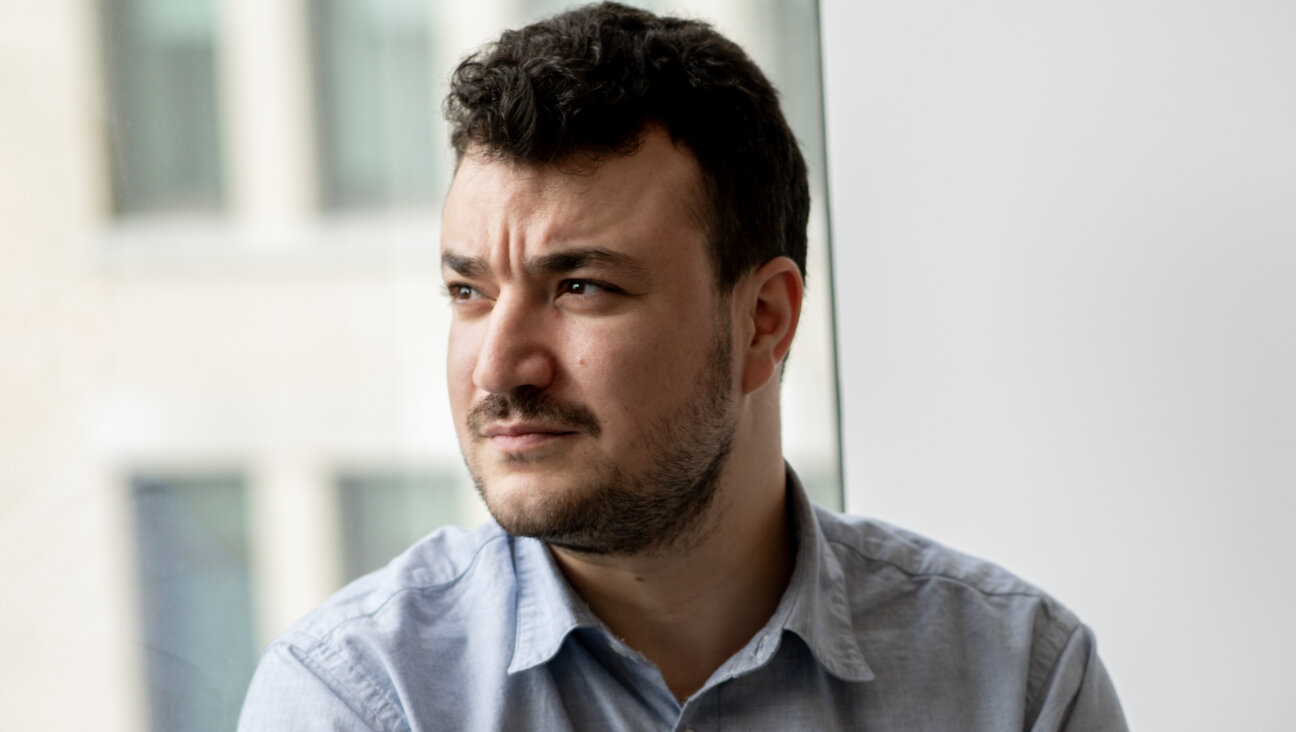
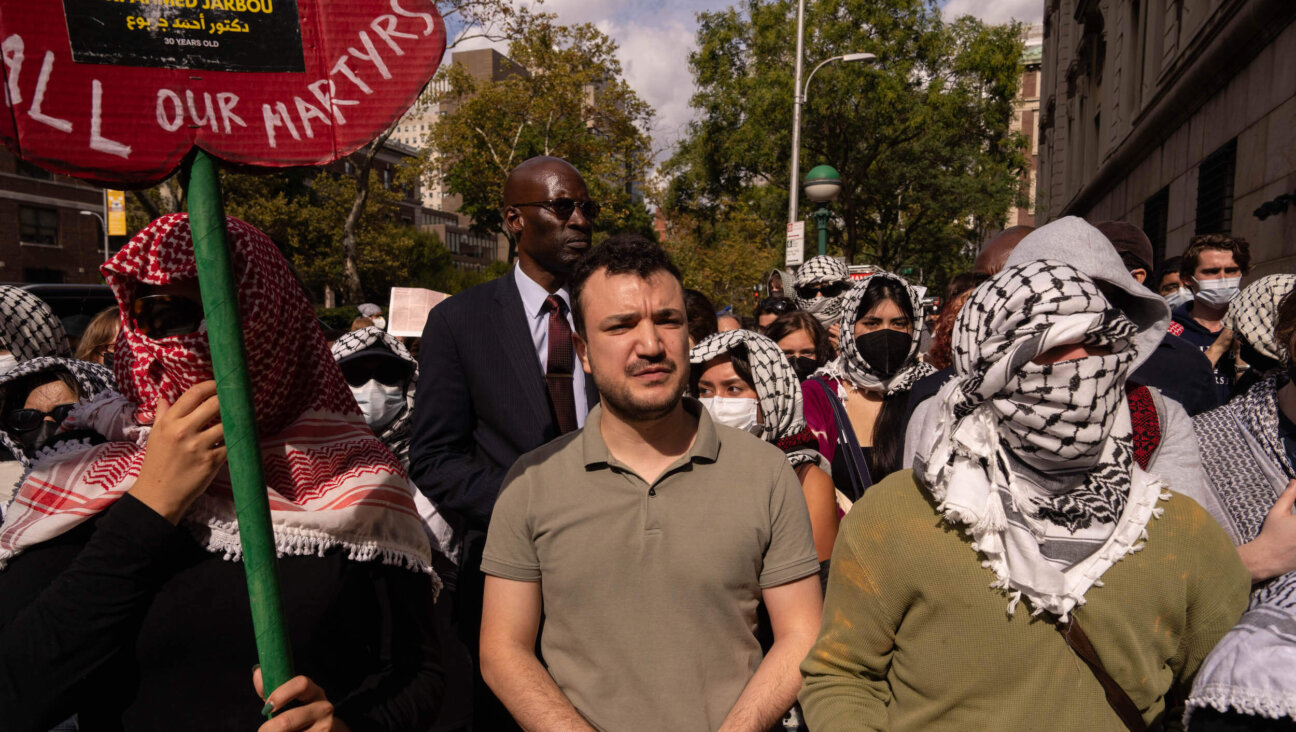
In his recent interview with the Forward, prominent Palestinian activist Mahmoud Khalil attempted to address claims that he’s an antisemite, that he supports Hamas, and that as a leader of Columbia’s anti-Israel encampments he helped foster hostility towards Jewish students and Jews generally.
Khalil says he’s offended by such claims, but by refusing to say whether Hamas deliberately targeted civilians on Oct. 7, confirmed by both Amnesty International and Human Rights Watch, how is he not providing coverage for Hamas?
The Forward attempts to present Khalil as a pragmatic moderate. But someone who can’t confirm what human rights investigators documented about the worst massacre of Jews since the Holocaust is not offering any real reassurances. Instead, he is only offering a performance.
An even deeper problem with Khalil is not what it means for Jews, but what it does to Palestinians. I say this as someone who has spent time in places where the gap between rhetoric and reality gets people killed.
In 2004, I was a young Marine officer building one of the first successful Iraqi military units in Iraq’s restive Al Anbar Province. My soldiers were mostly Shia, and many bore marks of torture from Saddam Hussein’s prisons, including scars and missing fingers.
One evening, I was watching the news with my Iraqi officers. We watched reports of Israeli tanks pushing into Gaza. I braced for anger and protests and was shocked when they started cheering for the Israelis. One of them quickly explained to me that Saddam had used the Palestinian cause to distract from his own atrocities at home. His support and alliance with Yasser Arafat and other Palestinian leaders was not out of solidarity, but rather as a tool of domestic control. My Iraqi soldiers had paid the price.
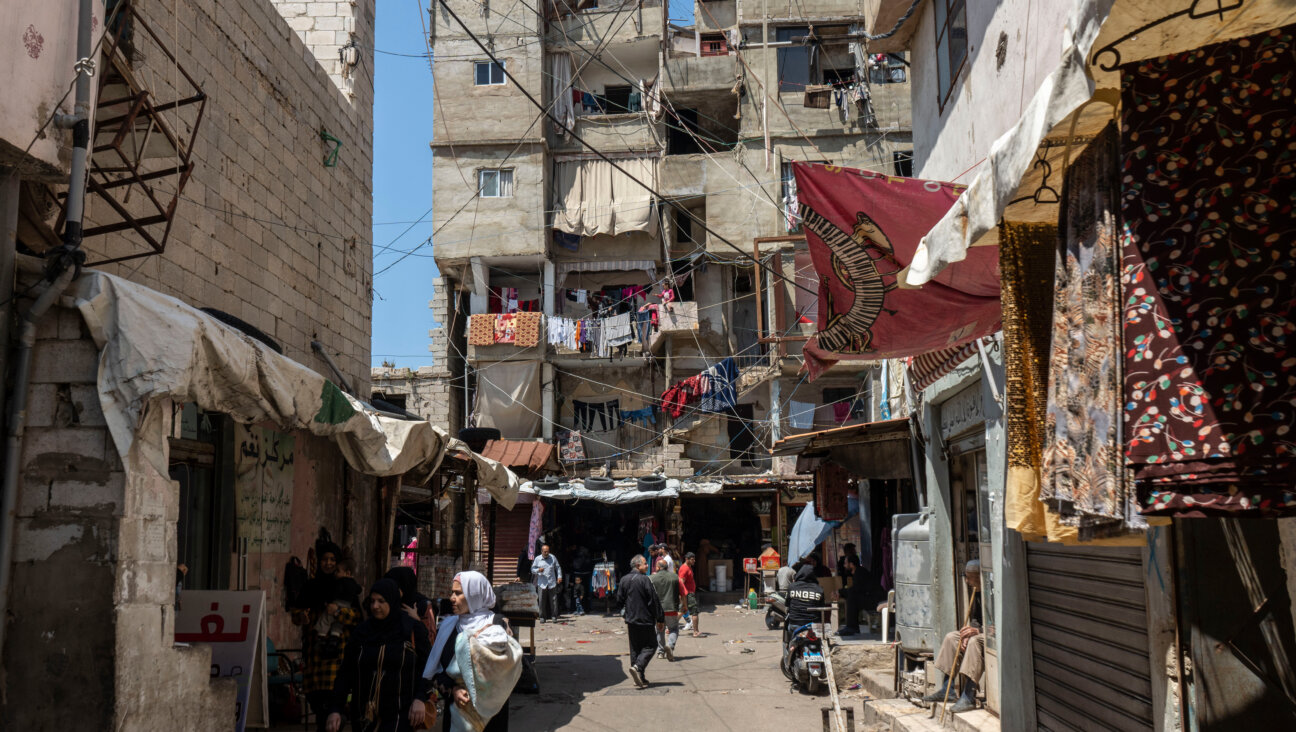
After leaving the Marines I visited Lebanon and Jordan, while working to help many of our translators we had left behind. During these visits, I walked through Sabra and Shatila, where Lebanese militias massacred hundreds, possibly thousands, of Palestinian civilians in 1982. I visited refugee camps in Jordan, not tents but cities, brick and mortar, generations deep, people suspended in political amber while the leaders who claimed to speak for them extracted whatever use they could.
During these visits, it was hard not to conclude that Palestinian suffering had been prolonged not only by Israel, but by a regional order that finds Palestinian statelessness useful. Khalil’s vision fits that order perfectly. It offers Palestinians justice in theory, but in reality only guaranteeing them decades of more suffering and tragedy. The people who benefit are not Palestinians in Gaza, but those who have built careers on book deals, speaking fees and endowed chairs on a cause they have no interest in resolving.
The brutal, tragic, and awful reality is that there is not a nation-state on Earth, maybe other than Iceland, that was not created through conflict and displacement. Throughout the Americas, it was the catastrophe that befell indigenous peoples, swept aside by European settlers over centuries of conquest and disease. Most of Western Europe’s borders hardened through revolution and the violent suppression of regional identities. Poland was erased from the map for a hundred years, then reconstituted after two world wars through mass population transfers that uprooted millions. The partition of India and Pakistan in 1947 displaced 15 million people and killed up to two million more. China’s borders were drawn through civil war, revolution, and the subjugation of non-Han peoples.
Every post-Ottoman Arab state, Jordan, Syria, Lebanon, Iraq, was created by European colonial powers drawing lines through tribal and sectarian areas with indifference to the consequences that are still felt today. The entire modern state system is built on this foundation: land taken, people moved, suffering endured, and eventually, when both sides accepted finality, a durable peace.
Either Khalil believes every nation-state on Earth should be dismantled, or he is applying a standard that exists for Jews and Jews alone. The entire Arab world spans 13 million square kilometers and nearly half a billion people. Israel barely covers 22,000 square kilometers and is home to only 7 million Jews. Khalil doesn’t call for the dissolution of Jordan, doesn’t demand China answer for Tibet, or push for the right of return for millions of Hindus and Muslims displaced by the partition of India and Pakistan. He saves that demand for the one Jewish state on Earth, a nation smaller than New Jersey, surrounded by a region that has tried to destroy its people repeatedly. This is antisemitism through the vocabulary of liberation.
Look at where peace has actually come from. Northern Ireland’s Troubles killed thousands over 30 years, a conflict soaked in ancient grievance, religious identity, and competing claims to land and sovereignty that each side considered non-negotiable. It ended not when one side achieved its maximal demands, but when the Good Friday Agreement gave both communities something short of victory and something better than war. Unionists did not get the permanent British Ulster they wanted. Republicans did not get the unified Ireland they had fought and died for. They got a future. In the Balkans, a decade of wars that produced ethnic cleansing, mass atrocity, and the worst European violence since World War II finally yielded to exhaustion and the hard work of partition and negotiated borders. The map that emerged was not just. It was livable. That distinction, between justice as an absolute and peace as a possibility, is the one Khalil refuses to make.
Khalil’s vision has been tried, in different forms and different names, for 70 years. It has not produced peace. It has produced more of exactly what he says he wants to end.
The only path forward is the one he refuses: two peoples, two states, a future neither side fully wants, but both can live with. Everything else is a jobs program for people who profit from the conflict, paid for in Palestinian lives.
His reassurances are hollow to Jews. They are fatal to Palestinians.
This is a moment of great uncertainty. Here’s what you can do about it.
We hope you appreciated this article. Before you go, we’d like to ask you to please support the Forward’s independent Jewish news this Passover. All donations are being matched by the Forward Board - up to $100,000.
This is a moment of great uncertainty for the news media, for the Jewish people, and for our sacred democracy. It is a time of confusion and declining trust in public institutions. An era in which we need humans to report facts, conduct investigations that hold power to account, tell stories that matter and share honest discourse on all that divides us.
With no paywall or subscriptions, the Forward is entirely supported by readers like you. Every dollar you give this Passover is invested in the future of the Forward — and telling the American Jewish story fully and fairly.
The Forward doesn’t rely on funding from institutions like governments or your local Jewish federation. There are thousands of readers like you who give us $18 or $36 or $100 each month or year.

Support our mission to tell the Jewish story fully and fairly.