Mahmoud Khalil’s anti-Zionist case to Jews shows the case for skepticism
His recent interview with the Forward illustrates ongoing failures within the pro-Palestinian movement
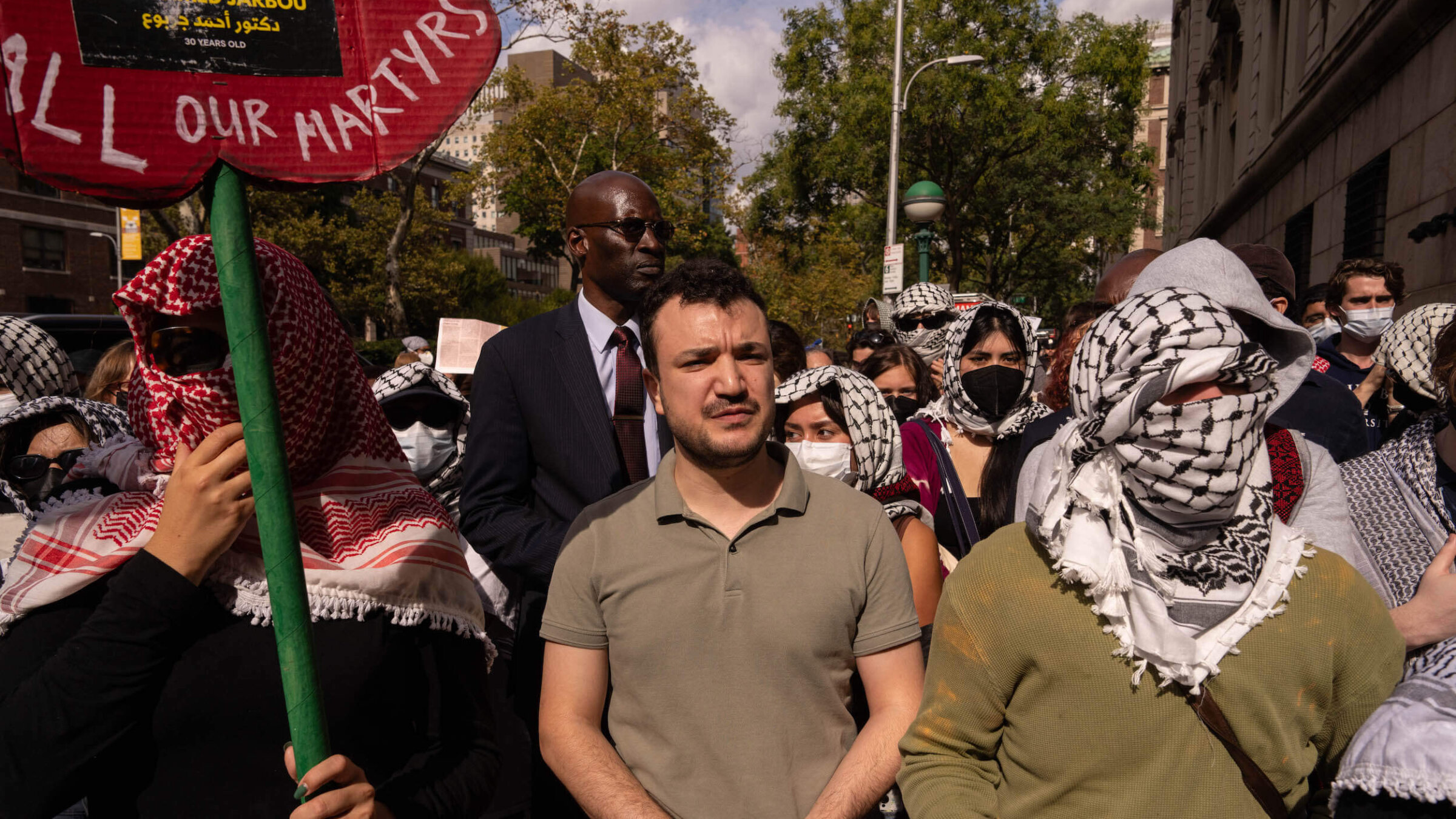
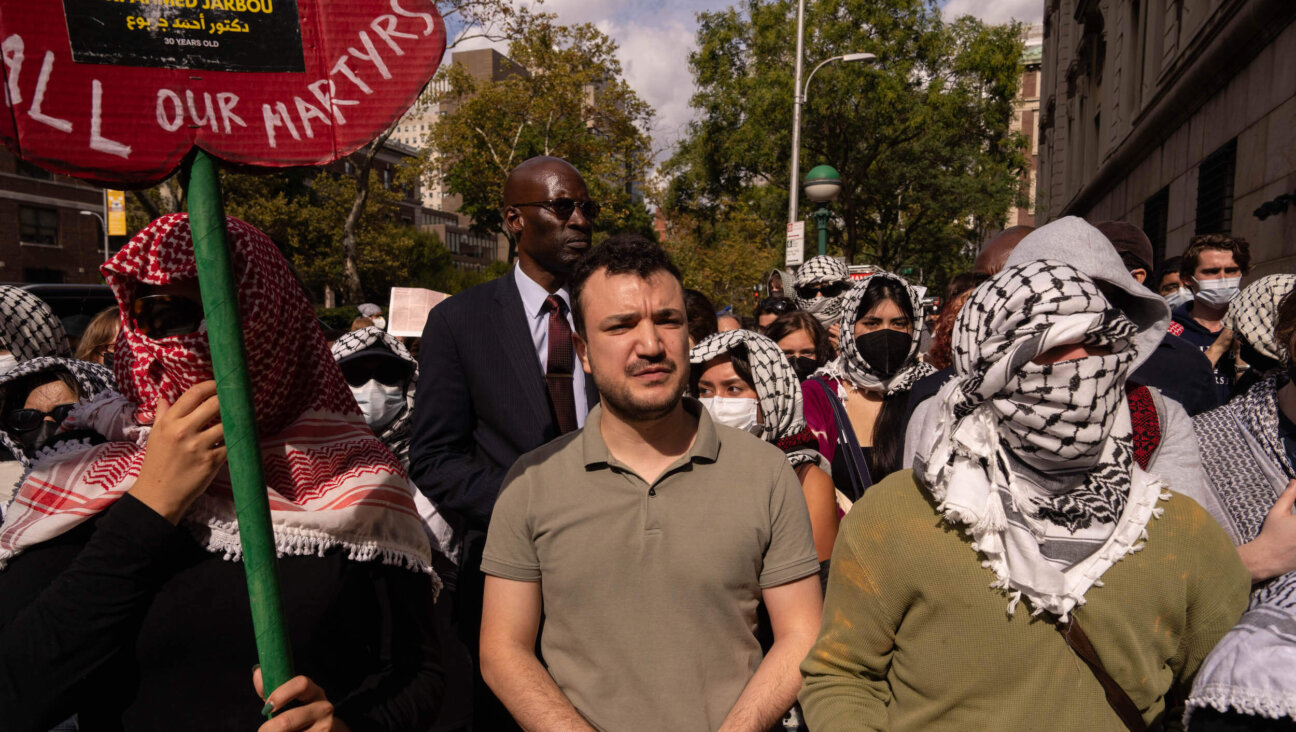
Mahmoud Khalil attends a vigil and protest for Palestine outside of Columbia University on Oct. 7, 2025 in New York City. Photo by Adam Gray/Getty Images
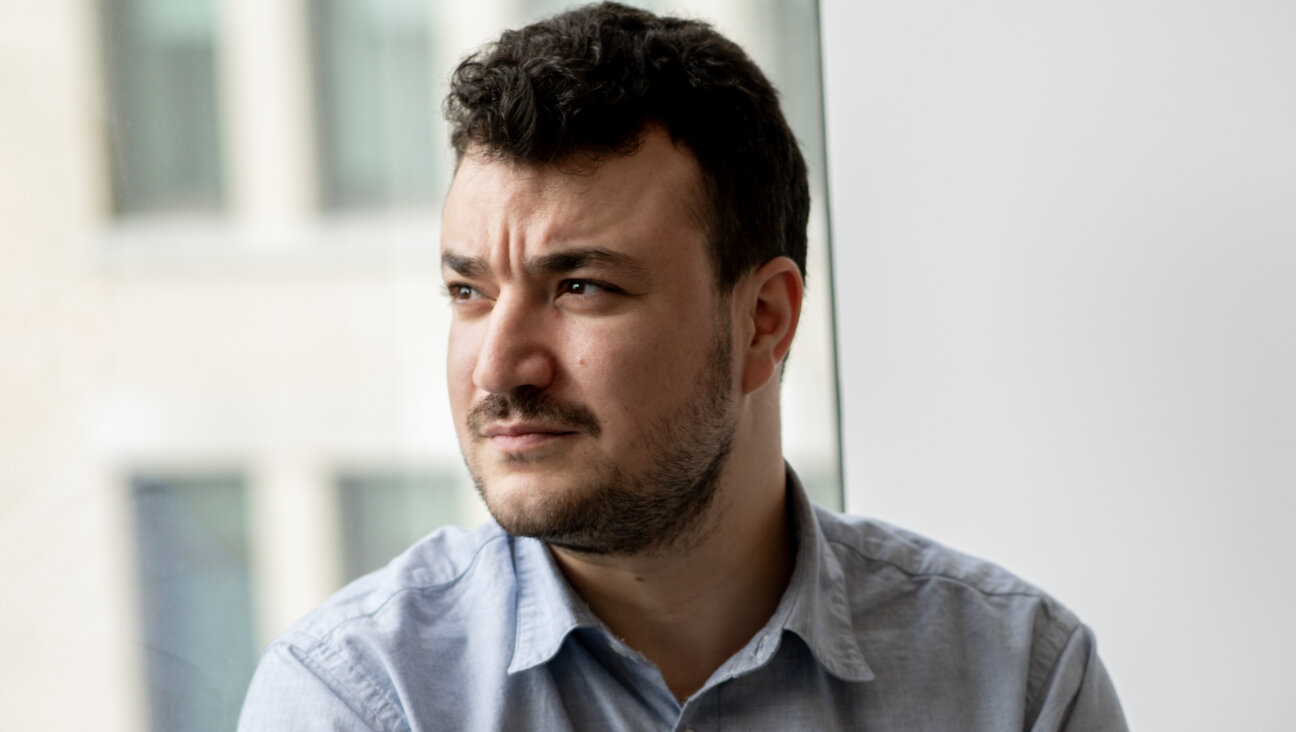
Mahmoud Khalil wants to reassure the Jewish community. In an extensive new interview with the Forward, the pro-Palestinian protest leader recognized “a Jewish connection” to Israel, and promised that a free Palestine would include safety and security for Jewish residents.
And yet I read the interview and felt a sense of alarm.
Not because Khalil seems insincere. I believe he means much of what he says. But rather because his attempts to instill confidence fall short in ways that illuminate exactly why so many Jews remain afraid and skeptical of the anti-Zionist movement.
Serious causes for serious concerns
Khalil describes himself as a pragmatist. In his activism, however, he envisions a utopia.
He is adamant that a two-state solution preserving a Jewish majority in Israel is a nonstarter. He argues, instead, for a democratic country — or multiple countries — across Israel, the West Bank and Gaza, with equal rights for all and the right of return for Palestinian refugees.
“I know it might sound like a very ideal utopia,” he told the Forward‘s Arno Rosenfeld, “but this is what we should aspire for.”
Khalil is concerned that Jewish fear is an obstacle to Palestinian liberation, and suggests that this fear is misplaced. “People think that we want to drive all Jews to the sea,” he said. “We don’t believe that.”
But history has long shown that Jewish safety without Jewish autonomy often proves conditional. In the ideal that Khalil advances, Israel would lose the self-determination that leads so many Jews to view it as a safe haven. My late grandfather, who was deported to a Siberian gulag by the Soviets from Lithuania — where about 90% of his fellow Jews were murdered by the Nazis — put it simply: Israel was a place where he felt his fate was in his own hands.
Nor is apprehension of anti-Zionism misplaced. Report after report has cataloged persistent harassment of Jews, threats of violence against Zionists, and invocations of antisemitic tropes within anti-Zionist movements. Yes, there are moderates, many of whom are driven by a commitment to a better future for Palestinians. But there are also extremists, and scenes on campuses and city streets around the world have shown that their tactics often prevail.
Adding to Jews’ sense of alarm are decades of violence within Israel — including the Second Intifada and Hamas’ Oct. 7, 2023 attack — and globally, including recent violence against American Jewish institutions. Jews are not scared because we misunderstand the aims of the anti-Zionist movement. We are scared for good reason.
Political abstractions
A genuine effort at reassurance would engage with that truth. Instead, Khalil dances around it, suggesting that the thing we’re worried about doesn’t actually exist. He says, for example, that the pro-Palestinian campus movement did a good job of keeping antisemitism at bay. It did not.
Even when it comes to the well-established facts of Hamas’ Oct. 7 massacre, he demurs: “I wouldn’t rule out that Hamas targeted civilians,” he said, “but I wouldn’t confirm it either.”
When referencing the excesses of pro-Palestinian campus protests, Khalil retreated into vague language. “There were maybe some bad actors,” he said. His denunciations of antisemitism remained safely generic: “some anti-Zionist actions may touch on antisemitism that we absolutely oppose.”
Who, exactly, is “we” here?
Political movements are not abstractions. They consist of real people doing real things. When excesses are common enough, they become characteristic. This is something I’ve long argued about the Israeli right as well. We cannot dismiss settler violence or anti-Palestinian abuses as fringe when they keep escalating and enjoy support from those in power.
It’s easy to say you oppose antisemitism or suffering by Palestinians, or that a utopian future is possible if we all look past our fear. It’s much harder to look within your political coalition and call out the specific negative acts your allies have committed — or acknowledge their very real consequences.
Denial and Oct. 7
Circle back to Khalil’s alarming equivocation about Oct. 7.
He frames the killings as civilians being “caught up” in violence, not targeted by it. Notice the evasive grammar: Khalil says “there were crimes committed” and Hamas has “a responsibility,” rather than “Hamas committed crimes.”
Khalil does explicitly say that he thinks Hamas is “not up to the Palestinian aspiration for liberation” and that he “doesn’t believe in political Islam.” But for someone so attuned to the language of liberation and justice, he is remarkably comfortable with passive voice when it comes to Hamas carrying out horrific murders on Oct. 7.
As I’ve previously written, the evidentiary record is overwhelming. Amnesty International and Human Rights Watch, organizations critical of Israel, independently concluded that Hamas deliberately and systematically targeted civilians. In one intercepted call, a Hamas terrorist bragged to his parents, “Look how many I killed with my own hands! Your son killed Jews!”
Neutrality on established facts is no different than denialism. If you are trying to reassure Jews but can’t acknowledge that Hamas killed Jews as such, any reassurance you have to offer will ring hollow.
A practical peace
Khalil says he is opposed to any violence against civilians but cannot dictate what Palestinians who experience Israeli human rights abuses should do. He says he understands why Palestinians turn to resistance, even violence, in the face of oppression.
But if you say you understand why decades of oppression push Palestinians toward resistance, then you should also understand why decades of terrorism push Israelis toward aggressive security measures, including ones that harm Palestinian civilians. If every act is merely a justified reaction to a prior act, we will end up in a world in which it’s too easy to argue that all violence is legitimate, rather than none of it.
The deep culture of mutual suspicion that this painful history has bred may be the biggest obstacle to Khalil’s utopian vision.
I share Khalil’s aspirations for peace. But Israelis, even most liberals, leftists and the millions who have protested the right-wing government, say they won’t accept a one-state solution. One 2025 poll by The Institute for National Security Studies, an independent think tank affiliated with Tel Aviv University, found that only 4% of all Israelis, and 1% of Israeli Jews, prefer a one-state solution with equal rights. Palestinians, too, are skeptical of a single state with equal rights.
At the same time, many Israelis oppose a two-state solution. So do many Palestinians. The people who live in the region hold complicated and often contradictory ideas of the path forward, and Khalil does not necessarily speak on their behalf.
Any anti-Zionist looking to reassure Jews needs to, at minimum, acknowledge that Hamas killed civilians deliberately, because they were Jews; condemn specific instances of antisemitism rather than just the concept in the abstract; and ask why Jews are scared right now, rather than telling us we shouldn’t be.
Yet Khalil’s reticence to be honest about his own movement’s flaws is a mirror of our own. Supporters of Israel have long been reluctant to name the failures of the Israeli right and to reckon with how settlements and the occupation harm Palestinians.
Khalil recounts being born in the Palestinian refugee camp Khan Eshieh in Syria, and raised on stories of his grandparents’ expulsion from a village near Tiberias. He was shot by an Israeli soldier when he was just 16. His effort to nevertheless engage with Israeli perspectives, like by reading Ari Shavit, is admirable. Jews should similarly listen to Palestinian perspectives and sit with Palestinian stories, including Khalil’s and those of Palestinians living today in the West Bank and Gaza.
The only way for any of us to build a durable political movement is to be exactingly honest about the ways in which we have, so far, failed, and to ask others with open ears: Why are you so scared?
This is a moment of great uncertainty. Here’s what you can do about it.
We hope you appreciated this article. Before you go, we’d like to ask you to please support the Forward’s independent Jewish news this Passover. All donations are being matched by the Forward Board - up to $100,000.
This is a moment of great uncertainty for the news media, for the Jewish people, and for our sacred democracy. It is a time of confusion and declining trust in public institutions. An era in which we need humans to report facts, conduct investigations that hold power to account, tell stories that matter and share honest discourse on all that divides us.
With no paywall or subscriptions, the Forward is entirely supported by readers like you. Every dollar you give this Passover is invested in the future of the Forward — and telling the American Jewish story fully and fairly.
The Forward doesn’t rely on funding from institutions like governments or your local Jewish federation. There are thousands of readers like you who give us $18 or $36 or $100 each month or year.

Support our mission to tell the Jewish story fully and fairly.