I’m a Jewish candidate for New York comptroller. Our state must divest from Israel bonds
It is time to stop investing in a government that acts in contradiction to our people’s deepest values

The New York State Capitol in Albany, New York. Photo by DutcherAerials/Getty Images
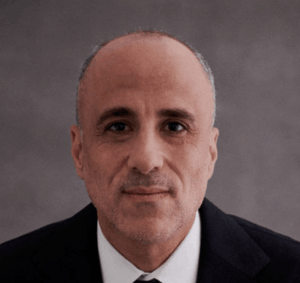
Drew Warshaw April 10, 2026
The New York state and local retirement fund owns $368 million in Israel bonds. Most state pension funds own none. And most New Yorkers have no idea that their tax-funded pension fund, as invested by State Comptroller Tom DiNapoli, helps finance Israeli Prime Minister Benjamin Netanyahu’s wars.
As an American Jew and as a candidate for New York state comptroller, I want to offer why I have committed, as part of my campaign, to divest this stake.
We have just finished observing Passover, our people’s essential story of freedom. It is also a story of reckoning. As we read through the book of Exodus, we learn that a walk that would normally have taken four weeks took 40 years as our ancestors wrestled with God and false idols, with each other and with themselves. Because liberation required reckoning — an entire generation of it — so the children of these refugees could understand that freedom comes not just with power but also responsibility.
This Passover gave us many reasons to reckon with our own power and responsibility.
Our country has been at war. Again. Our president has turned mask-wearing, rifle-wielding agents on our own people. Our politicians talk tough in echo chambers designed to echo louder and louder.
And as American Jews at this moment, many of us are also reckoning with Israel.
When I take on that reckoning, a word repeated ritually at our Seder comes to mind: “dayenu.” A word so sacred to me — meaning “it would have been enough for us” — that it is engraved on the Star of David I wear around my neck.
But it rang differently for me this year. Instead of hearing “dayenu” as an expression of gratitude for every single step of God’s deliverance, the word hit me like a piercing shofar blast, crying: “enough is enough!”
When is enough today?
Responding to the Hamas massacre of its civilians on Oct. 7, 2023, Israel said it would do what any country would do: defend itself and get its hostages back. But Netanyahu’s government has gone much further than that. It has unleashed overwhelming killing power, leaving tens of thousands of Palestinian civilians dead and millions more displaced and destitute. It has leveled a stretch of land the size of Brooklyn and Queens — dropping nearly as many bombs in that crowded space in the first week of fighting as fell during an entire year of the U.S. war in Afghanistan.
It has also sponsored a newly energized and brutal expansion of settlements in the West Bank; just this week, the government approved 34 new settlements. And it has now invaded Lebanon after joining the U.S. in a bombing war against Iran.
The images from the massacre and trauma perpetrated by Hamas haunt me. But the Jewish values I grew up with — like tikkun olam (repairing the world) and ha lachma anya (the Seder’s call to offer what we have to those whose needs are greater) — could never justify responding to this trauma with such overwhelming cruelty. We have witnessed blockades and starvation; the cutting off of medical supplies; and the murder and displacement of children and families.
New York state must not enable or be complicit in such human misery any longer.
Our current state comptroller, who has been in office since 2007, does not see it that way. He continues to use New Yorkers’ money to finance Netanyahu’s war machine. He purchased an additional $20 million in Israel bonds after Oct. 7, and chose not to sell them as Israel’s government ravaged Gaza. The present campaign, in which Democratic voters will be able to cast a primary vote against DiNapoli for the first time in 20 years, gives us the opportunity to make a different choice.
We can and must divest our public pension fund’s stake in financing Israel’s government, and from all other foreign governments. (New York state holds stakes in just three other countries: Saudi Arabia, Jordan and Canada, a degree of selectivity that suggests no coherent strategy). And we can do so now instead of waiting decades for these bonds to mature, as some of my opponents in this primary have proposed.
This makes financial and moral sense. The record amount of Israel debt DiNapoli has amassed — it currently makes up 80% of all foreign government debt owned by our pension fund — poses a concentration risk.
But concentration risk aside, there has to be a point when we reach our own limit, when we say enough is enough. If not, we lose what it means to be human. As humans, with God-given freedom and the responsibility that comes with it, we face the reality that the merciless policies of Netanyahu’s government represent a moral catastrophe, and New York state cannot continue to finance them.
The words of Exodus 23:9 leap off the page: “No stranger shall you oppress, for you know the stranger’s heart, since you were strangers in the land of Egypt.” This is our call, as Jews, to fight for the stranger wherever they may be.
If you have the power to do something about it, you do it. And if you don’t have the power, you fight for it.
This is a moment of great uncertainty. Here’s what you can do about it.
We hope you appreciated this article. Before you go, we’d like to ask you to please support the Forward’s independent Jewish news. All donations are still being matched by the Forward Board - up to $100,000 until April 24.
This is a moment of great uncertainty for the news media, for the Jewish people, and for our sacred democracy. It is a time of confusion and declining trust in public institutions. An era in which we need humans to report facts, conduct investigations that hold power to account, tell stories that matter and share honest discourse on all that divides us.
With no paywall or subscriptions, the Forward is entirely supported by readers like you. Every dollar you give is invested in the future of the Forward — and telling the American Jewish story fully and fairly.
The Forward doesn’t rely on funding from institutions like governments or your local Jewish federation. There are thousands of readers like you who give us $18 or $36 or $100 each month or year.

Support our mission to tell the Jewish story fully and fairly.