Viktor Orbán may fall. Netanyahu should be next
What Israel has to learn from Hungary’s pending election

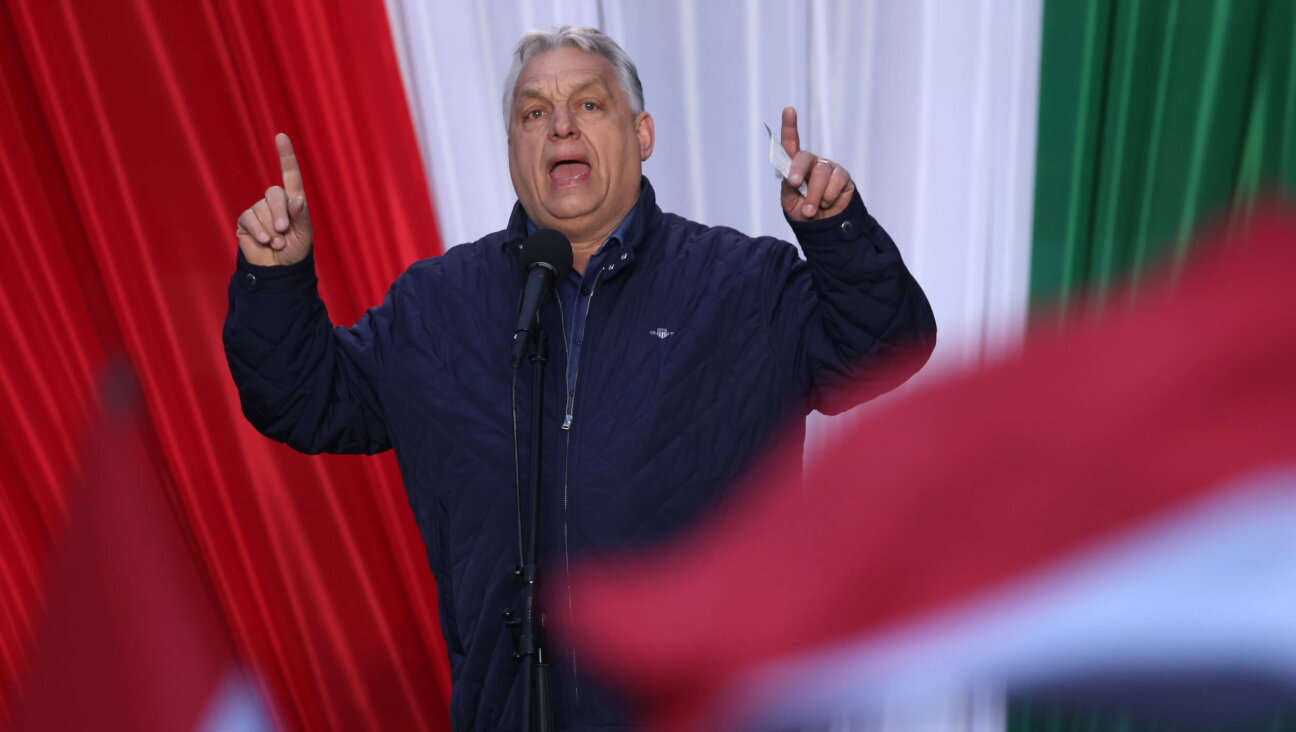
Hungarian Prime Minister Viktor Orbán speaks to voters at an election campaign rally two days before parliamentary elections on April 10. Photo by Sean Gallup/Getty Images

Columnist Dan Perry April 11, 2026
At first glance, Hungary may seem like a small central European country with limited relevance to Israel. But political trends can cross borders, and a shift in one society might herald something broader.
The defeat that polls are predicting for Prime Minister Viktor Orbán, a towering icon of the global populist right, could spell trouble for Israeli Prime Minister Benjamin Netanyahu as well.
For 16 years, Orbán has been widely seen as the most successful architect — indeed the prophet — of illiberal democracy, devising a system that preserves elections but systematically tilts the playing field, turning a country’s leader into a seemingly elected authoritarian.
Since returning to power in 2010 — like Netanyahu, Orbán also served a term starting in the 1990s — Orbán’s party, Fidesz, has rewritten constitutional rules, weakened the judiciary, neutered institutional checks, cultivated a loyal media ecosystem, and fused political power with economic patronage.
Orbán has also pumped out an obsessive narrative whereby the Hungarian nation is in danger from progressives, cosmopolitan Europeans, migrants and Muslims — dangers that, naturally, only Orbán can see clearly and fight well. The meta-narrative, bizarre in currently peaceful Europe, is one of constant crisis, of nerves ever on edge.
And it has worked wonders, yielding something that looks like democracy while functioning as autocracy.
Until now.
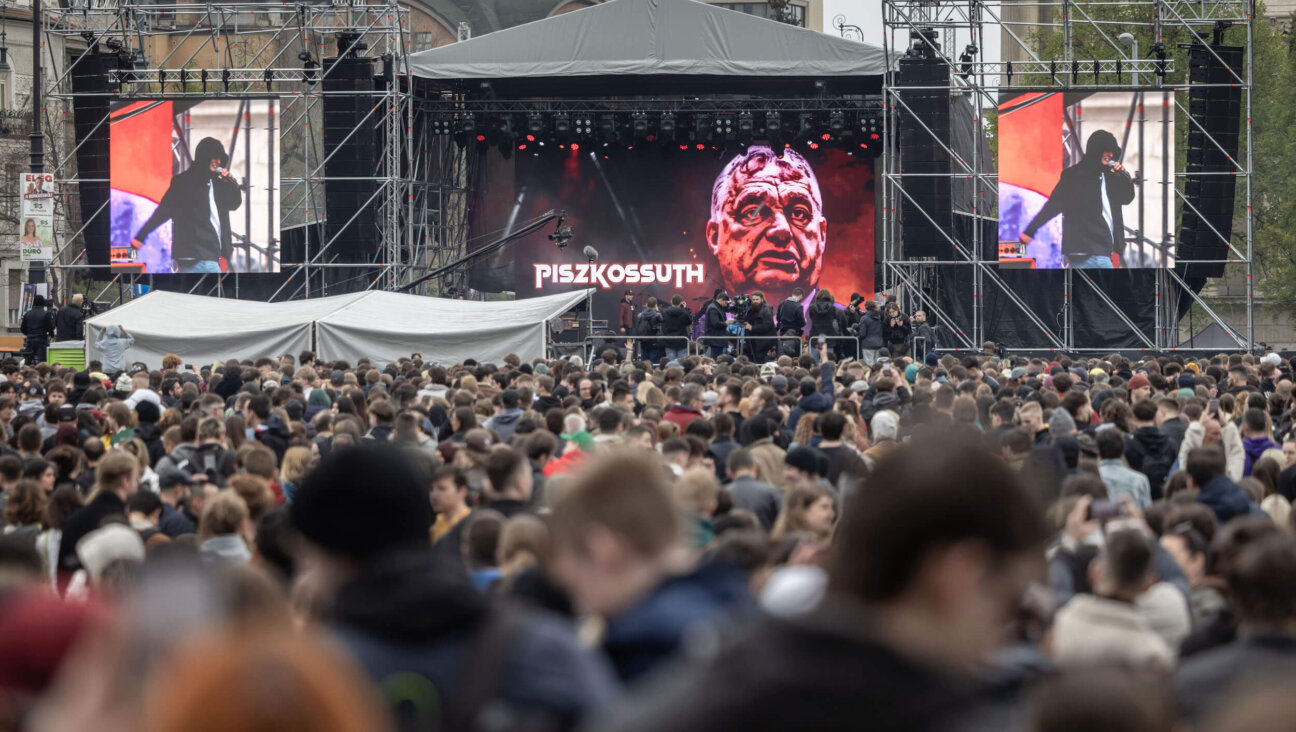
If Orbán loses this weekend’s election, his defeat will send a message across the world and particularly to Israel, where Netanyahu has carefully followed his model.
Populist systems thrive on polarization. They convert politics into a series of existential battles — identity, culture, survival. In such an environment, challengers who attempt to outbid the populist in ideological intensity often fail. They reinforce the terrain on which the incumbent is strongest.
Orbán’s defeat would show that what can prove more effective is something quieter: a shift away from ideological maximalism toward questions of competence, propriety and everyday governance.
An almost-perfect system
When perfected, the opposition in the kind of system Orbán pioneered has an almost impossible time returning to power. Admirers around the world have looked to Hungary not for its economic model or foreign policy, but for a blueprint for how a modern elected leader can entrench himself so deeply that removal through the ballot box becomes nearly impossible.
For years, Orbán’s system appeared invincible. He was reelected in 2014, 2018, and even in 2022, amid inflation and economic strain, and facing a rare unified opposition. He succeeded in amplifying a narrow majority in the last election into almost a two-thirds majority in parliament through districting and electoral “reforms” which he had put in place during his previous terms.
The lesson drawn by many observers — supporters and critics alike — was that once entrenched, such leaders do not lose, since the system becomes self-reinforcing. But now that certainty has begun to fray.
Israelis will recognize the contours of that story.
Over the past decade or so, as Netanyahu began to face serious legal trouble that has since landed him in court on bribery and other charges, his mania for holding on to power went into overdrive — and he adopted the Orbán playbook with precision.
Israelis have witnessed sustained attacks on the judiciary; efforts to restructure the balance of power; the delegitimization of legal and media institutions; and a politics increasingly organized around permanent cultural and existential conflict. During the last vote, in 2022, Netanyahu largely hid his intention to drag the country in this direction; should he win again, this will be interpreted as a mandate. The “Orbánization” will go into overdrive.
Israel has not yet become Hungary: its institutions remain more pluralistic, its media more combative, its political system more fragmented. But the direction of travel is clear.
How the system fails
In early 2024, a controversial Orbán-engineered presidential pardon — linked to a figure associated with a child abuse case — punctured his carefully cultivated image of moral authority and care for traditional values. It was simply, for many, too much.
Into that breach stepped challenger Peter Magyar, who is not a traditional opposition figure, which is a key point. Magyar comes not from Hungary’s fragmented liberal camp, but rather from within Orbán’s own orbit. A former insider of Orbán’s Fidesz party, Magyar understands the machinery. His political movement, the Tisza Party, rose with remarkable speed, transforming into a credible electoral force within months. It currently has a growing lead in the polls.
Perhaps the most important aspect of Magyar’s rise is how he has campaigned. Previous Hungarian opposition efforts focused heavily on abstract democratic principles, including rule of law, institutional checks and media freedom. These are vital issues. But against Orbán’s emotionally charged narratives or sovereignty and national survival, they failed to mobilize a broad electorate.
Magyar instead has traveled extensively, visiting hundreds of towns and villages, engaging with practical grievances: failing public services, rising costs and bureaucratic dysfunction. The implication is that Orbán has hubristically lost touch. Magyar’s message has been almost technocratic in tone: He wants, he says, to make the state function again for ordinary citizens with regular concerns.
If Orbán were to lose, it would be, in effect, because Magyar is a centrist with practical, citizen-focused ideas — sidestepping entirely the identity issues that Orbán peddles.
The lesson for Israel
Magyar cannot easily be dismissed as alien or threatening by Orbán’s base. For Israelis contemplating a post-Netanyahu future, this is instructive.
For years, one of Netanyahu’s greatest political strengths has been his ability to frame opponents as fundamentally “other” — as disconnected from national priorities, or as representatives of a different, even suspect, ideological camp. A challenger who reframes the conversation — toward competence, integrity and the basic functioning of the state — may find a different kind of opening.
Hungary and Israel are not the same; the dangers Netanyahu weaponizes politically are vastly more acute. But he and Orbán represent something that has been widespread around the world: a rebellion against the establishment, and a message that says an elected government can do close to anything it wants in the name of “the people.”
It is a proposition that exists at the most vulgar democratic baseline: that of majority rule. It cares little for the niceties of liberal democracy: checks and balances, rule of law, minority rights, equality under the law, guaranteed protections and individual freedoms.
Orbán’s genius, eagerly embraced and copied by Netanyahu, has been to convince enough people that majority rule is basically all that matters. Majority rule is critical when one is attacking the establishment, the elites, the intellectuals, the journalists, the professors, the experts, and the judges who preside at one’s trial.
If Orbán loses on Sunday, it could bode ill for Netanyahu in the Israeli election that must be held by October, and good for a world that desperately needs to return to a more nuanced understanding of how government is supposed to work. It would suggest that the fever that sustains Orbán and Netanyahu alike has started to break.
This is a moment of great uncertainty. Here’s what you can do about it.
We hope you appreciated this article. Before you go, we’d like to ask you to please support the Forward’s independent Jewish news. All donations are still being matched by the Forward Board - up to $100,000 until April 24.
This is a moment of great uncertainty for the news media, for the Jewish people, and for our sacred democracy. It is a time of confusion and declining trust in public institutions. An era in which we need humans to report facts, conduct investigations that hold power to account, tell stories that matter and share honest discourse on all that divides us.
With no paywall or subscriptions, the Forward is entirely supported by readers like you. Every dollar you give is invested in the future of the Forward — and telling the American Jewish story fully and fairly.
The Forward doesn’t rely on funding from institutions like governments or your local Jewish federation. There are thousands of readers like you who give us $18 or $36 or $100 each month or year.

Support our mission to tell the Jewish story fully and fairly.