How my first trip to Israel led to ‘The First Ever Yiddish Show in Egypt’
A fear of flying and an anti-Zionist upbringing kept singer Riki Rose grounded
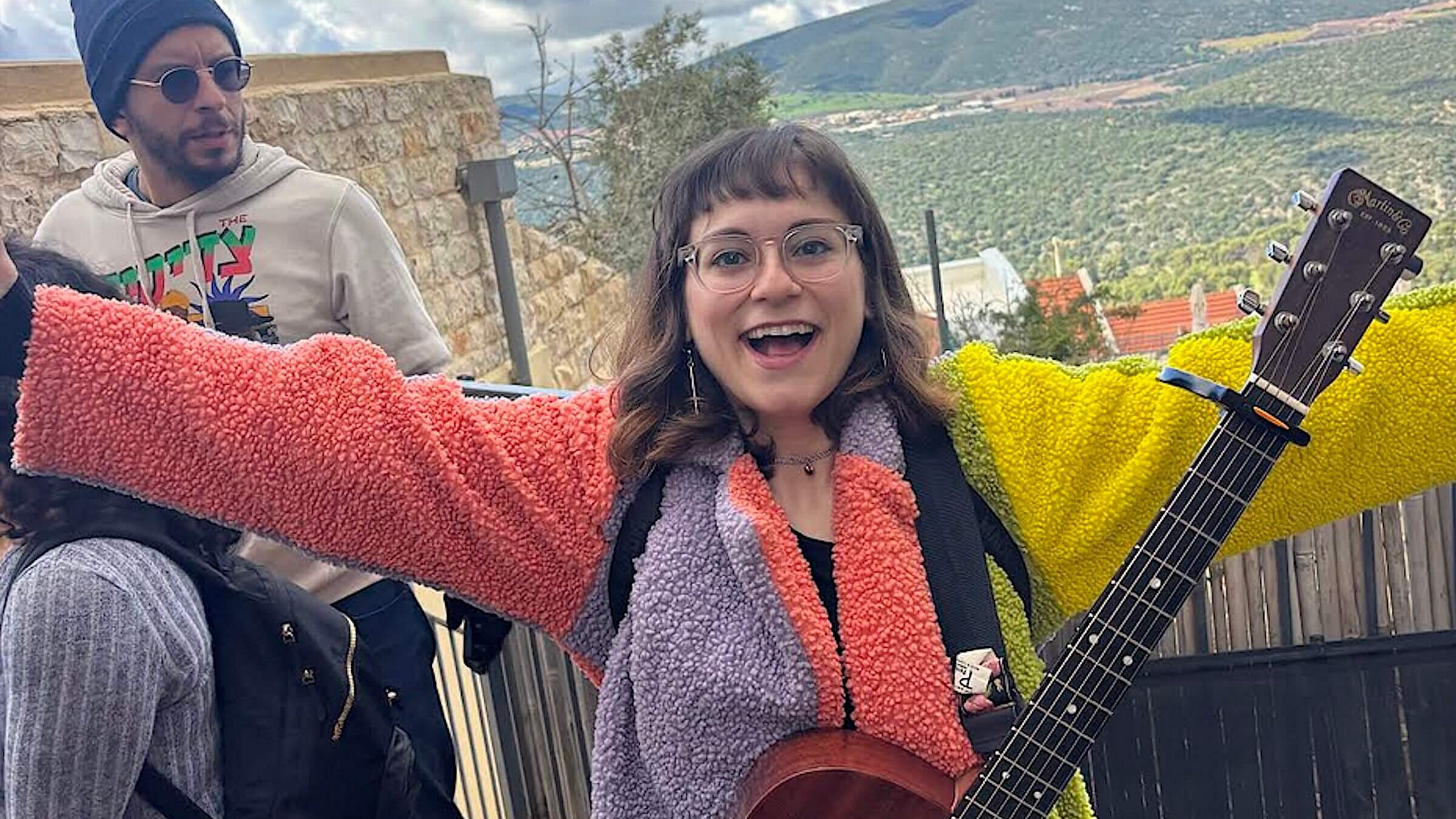
Rki Rose in Tzfas (Safed), Israel Courtesy of Riki Rose
As one who has been eager to build a career in music and comedy online, I began to notice that about 25% of my views were coming from Israel. Messages started pouring in.
Friends who lived there told me people were talking about me. Promoters reached out about shows.
“When are you coming to Israel?”
But a severe fear of flying — and an anti-Zionist Satmar upbringing that included the burning of Israeli flags on Purim — grounded me. Then I booked a gig in Poland, a big step. If my career was going to grow, I couldn’t avoid overseas flights forever.
A few days later, Rabbi Dov Oliver called. The rabbi of Hillel of Rockland County, New York has been trying for years to persuade me to visit the Jewish State.
“Come on my Israel trip,” he said.
“If I can take one night off to do a show, I’m in,” I replied.
“Of course.”
And just like that, my first trip to Israel was happening.
We announced the show and tickets started selling immediately. Within days, dozens were gone and then it sold out. People were begging me for tickets.
The flight, however, was a nightmare. My seat was cramped, near the bathrooms, with barely any legroom and no window. Panic hit instantly. Every cell in my body screamed to run off the plane.
The anxiety came in waves for 11 hours. I cried, paced the aisles, talked with friends and flight attendants, and breathed through it.
Finally we landed. When the plane touched down in Israel, people started singing: “Hashem yitbarach tamid ohev oti” (“God Almighty always loves me”).
I cried again — this time from relief.
At the airport, a soldier greeted me and said she loved my videos. I kissed the ground outside, like the tzadikim, the holy righteous people, were said to do.
Israel immediately felt intense — beautiful mountains, Hebrew letters everywhere, ancient streets. In the cities of Tzfas and Miron, the birthplace of the kabbalah, I felt comfortable among Hasidim, amid the mystical nature of the place.
Other parts felt foreign: army bases, modern Israeli culture, the constant awareness of war.
We volunteered a lot — packing food, planting flowers. Painting a bomb shelter in a school was sobering.
But the moments that touched me most were simple ones: singing to elderly Yiddish speakers in a hospital, dancing with soldiers, and performing Shabbos songs in the shuk where crowds gathered around.
Then I went to the Kotel.
The moment I touched the Wall I burst into tears. I prayed for my family, for peace, and for inner calm.
Standing there, I realized something: Somehow, despite everything, I belonged here.
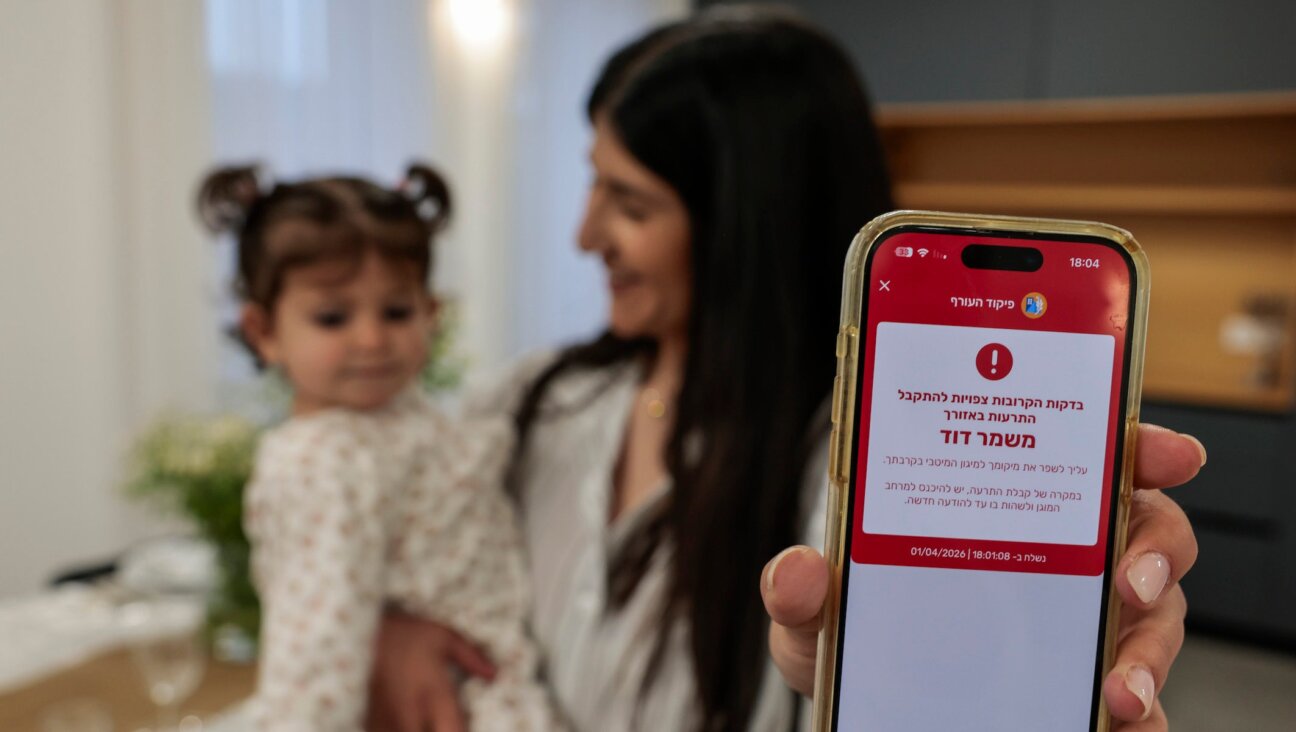
My show was scheduled for a few days later. But early that Shabbos morning, we woke to sirens.
War had escalated. We were rushed into bomb shelters. Birthright decided to evacuate us from Jerusalem to the Dead Sea.
My show was canceled.
I was devastated, but also strangely calm. War doesn’t care about your plans.
Soon we were evacuated again — this time out of the country through Egypt. At the hotel in Taba, surrounded by Birthright groups from all over the world, I had an idea. Why not do the show here?
The rabbi loved it. A flyer went out: “The First Ever Yiddish Show in Egypt.”
The setup was far from glamorous. No sound system, terrible acoustics, and we were competing with a belly dancer performance down the hall.
But I had my guitar. I sang with everything I had. People clapped, joined in, and some even played along on makeshift instruments.
It wasn’t the show I imagined. But somehow it was perfect.
From Egypt we flew to Greece, where we spent Purim together with Jews from around the world. In a random hotel in Athens we read the Megillah, booed Haman, and danced in the lobby until security shut us down.
Finally, after flights through Switzerland, we made it back to Newark.
The trip didn’t turn me into a political expert or a passionate Zionist. But something deeper happened. I fell in love with the place.
Israel feels messy, intense, spiritual, chaotic. And somehow, despite everything, like home.
This is a moment of great uncertainty. Here’s what you can do about it.
We hope you appreciated this article. Before you go, we’d like to ask you to please support the Forward’s independent Jewish news this Passover. All donations are being matched by the Forward Board - up to $100,000.
This is a moment of great uncertainty for the news media, for the Jewish people, and for our sacred democracy. It is a time of confusion and declining trust in public institutions. An era in which we need humans to report facts, conduct investigations that hold power to account, tell stories that matter and share honest discourse on all that divides us.
With no paywall or subscriptions, the Forward is entirely supported by readers like you. Every dollar you give this Passover is invested in the future of the Forward — and telling the American Jewish story fully and fairly.
The Forward doesn’t rely on funding from institutions like governments or your local Jewish federation. There are thousands of readers like you who give us $18 or $36 or $100 each month or year.
Support our mission to tell the Jewish story fully and fairly.