How one Sephardi synagogue is dealing with Covid

Graphic by Angelie Zaslavsky
It was a delightful spring morning, warm, breezy, sunny, a perfect day for the park, the beach, or a picnic. We were enjoying the weather, sitting comfortably, some of us sipping coffee or tea. But we were not in a park or a beach. We were outdoors at our synagogue, Beth Abraham, in Brookline.
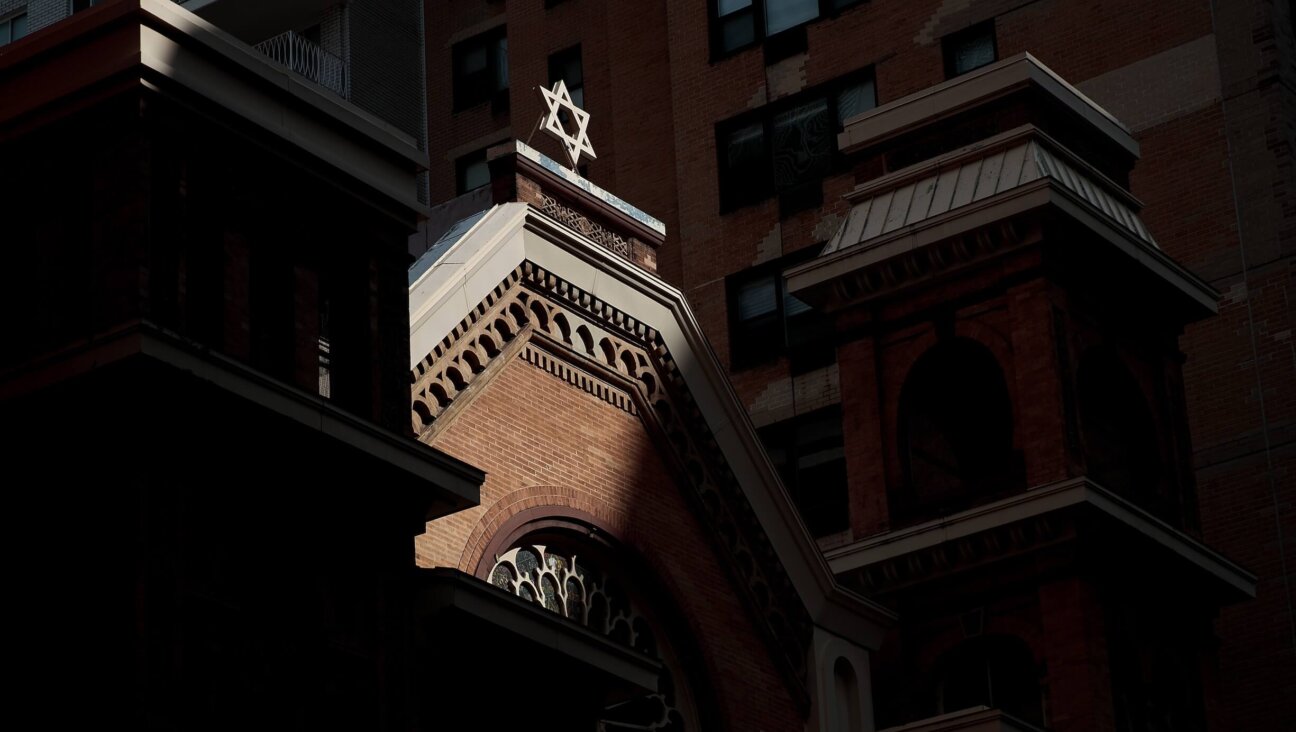
We are a traditional Sephardic synagogue “nestled” among other synagogues in Brookline. We held services every day until we were shuttered by the governor’s order closing us down in March. Jewish synagogue goers have many motivations for their attendance. And whatever needs this attendance might fulfill, it is a shock to the system whenever a deeply ingrained habit is met by a closed — literally. Some actually enjoyed the extra sleep, but the broken daily structure began to take its effect. Some groups actually held “underground” services, reminiscent of those held illegally in Spain or other places, but for very different reasons.
Synagogues reopened in May, and those choosing not to function electronically had to figure out how to manage in the new conditions. We decided to abandon our pre-set seating for the benefit of a large open space in our social hall where people could sit apart. Knowing the government’s dissuasion for indoor gathering, we explored moving out to a small front yard. Our synagogue would almost fit in the coatroom of many of the large temples in greater Boston, so our yard would be virtually in the street — but a very friendly street.
So, we set up a privacy screen using the walls of our Sukkah. And with some procedural modifications, our outdoor services began.
Even though the Jewish calendar speaks only about dew in the summer, it does rain in America. Tents were next, and, as the sun does set, lighting was also installed.
No one was prepared for the final effect. All we needed were pennants on top of the tents for it to appear like an outdoor wedding, a sporting event, or a lavish picnic. It felt especially festive, and when the lights were on, it gave the atmosphere of an evening celebration. But it was for Jewish services.
For some of our Mizrahi congregants, it was a bittersweet reminiscence of being in the open-air courtyards of our synagogues in places like Iraq, Iran, Egypt, or Libya. There we had high walls to protect us from the sometimes-hostile view of the Muslim population.
Here in Brookline, we only had to get used to the curious looks of passersby who had never seen a group of Jews praying with tallitot and tefillin and singing in a language they had not heard.
Another reason we love America: We were never molested. The only argument we ever had was with a Jewish man walking his dog who claimed that we were blocking the way. Our chairs had “crept” out onto the sidewalk, just like city dwellers’ do on a hot summer day.
We had to adapt to our new ecosystem. We were partners with the open air, the uneven ground, the birds, the trees, the squirrels, and the dogs. And we had to make peace with the trucks, police cars, sirens, motorcycles, delivery vehicles, and the shofar blasts of neighboring synagogues.
Whereas a place of worship seeks to create a private inner space suitable for meditation and introspection, praying outdoors was an equally meaningful exercise that we are a part of the greater community and the world around us. Jews live in both perspectives.
We sat comfortably distant outdoors; individuals wore masks and put their chairs as far as their safety comfort level dictated. We all felt safer, sensing the breeze blow away any possibly tainted air. And, we congenially kept our communal intimacy connected through our common prayers.
An especially striking experience came with the holiday of Sukkoth. We were practically already dwelling in Sukkoth as the Torah required. We only had to add the appropriate roofing, the sechach to one of our tent sections. True to form, a “mighty wind” came upon our space and brought down some of our structures, making a very visual demonstration of the Sukkot message that we choose to live in flimsy structures to demonstrate our faith in the protection of God. And the actual Sukkah we built did remain upright.
We are still outdoors as long as the weather allows. In it for the long haul, we know of some synagogues that have set up restaurant-type gas heaters. We hope that we will be able to repeat the pleasant parts of the experience next spring by choice and not by public health directive.
Dr. David Sheena is a founder and the presidentemeritus of Beth Abraham, the Sephardic Congregation of New England in Brookline, Massachusetts.
This is a moment of great uncertainty. Here’s what you can do about it.
We hope you appreciated this article. Before you go, we’d like to ask you to please support the Forward’s independent Jewish news this Passover. All donations are being matched by the Forward Board - up to $100,000.
This is a moment of great uncertainty for the news media, for the Jewish people, and for our sacred democracy. It is a time of confusion and declining trust in public institutions. An era in which we need humans to report facts, conduct investigations that hold power to account, tell stories that matter and share honest discourse on all that divides us.
With no paywall or subscriptions, the Forward is entirely supported by readers like you. Every dollar you give this Passover is invested in the future of the Forward — and telling the American Jewish story fully and fairly.
The Forward doesn’t rely on funding from institutions like governments or your local Jewish federation. There are thousands of readers like you who give us $18 or $36 or $100 each month or year.
Support our mission to tell the Jewish story fully and fairly.