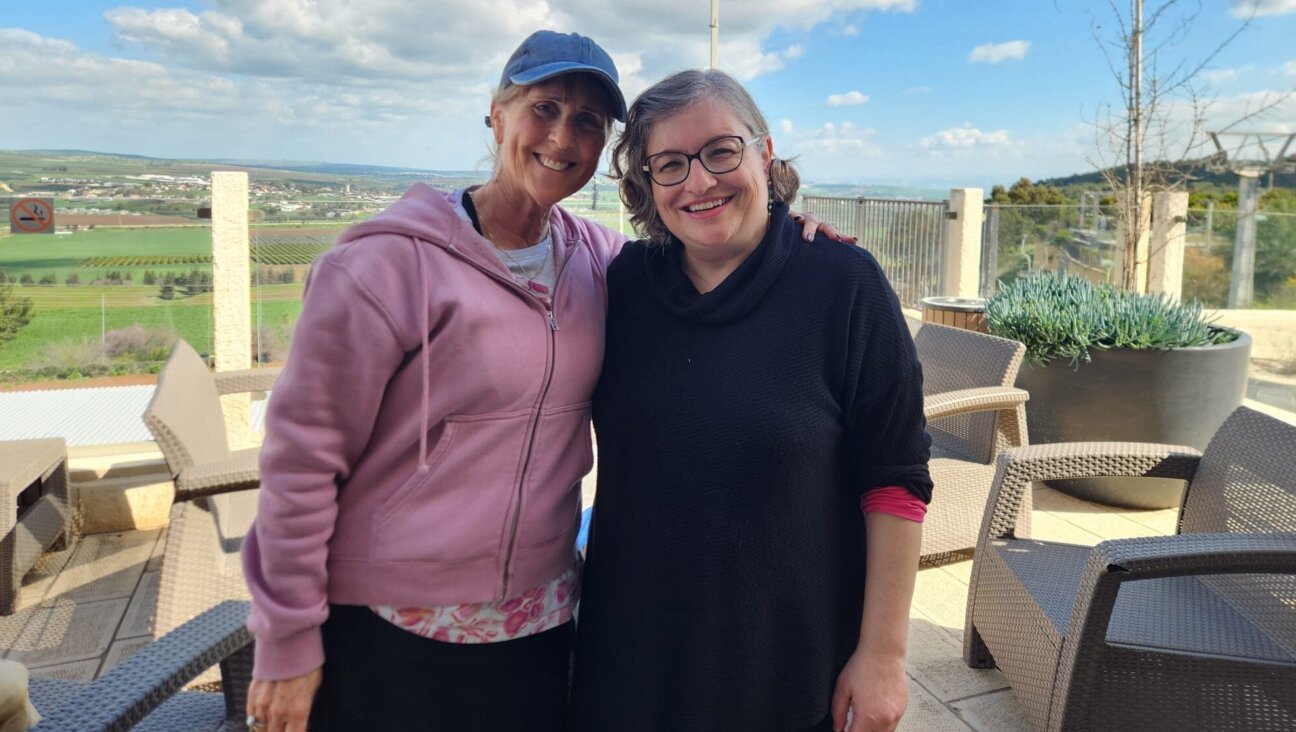
Sarah Bunin Benor

Image by Hebrew Union College
While working in the library as a college student, Sarah Bunin Benor stumbled upon references to Judeo-Italian and other Jewish languages she’d never heard of before. This discovery inspired her to become a sociolinguist and study Jewish languages around the world and close to home. Her book, “Becoming Frum: How Newcomers Learn the Language and Culture of Orthodox Judaism,” which was published late last year, shows how newly Orthodox Jews in America express their religious identity in part by adopting linguistic usages that characterize the communities they have joined.
In “Becoming Frum,” which was awarded second place in the Jewish Book Council’s prestigious Sami Rohr Prize for Jewish Literature, Benor illustrates the unique way in which American Jewish speech exists on a continuum — the more one wants to stress one’s Jewish ritual observance, the more one’s speech tends to deviate from standard American English. This is why a BT (Ba’al Teshuvah, a Jew who becomes Orthodox) will employ different speech patterns from someone who grew up Orthodox, or in the common parlance of some Orthodox communities, as FFB (Frum From Birth).
Benor founded the Jewish English Lexicon as an “Urban Dictionary of Jewish language” to track words derived from various Jewish languages that Jews use even when they are speaking English.
An associate professor of contemporary Jewish studies at the Hebrew Union College-Jewish Institute of Religion’s Los Angeles campus, Benor, 38, was also an active member of the advisory panel for the Pew Research Center’s survey of American Jews. As she notes, “Language is a fascinating lens through which we can learn about a community.”
This is a moment of great uncertainty. Here’s what you can do about it.
We hope you appreciated this article. Before you go, we’d like to ask you to please support the Forward’s independent Jewish news this Passover. All donations are being matched by the Forward Board - up to $100,000.
This is a moment of great uncertainty for the news media, for the Jewish people, and for our sacred democracy. It is a time of confusion and declining trust in public institutions. An era in which we need humans to report facts, conduct investigations that hold power to account, tell stories that matter and share honest discourse on all that divides us.
With no paywall or subscriptions, the Forward is entirely supported by readers like you. Every dollar you give this Passover is invested in the future of the Forward — and telling the American Jewish story fully and fairly.
The Forward doesn’t rely on funding from institutions like governments or your local Jewish federation. There are thousands of readers like you who give us $18 or $36 or $100 each month or year.
Support our mission to tell the Jewish story fully and fairly.