Photo EssayAn Illustrated Diary of Israel After The Six Day War
After the dig, we volunteered at Kibbutz Alumot in the north. Harvesting olives was the best job ever. It was so peaceful in the ancient grove, with breezes from the Sea of Galilee cooling us.
Photo EssayAn Illustrated Diary of Israel After The Six Day War
While fighting raged during the Six Day War, I felt compelled to apply to volunteer in Israel – to do work that soldiers would have been doing. The war ended in a miraculous six days, but the Jewish Agency decided to bring us to Israel anyway. I spent a year in three different parts of the country: the Negev, the Galilee and Jerusalem. Here I present some of my most vivid memories from that year.
Katherine Janus Kahn is the illustrator of more than 50 books, all for Jewish children, including the “Sammy Spider” series.
1 / 10
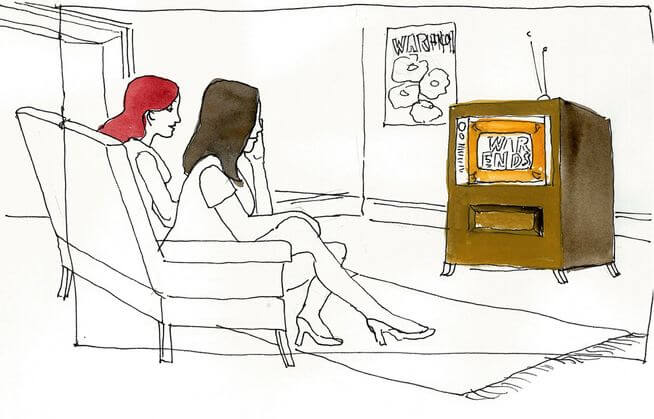
My college roommate Margaret had been to Israel. My family had never mentioned it. During the Six Day War she had the TV going the whole time. Her enthusiasm for the country and the stirring news made me want to go. She called it my “religio-identification crisis.” I left in August on the first airplane to fly to the United States from Israel after the war. Photo by Katherine Janus Kahn
2 / 10
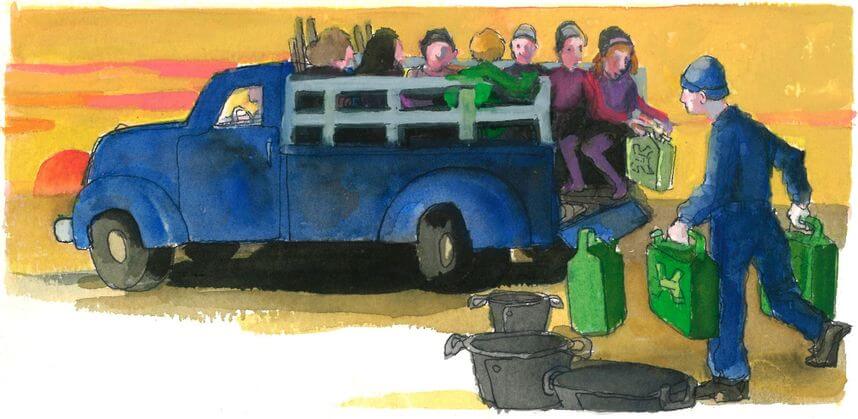
Dawn and a quick breakfast before packing jerry cans of water, black-dirt buckets and tools, and ourselves into the truck for a half-hour trip to the dig. We were searching for the Lost City Of Arad. Photo by Katherine Janus Kahn
3 / 10
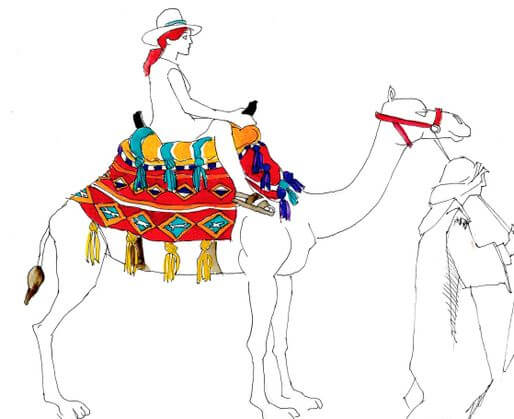
I vividly remember riding a camel at the camel market in Beersheba. Photo by Katherine Janus Kahn
4 / 10
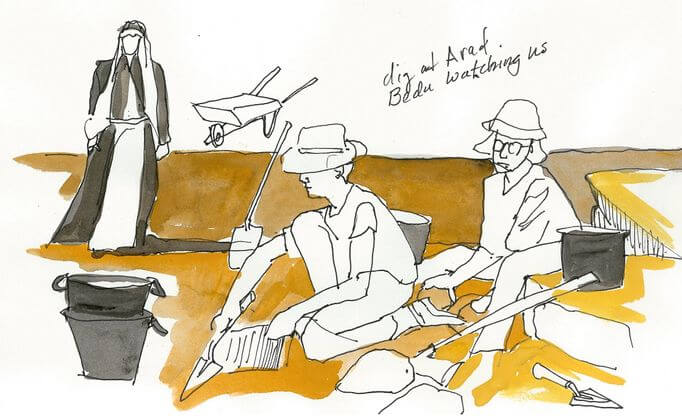
A Bedouin man came to our dig every day to guard his grandmother’s bones. He was also an entrepreneur, selling us soda. It was a great boon in the dry desert. Photo by Katherine Janus Kahn
5 / 10
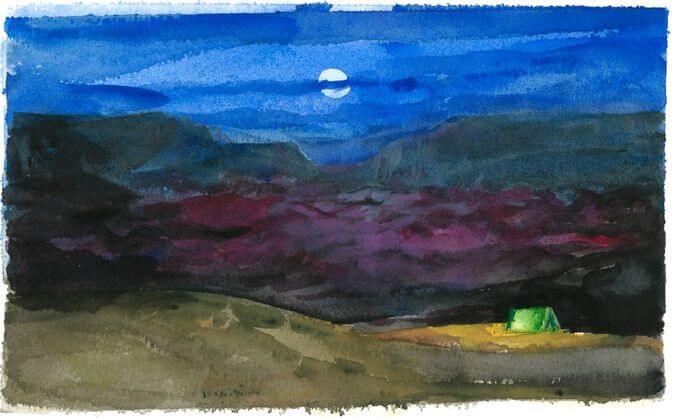
After a hard day’s work under a blazing sun, the Negev offered cool air and an absolute silence. We listened to Arab music on the radio after dark. Photo by Katherine Janus Kahn
6 / 10
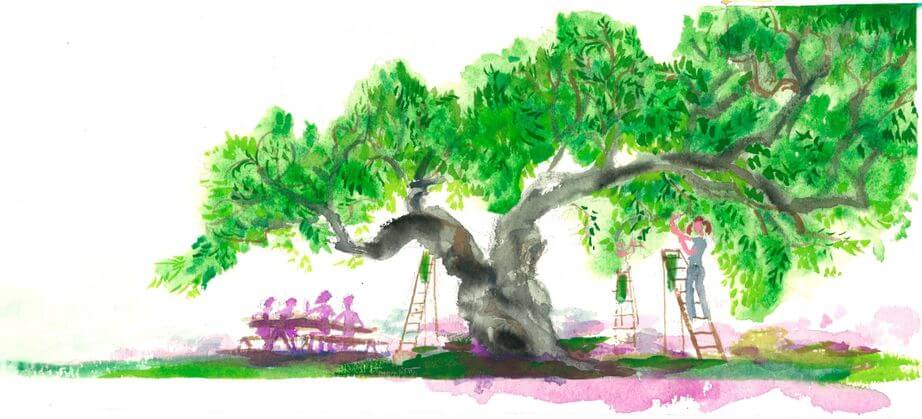
After the dig, we volunteered at Kibbutz Alumot in the north. Harvesting olives was the best job ever. It was so peaceful in the ancient grove, with breezes from the Sea of Galilee cooling us. Photo by Katherine Janus Kahn
7 / 10
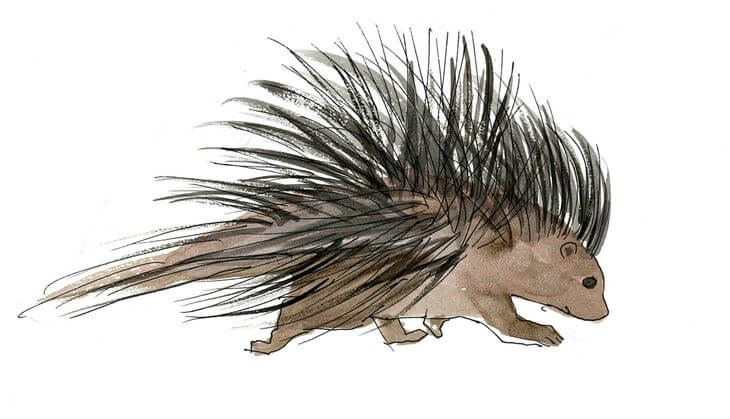
A Bedouin family lived on the kibbutz lands during the summer. One day the uncle was visiting from Beersheba, and a few of us were invited to a porcupine feast. We watched him trying to kill the porcupine. We begged off. Photo by Katherine Janus Kahn
8 / 10
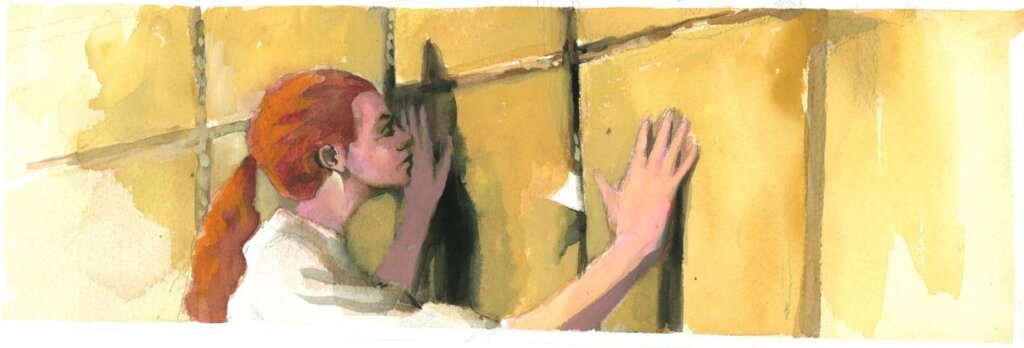
Lastly, we attended the Bezalel School Of Art in Jerusalem. The love of the city was palpable in both Arabs and Jews. In that precious time, reconciliation felt possible. I went to the wall often, and put my own prayers for peace in the crevices. Photo by Katherine Janus Kahn
9 / 10
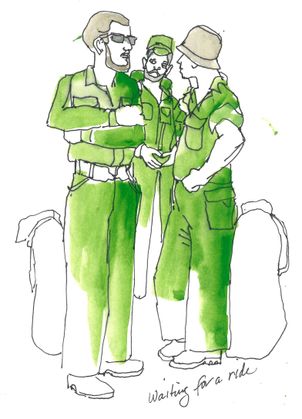
My friend Maddy and I hitchhiked everywhere. Soldiers were picked up first for rides, but we always got where we wanted to go. We were invited to eat lunches and dinners at whatever kibbutz we passed. Photo by Katherine Janus Kahn
10 / 10
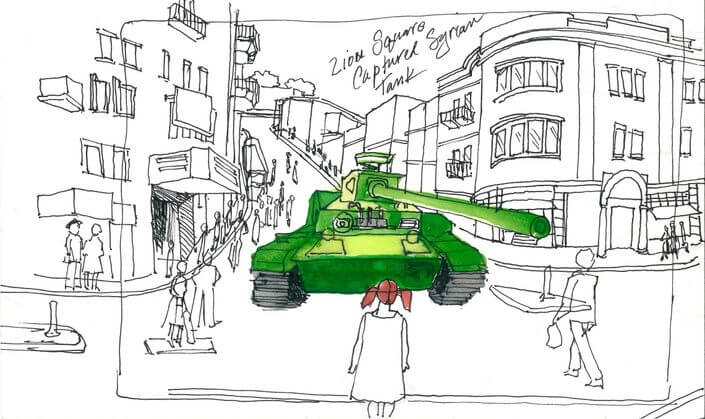
We frequented the falafel stands in Zion Square for lunch. One day I found myself confronting a captured Syrian tank. Photo by Katherine Janus Kahn
This is a moment of great uncertainty. Here’s what you can do about it.
We hope you appreciated this article. Before you go, we’d like to ask you to please support the Forward’s independent Jewish news this Passover. All donations are being matched by the Forward Board - up to $100,000.
This is a moment of great uncertainty for the news media, for the Jewish people, and for our sacred democracy. It is a time of confusion and declining trust in public institutions. An era in which we need humans to report facts, conduct investigations that hold power to account, tell stories that matter and share honest discourse on all that divides us.
With no paywall or subscriptions, the Forward is entirely supported by readers like you. Every dollar you give this Passover is invested in the future of the Forward — and telling the American Jewish story fully and fairly.
The Forward doesn’t rely on funding from institutions like governments or your local Jewish federation. There are thousands of readers like you who give us $18 or $36 or $100 each month or year.
Support our mission to tell the Jewish story fully and fairly.