A hypnotic new album inspired by a unique Yiddish recording
The ‘Rose Cohen Experience’ makes use of ambient recordings, an old sewing machine and a women’s prayer
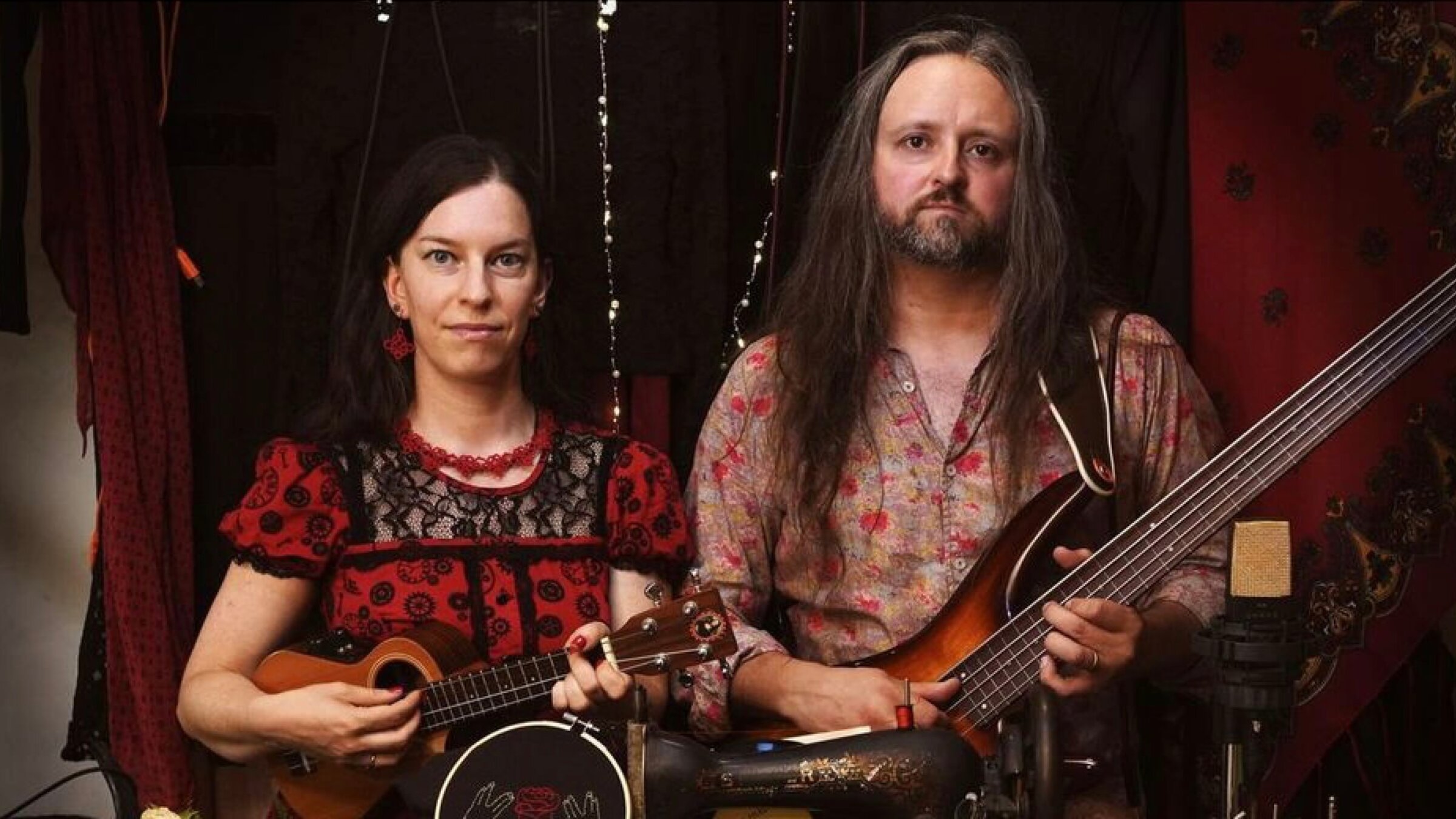
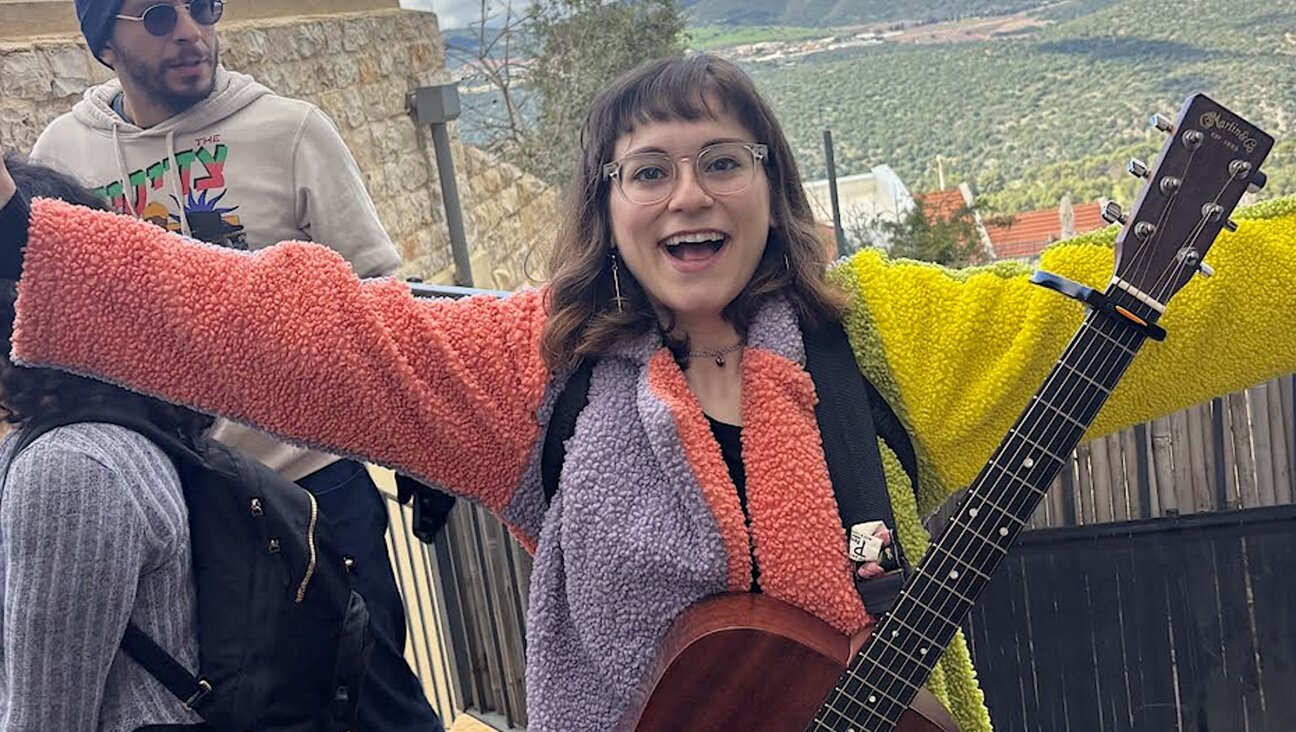
Cantor Sarah Myerson and multi-instrumentalist Ilya Shneyveys who are now on tour with the ‘Rose Cohen Experience.’ Photo by D. Zisl Slepovitch

By Zach Golden January 12, 2026
Folklore scholar Barbara Kirshenblatt-Gimblett doesn’t remember interviewing and recording the Yiddish folksinger Rose Cohen in 1968 in Toronto. But this recording may turn out to be one of the most significant ones that made it into the storied archives at the YIVO Institute for Jewish Research.
In it, Cohen sings ten songs from her childhood in the Kyiv region of Ukraine, in Yiddish, Hebrew, Ukrainian and Russian. A handful of these songs have never been found anywhere else.
Cohen, who came to Toronto after World War II, was from a dynasty of what she called khazonishe, or singing rabbis, and learned many of these songs listening to them singing in her home.
This recording became the inspiration for a new album, The Rose Cohen Experience, released last month on Borscht Beat, a label featuring Yiddish and Jewish music. Her songs are performed here by Cantor Sarah Myerson and Ilya Shneyveys, a married couple of talented multi-instrumentalists. The duo, called Electric Rose, took nine of the ten songs Kirshenblatt-Gimblett recorded and created their own elaborate, imaginative versions of them.
In the recording, Myerson — who serves as spiritual leader and cantor at Roosevelt Island Jewish Congregation in New York City — sang them as she and Shneyveys played an array of instruments over loops, creating a surreal, hypnotic sound. As a founder of the Yiddish “psychedelic” rock group Forshpil, Shneyveys was no stranger to this.
One of the songs, Berosh Hashone (On Rosh Hashone) begins with a segment from the solemn High Holidays prayer Unetaneh Tokef, about how our destiny is determined by God, depending on what deeds we’ve done. But then there are other Yiddish verses about an unhappy woman asking her children if she should divorce their father. “We don’t have that as a Yiddish song elsewhere in the repertoire,” Myerson said in an interview. “We don’t know of that song existing in other languages either.”
The album is structured, at least at first, as an imagined narrative of Cohen’s own life. “Ikh heyb mikh on tsu dermonen” (I’m beginning to remember) possesses a driving rhythm and a powerful recollection of an immigrant in North America dreaming of going back to his wife in Europe. Even though it’s a folk song, it’s possibly autobiographical when she sings it, as Cohen’s father immigrated to Toronto before the rest of his family. Myerson and Shneyveys aimed to draw out the autobiographical aspect of this song by playing selections of the Cohen interview where she recalls where she is from and how old she is.
The song transitions to Bay mashin (At the machine), a folk song about a woman slaving over a sewing machine, looking forward to getting married after having assembled her dowry. In an interesting twist, Myerson actually uses the sound of a sewing machine throughout the track, both in recorded and live performances. It’s a small hand-crank sewing machine from the early 20th century, “possibly developed for child labor,” Myerson said.
Myerson contributed a special track, Kale Tkhine (Bride’s prayer), to supplement the nine Cohen songs. Kale Tkhine is taken from an excerpt of an actual tkhine (a Yiddish-language women’s prayer) that a woman would recite on the night before the wedding. Myerson found the prayer in an 1897 prayer book known as the Siddur Korban Minchah.
Myerson said she decided to include this text after trying to imagine how Cohen may have felt singing Bay mashin, where the ending indicates that the female narrator is about to marry. The words are plaintive (“O God, please hear my youthful prayer, receive my hot tears that I now spill before You”), raising the possibility that she is unhappy about the match. Myerson’s performance delivers the song in that spirit, utilizing a vocoder, a keyboard that allows her to harmonize with herself.
From here, the album drops its autobiographical train of thought and moves into a more experiential mode. Mayim Rabim (mighty waters), also known as Psalm 93 — a psalm recited during the Shabbat evening prayer service — is remarkable because, as Myerson said, “we just don’t have many recordings of women of her generation singing liturgy.” Here, we see how Electric Rose made use of ambient recordings; in this case — ocean waves from Miami Beach.
You can catch Electric Rose on their upcoming tours throughout the East Coast, California and Germany.
This is a moment of great uncertainty. Here’s what you can do about it.
We hope you appreciated this article. Before you go, we’d like to ask you to please support the Forward’s independent Jewish news this Passover. All donations are being matched by the Forward Board - up to $100,000.
This is a moment of great uncertainty for the news media, for the Jewish people, and for our sacred democracy. It is a time of confusion and declining trust in public institutions. An era in which we need humans to report facts, conduct investigations that hold power to account, tell stories that matter and share honest discourse on all that divides us.
With no paywall or subscriptions, the Forward is entirely supported by readers like you. Every dollar you give this Passover is invested in the future of the Forward — and telling the American Jewish story fully and fairly.
The Forward doesn’t rely on funding from institutions like governments or your local Jewish federation. There are thousands of readers like you who give us $18 or $36 or $100 each month or year.
Support our mission to tell the Jewish story fully and fairly.