Forverts podcast: The Triangle Shirtwaist Factory fire
The 1911 tragedy reminds us what could happen when immigrant workers’ lives are put in danger.

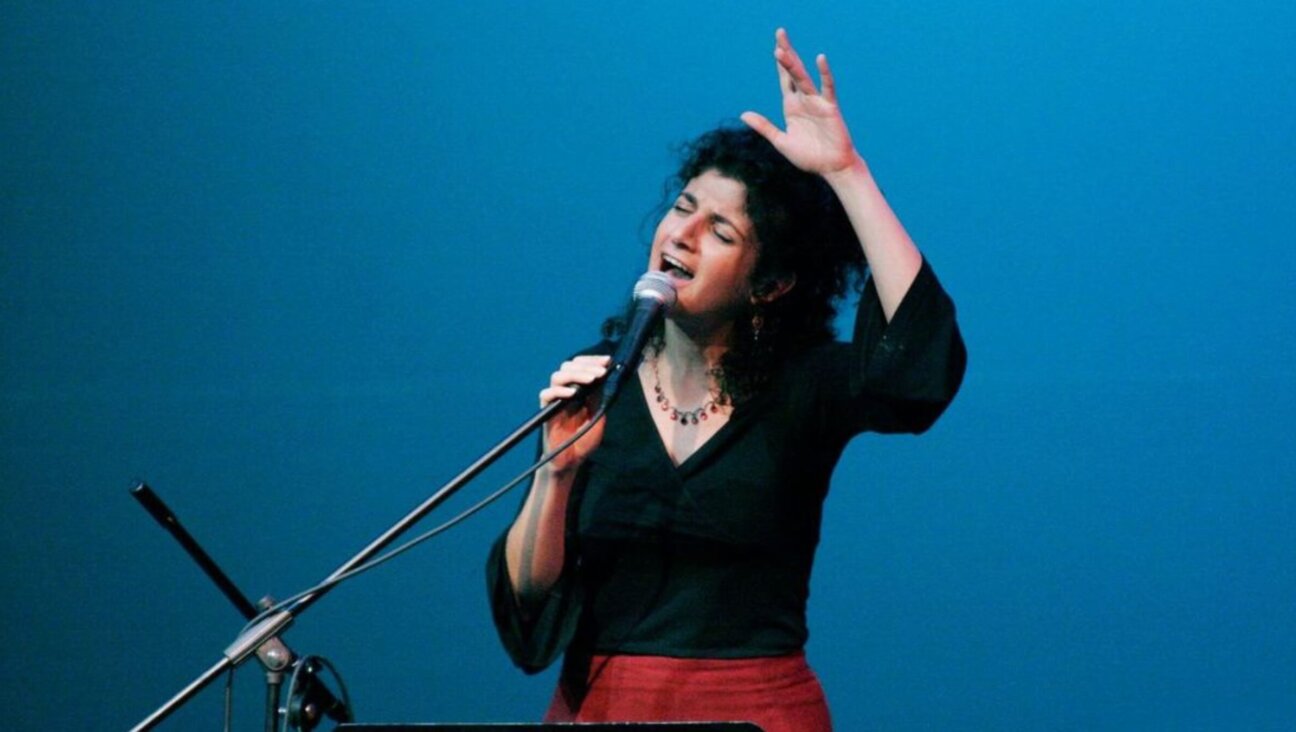
Photo by the Forward

By Rukhl Schaechter March 16, 2026
As calls for immigrants’ rights reverberate throughout the country these days, an upcoming anniversary can serve as a reminder of the consequences for impoverished, immigrant workers when their lives are put in danger.
On March 25, 2011, 115 years ago, 146 young Jewish and Italian women perished in an inferno that broke out at the Triangle Shirtwaist Factory fire in New York City. Because the employer had locked the sweatshop door from the outside, the workers had no way to escape.
Morris Rosenfeld, known as one of the Yiddish “sweatshop poets” of New York, was a writer and poet at the Forverts when the fire broke out and he immediately rushed to the scene. Overcome by the tragedy, he immediately wrote a poem and personal essay in response that appeared on the front page of the newspaper.
In this episode of Yiddish With Rukhl: A Forverts Podcast, the Forward’s Yiddish editor Rukhl Schaechter reads Rosenfeld’s pieces, as well as several poems written by other poets in reaction to the tragedy.
Yiddish with Rukhl, a podcast for people who love spoken Yiddish, consists of 15-20 minute episodes in which listeners hear engaging Forverts articles written in conversational Yiddish. Each episode focuses on a single topic. Previous episodes have been about coffee, seeking love, the cemetery, at-risk languages and Jewish education.
This is a moment of great uncertainty. Here’s what you can do about it.
We hope you appreciated this article. Before you go, we’d like to ask you to please support the Forward’s independent Jewish news this Passover. All donations are being matched by the Forward Board - up to $100,000.
This is a moment of great uncertainty for the news media, for the Jewish people, and for our sacred democracy. It is a time of confusion and declining trust in public institutions. An era in which we need humans to report facts, conduct investigations that hold power to account, tell stories that matter and share honest discourse on all that divides us.
With no paywall or subscriptions, the Forward is entirely supported by readers like you. Every dollar you give this Passover is invested in the future of the Forward — and telling the American Jewish story fully and fairly.
The Forward doesn’t rely on funding from institutions like governments or your local Jewish federation. There are thousands of readers like you who give us $18 or $36 or $100 each month or year.
Support our mission to tell the Jewish story fully and fairly.