ווידעאָ: ליטעראַטור־פֿאָרשערין מרים טרין רעדט וועגן חיים גראַדעס „זין און טעכטער“VIDEO: Literature scholar Miriam Trinh on Chaim Grade’s novel ‘Sons and Daughters’
דעם ראָמאַן האָט גראַדע אַזוי לאַנג געשליפֿן אַז ער האָט אים קיין מאָל נישט פֿאַרענדיקט.
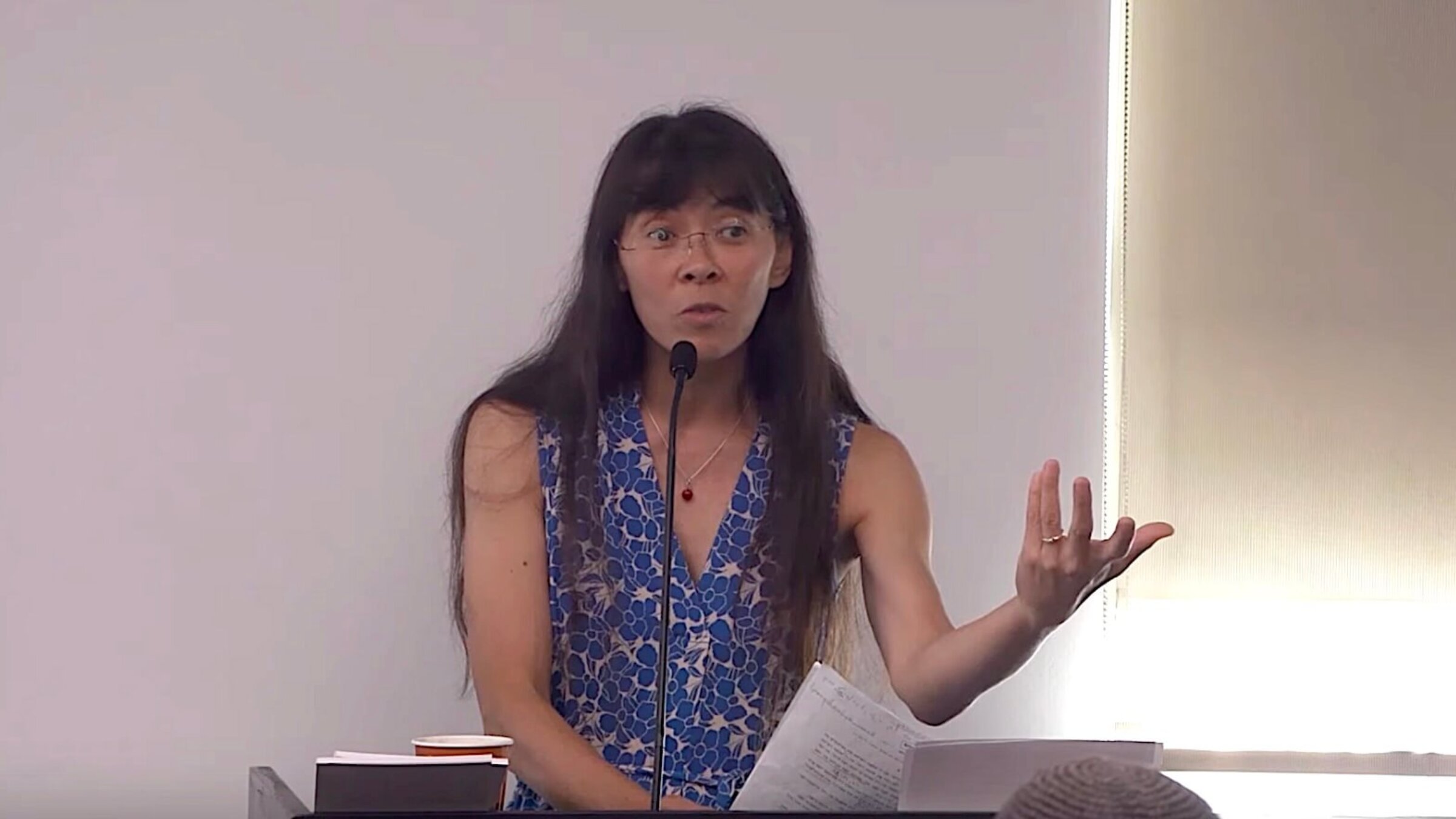
מרים טרין האַלט די לעקציע אינעם ייִדישן טעאָלאָגישן סעמינאַר, דעם 25סטן אויגוסט 2025 Photo by the League for Yiddish
אַ ווידעאָ וווּ מרים טרין, די באַקאַנטע פֿאָרשערין פֿון דער ייִדישער ליטעראַטור, דיסקוטירט חיים גראַדעס ראָמאַן „זין און טעכטער“, איז לעצטנס אַרויסגעלאָזט געוואָרן אויף יוטוב. דער ווידעאָ איז אַ רעקאָרדירונג פֿון אַ לעקציע, געשטיצט פֿון דער ייִדיש־ליגע, וואָס זי האָט געהאַלטן בײַם ייִוואָ אין ניו־יאָרק אין אויגוסט.
דער ראָמאַן, וואָס האָט לכתּחילה געהייסן „דאָס אַלטע הויז“, איז געדרוקט געוואָרן אין המשכים צווישן 1965 און 1966 אינעם „טאָג־מאָרגן זשורנאַל“. אין 1968 האָט גראַדע ממשיך געווען דעם ראָמאַן אין דער צײַטונג, אָבער מיט אַ נײַעם טיטל, „זין און טעכטער“, ביז אויגוסט 1971. נאָך דעם ווי דער „טאָג־מאָרגן זשורנאַל“ האָט זיך געשלאָסן אין 1973 האָט גראַדע געבראַכט דעם ראָמאַן צום „פֿאָרווערטס“, מיט אַ דריטן טיטל: „בית הרבֿ“, וואָס מיינט „דעם רבֿס הויז.״ צום באַדויערן האָט ער דעם ראָמאַן קיין מאָל נישט פֿאַרענדיקט.
אינעם װידעאָ דערציילט טרין עטלעכע אינטערעסאַנטע פֿאַקטן װעגן חיים גראַדעס גרויסן אַרכיװ, װאָס געפֿינט זיך הײַנט אונטערן רשות פֿונעם ייִװאָ בשותּפֿות מיט דער נאַציאָנאַלער ישׂראלדיקער ביבליאָטעק אין ירושלים.
בפֿרט שטעלט זי זיך אָפּ אויף דער גאָר אינטערעסאַנטער קאָרעספּאָנדענץ צווישן גראַדען און זײַן נאָענטן חבֿר און מעצענאַט, אַבֿרהם באָרענשטיין. אין די בריוו שרײַבט גראַדע, אַז ער האַלט אַז דער ראָמאַן וועט נאָך ווערן זײַן גרעסט ווערק. אפֿשר צוליב דעם זייער הויכן סטאַנדאַרט וואָס ער האָט פֿאַר זיך געשטעלט — זאָגט טרין — האָט ער דעם כּתבֿ־יד אַזוי לאַנג געשליפֿן און איבערגעשליפֿן, אַז צום סוף איז ער געשטאָרבן איידער ער האָט עס באַוויזן צו פֿאַרענדיקן.
This is a moment of great uncertainty. Here’s what you can do about it.
We hope you appreciated this article. Before you go, we’d like to ask you to please support the Forward’s independent Jewish news this Passover. All donations are being matched by the Forward Board - up to $100,000.
This is a moment of great uncertainty for the news media, for the Jewish people, and for our sacred democracy. It is a time of confusion and declining trust in public institutions. An era in which we need humans to report facts, conduct investigations that hold power to account, tell stories that matter and share honest discourse on all that divides us.
With no paywall or subscriptions, the Forward is entirely supported by readers like you. Every dollar you give this Passover is invested in the future of the Forward — and telling the American Jewish story fully and fairly.
The Forward doesn’t rely on funding from institutions like governments or your local Jewish federation. There are thousands of readers like you who give us $18 or $36 or $100 each month or year.
Support our mission to tell the Jewish story fully and fairly.