The Man Who Saved New York
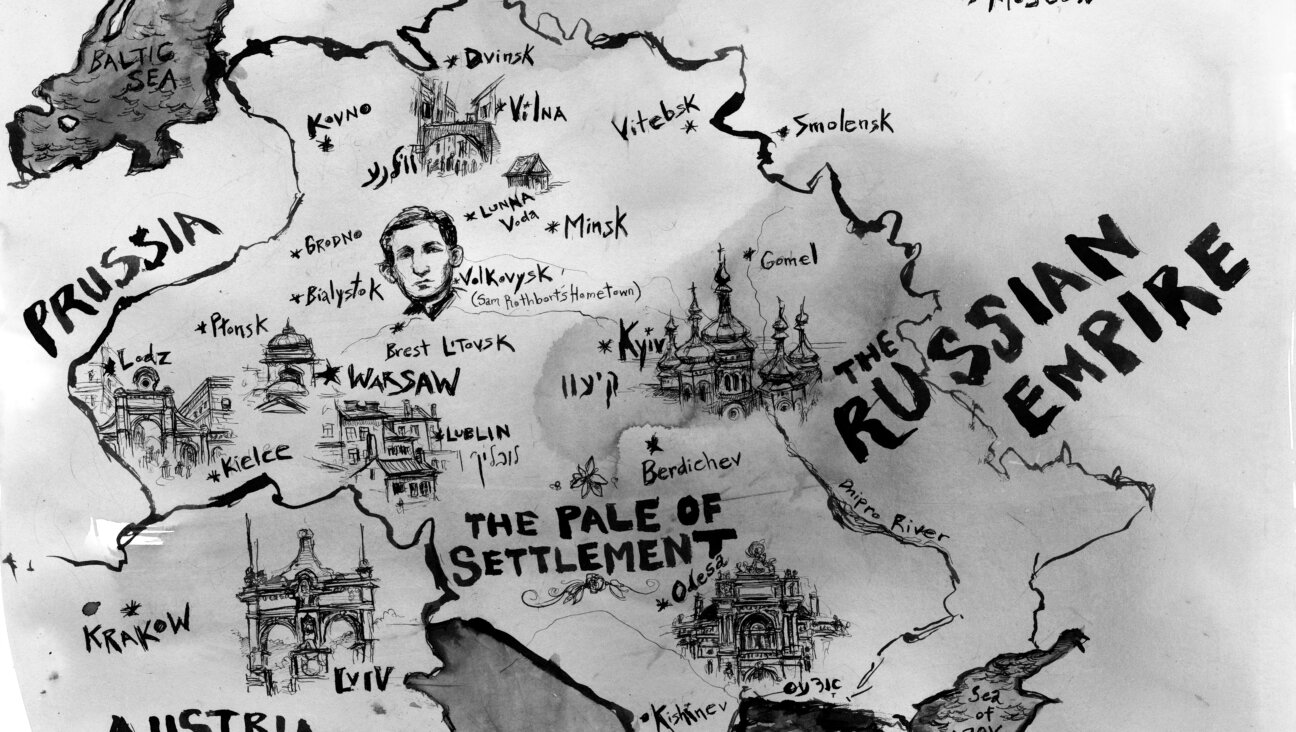
Graphic by Angelie Zaslavsky
DEALINGS By Felix Rohatyn Simon & Schuster, $27.00, 304 pages
His life is, in some ways, a classic tale of a Jewish boy making good. In 1940, at the age of 12, Felix Rohatyn escaped Nazi-occupied France with gold coins hidden in toothpaste tubes. After migrating to the U.S., Rohatyn earned a physics degree and then fell into a clerical job at Lazard-Frères, the venerable investment bank.
When he transferred to mergers and acquisitions, Rohatyn found his calling. Over the decades, Rohatyn would be intimately involved with many of the biggest deals of the century. He helped Kinney, a parking and funeral company, acquire then “moribund” Avis and turn it around. He identified targets for ITT during its acquisition frenzy. He negotiated for GE in its acquisition of NBC, then RCA. Rohatyn also has a public-service streak, which eventually led him to be appointed American ambassador to France.
Rohatyn’s new book, “Dealings,” is his record of all this: a memoir of mergers, municipalities and money. For the most part, it’s an interesting book, even for the financially illiterate. Rohatyn dumbs down some extremely complicated transactions without patronizing the reader and compresses 40 years of such deals into easily digestible chapters.
“Dealings” is particularly compelling when Rohatyn describes his years of public service. In 1970, while on the board of the New York Stock Exchange, Rohatyn discovered that “Wall Street’s entire capital structure seemed balanced on a weak, impermanent capital base” (which, we know, would never happen again). A few years later, Rohatyn would work around the clock to re-establish New York City’s creditworthiness after a decade of egregious mismanagement. In both cases, Rohatyn was instrumental in a return to solvency — while simultaneously still making deals for Lazard-Frères. One has the impression that he ate, slept and exercised in a business suit.
“Dealings” is also interesting for the quirks displayed by his fellow Masters of the Universe (avant la lettre). André Meyer, the legendary chairman of Lazard-Frères, liked to help Rohatyn’s wife cook dinner. Harold Geneen, the ferocious chairman of ITT, ignored clocks, keeping the curtains drawn whether he was in New York or Brussels. Hollywood dealmaker Mike Ovitz comes off as flat-out weird — overly groomed and needlessly circuitous in conversation.
The author displays some quirks himself. Rohatyn drops so many names that I felt I had repeatedly stubbed my toe: Governor Hugh Carey; Bennet Cerf of Random House; Ahmet Ertegun of Capitol Records; Clay Felker, publisher of New York Magazine; union boss
Victor Gotbaum; Pamela Harriman; literary agent Mort Janklow; François Mitterand; Edith Piaf and Liliane de Rothschild. Admittedly, Rohatyn worked with most of these luminaries. But he also claims to have been friends with many of them. One wonders, then, if he mistakes friendship for a temporary alignment of interests.
Much of the book is given to self-apologetics. Too often he decries, with suspect humility, his own naiveté when dealing with politicians or the press — this from a man who frequently uses the word “shrewd” as a compliment. And even if “Dealings” is not a personal memoir per se, we still learn almost nothing about Rohatyn’s family.
Other blind spots are more confusing. In “Dealings,” Rohatyn frequently announces that he is a liberal and a Democrat. In that vein, he relates that one of his goals as ambassador to France was to “erase many of the theories some of the French had about the way our economy was manipulated and how the marketplace catered only to the rich.” However, most of the deals in “Dealings” are about making rich people richer: Like any other banker, Rohatyn often served his clients by helping them to avoid taxes. Other deals became profitable only after layoffs pushed up a company’s stock price. Such maneuvers, while legal, have not been beneficial to public coffers or to the middle class.
“Dealings” is at its most disingenuous when Rohatyn discusses the current crisis. He writes how he has “witnessed the creation of a new corporate culture… huge deals were what mattered, while consequences for employees and communities were too often overlooked.” But what deal, by his own admission, “set the tone”? The RJR-Nabisco merger, negotiated by one Felix Rohatyn.
Gordon Haber is a frequent contributor to the Forward.
This is a moment of great uncertainty. Here’s what you can do about it.
We hope you appreciated this article. Before you go, we’d like to ask you to please support the Forward’s independent Jewish news this Passover. All donations are being matched by the Forward Board - up to $100,000.
This is a moment of great uncertainty for the news media, for the Jewish people, and for our sacred democracy. It is a time of confusion and declining trust in public institutions. An era in which we need humans to report facts, conduct investigations that hold power to account, tell stories that matter and share honest discourse on all that divides us.
With no paywall or subscriptions, the Forward is entirely supported by readers like you. Every dollar you give this Passover is invested in the future of the Forward — and telling the American Jewish story fully and fairly.
The Forward doesn’t rely on funding from institutions like governments or your local Jewish federation. There are thousands of readers like you who give us $18 or $36 or $100 each month or year.

Support our mission to tell the Jewish story fully and fairly.