Pronouns of the World Unite!

By Phil O’Lologous March 6, 2012
[ ![][2]][2]
When I first started writing this weekly column, almost 115 years ago, Karl Marx was the Simon Cowell of the era — a loudmouth from Britain passing judgment on the working class. Being dead hadn’t stopped Marx and I’d be surprised if it stops Cowell.
At that time it was barely acceptable to be Irish, let alone a transgender Irish Jew from Brooklyn with a Litvishe accent. Now it seems that everyone wants to be gay or Irish, even if being Litvish is still frowned upon in certain areas of Flatbush.
I was reminded of that era when a Carl Marks wrote to me from Trier, Maine, asking, “Is there a Yiddish root for ‘boi’?” Mr. Marks is talking about the word for the younger, more submissive partner in the LGBT or BDSM community that has gotten more traction in the past few years.
Despite being accused of putting both the “we” and the “id” into “weird” after my 1928 column about the comparative etymologies of post-Sanskrit words for snake — “How Long Has Your Shlong Been Active?” — I am proudly pro-creation and pro-procreation. Especially if I can cull evidence from my 32-volume Alexander Harkavy Dictionary of Yiddish, Guarani and Hebrew, With Parchment Addendum on Post-Babylonian Millinery and Online Database of Contemporary Gender-Based Slang.
Harkavy tells me that “boi” comes not from the Yiddish, but from Israel. And not, despite it being a homophone for “Come hither” in Hebrew, from Hebrew. Rather it comes from the English-language acronym for the Bank of Israel, owing to contemporary slurs about the bank’s conciliatory behavior, under the stewardship of David Horowitz.
It is odd that Hebrew should simply borrow the word “bank,” especially with the Yiddish phrase “Helfn vi a toytn bankes” (“It’ll help you like cups on a corpse”) haunting the word. But cups (in this sense from the Russian “banki”) have another connection to Judaism.
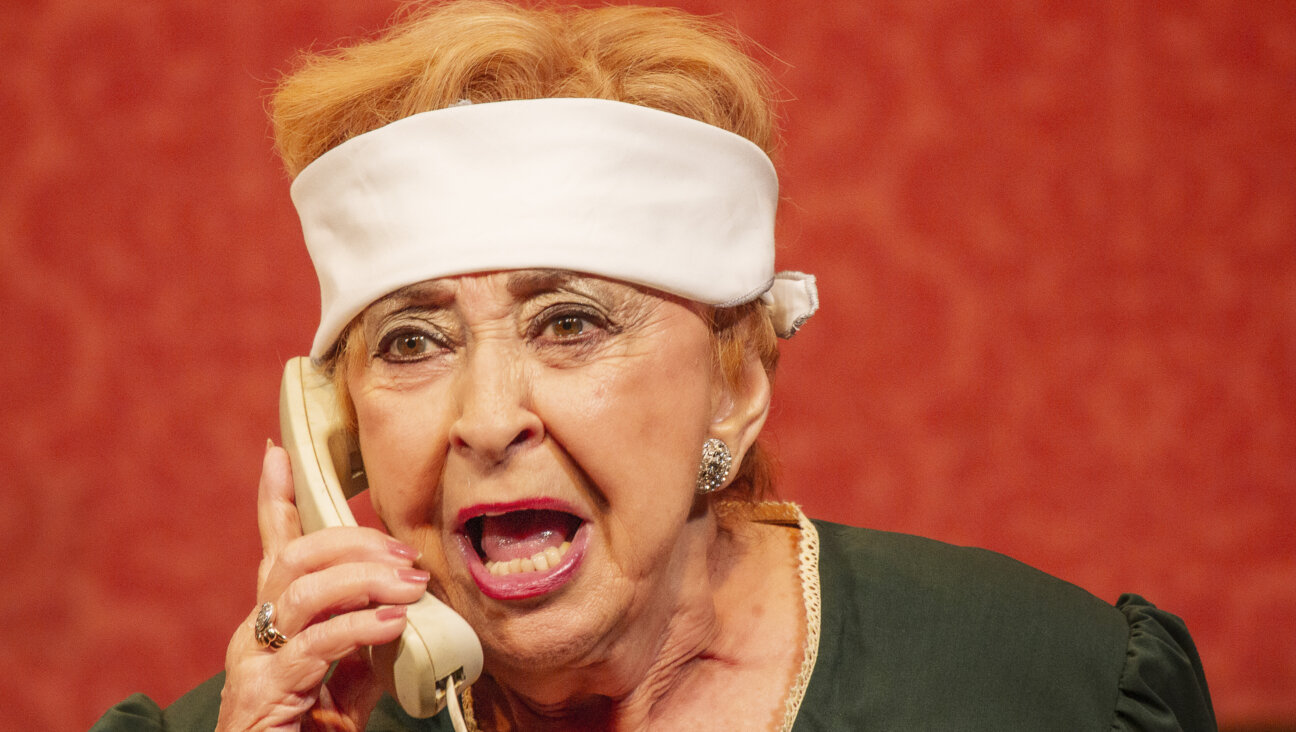
Wearers of traditional religious Jewish headgear can choose to call it a yarmulke, a kipah or a kapl. Since it joins a people to the God who chose them, we might think that this last term is related to the Armenian kapel, meaning “to lock,” or to “copula,” which means, in both linguistic and other discourses, to link.
However, like the convex banki, and unlike the flat banca (the Old Italian word for table, the work surface on which banking activities began), kapl is entirely free from copulation but not from cupolation. In an irony surely not lost on the generations of Jews who kept a wary eye on masses leaving churches, kapl, cupola and chapel are all cognates where the cpl root refers to the domed shape of the tops. So we are a dome-headed people, not one inextricably linked to God.
And iron links, or chains, bring us back to Marx.Growing up reading the “Komunistisher Manifest” at my father’s knee (he reserved the one at his elbow for my sister), I didn’t realize that the treatise was a vibrant call to arms. So say the English and German versions: “The proletarians have nothing to lose but their chains. They have a world to win.” The Yiddish ends, rather: “Let the ruling classes tremble at a Communistic revolution. We’ll probably not be slaughtered if we all stick together.” It’s enough to put us in our cups.
[]: https://forward.com/backward-purim/
Why I became the Forward’s editor-in-chief
You are surely a friend of the Forward if you’re reading this. And so it’s with excitement and awe — of all that the Forward is, was, and will be — that I introduce myself to you as the Forward’s newest editor-in-chief.
And what a time to step into the leadership of this storied Jewish institution! For 129 years, the Forward has shaped and told the American Jewish story. I’m stepping in at an intense time for Jews the world over. We urgently need the Forward’s courageous, unflinching journalism — not only as a source of reliable information, but to provide inspiration, healing and hope.
 , editor-in-chief
Support our mission to tell the Jewish story fully and fairly.