Remembering Sasson Somekh, Who Insisted On Arab Literature’s Place In Israel

Graphic by Angelie Zaslavsky
By Benjamin Ivry August 19, 2019
Editor’s note: This piece was originally published on September 22, 2012. It was republished on August 19, 2019 after Sasson Somekh’s death at age 86.
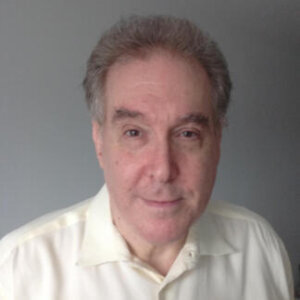
Translations have the potential to communicate one culture to another, strengthening humanistic ties. Translators can be peacemakers, self-abnegatingly finding compromises in the perilous confrontation of languages. No one exemplified this ideal more than Sasson Somekh, an Israeli translator and literary historian of Iraqi Jewish origin who passed away on August 18, 2019 at the age of 86.
An expert on modern Arabic literature, Somekh is author of the 2007 memoir, “Baghdad, Yesterday: The Making of an Arab Jew.” In 2012, Somekh’s “Life after Baghdad: Memoirs of an Arab-Jew in Israel, 1950-2000,” translated by Tamar Cohen, was published by Sussex Academic Press. Like his former book, “Life after Baghdad” radiates intellectual warmth. Somekh points out the strong ties between some Jewish communities and the Arabic language, underlining the fact that such key texts as Yehuda Halevy’s “Book of the Kuzari” and “Maimonides’ “Guide for the Perplexed” were originally written in Arabic.
Somekh explains that as a young émigré to Israel, he was fascinated by Avraham Shlonsky’s translation of the novel “Colas Breugnon” by Romain Rolland which improbably was transformed into an “amazing Hebrew work — exciting and surprising in its innovativeness.” Modern political discord may distract from such cultural exchange, as when Somekh published an anthology of young Syrian and Lebanese poets translated into Hebrew just weeks before the outbreak of the 1973 Yom Kippur War. Yet a number of the contemporary authors whom Somekh studied were eager for détente with Israel. Of the Nobel-Prizewinning Egyptian novelist Naguib Mahfouz, Somekh writes: “Peace with Israel was a fundamental principle from which Mahfouz would not budge, despite the ostracism and scathing condemnation he suffered for several years.”
In a 1979 letter to Somekh, Mahfouz observed: “[Egypt and Israel] have known fruitful coexistence, in ancient times, in the Middle Ages. And in the modern period, while the periods of conflict and dispute have been few and far between. But to my great sorrow, we have over-chronicled the moments of conflict a hundredfold more than we have recorded long generations of friendship and partnership.”
Tawfiq al-Hakim, another noted Egyptian author about whom Somekh has written, showed the latter some hate mail he had received from his compatriots, wishing him to be buried in a “Jewish paupers’ graveyard” in Tel Aviv because he supported the peace process. “Life after Baghdad” contains many inspirational examples of authors showing courage by defying public opinion. As ideal translations should, it makes deserving writers look good.
Watch an interview with Sasson Somekh filmed in 2010 at Cambridge University’s Woolf Institute here.
Listen to Iraqi Jewish musicians Saleh (1908-1986) and Daud (1910-1976) Al-Kuwaity here.
I’m personally matching all gifts to the Forward, up to $36,000. Can I match your gift now?

Hello, fellow Forward reader! I’m Joel Brown, a Forward reader and supporter for more than 15 years, and currently the chair of the board of directors.
I’m an avid Forward reader because it ticks so many of my essential boxes: excellent journalism, Jewish focus and diverse viewpoints. In today’s political climate, what I most appreciate is the Forward’s independence — made possible by the generosity of its membership.
The Forward is committed to bringing you unbiased, nuanced Jewish news. From my position as board chair, I see an exciting future as we expand our position as the definitive independent voice of contemporary American Judaism.
— Joel Brown, Forward board chair
Support our mission to tell the Jewish story fully and fairly.