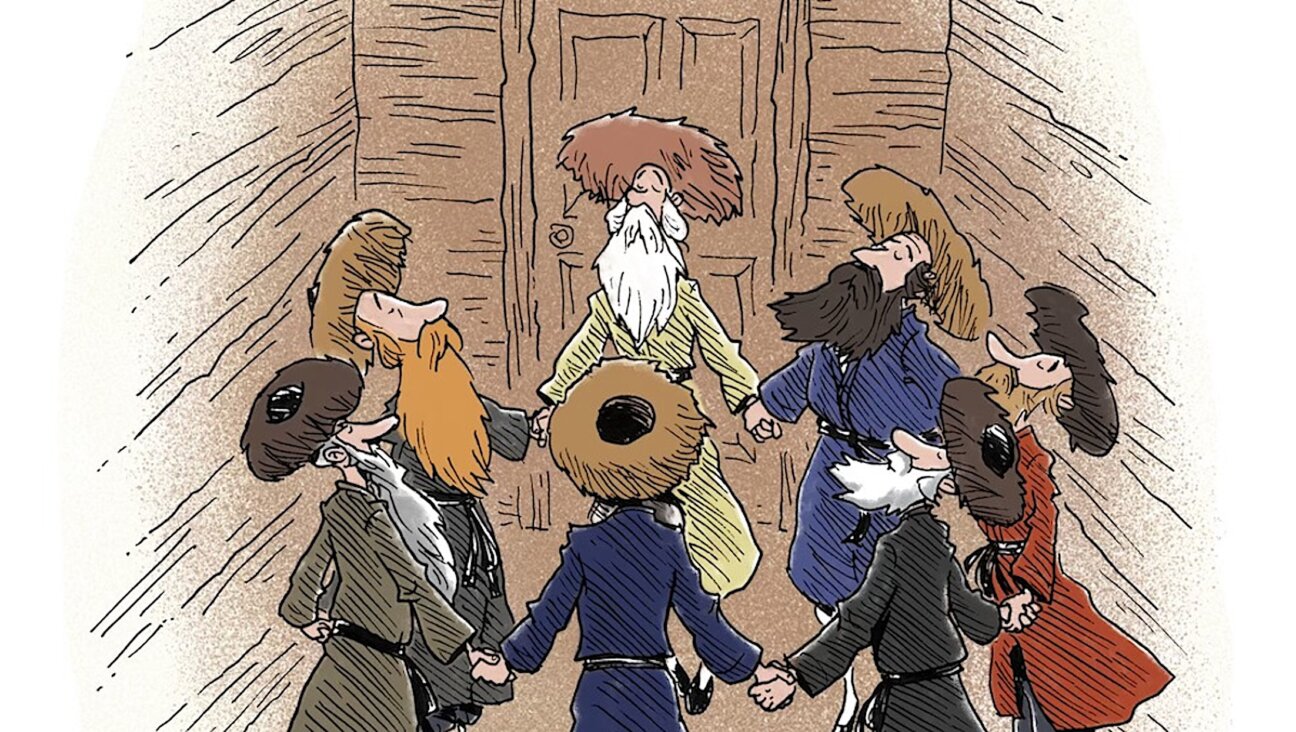
A Letter From the Editor: Efsharoot/Possibility
Graphic by Angelie Zaslavsky
You may be familiar with the journal Sh’ma, first published in 1970 by the liberal theologian Eugene Borowitz and in continuous publication ever since. You may be surprised to find this Sh’ma insert in the Forward. In surprise, we hope you will find possibility.
What you hold in your hand is a link between Sh’ma’s past and its future — an issue that examines the idea of possibility (efsharoot, in Hebrew) and at the same time embodies a possibility: a partnership with the Forward that would continue to bring Sh’ma’s unique content to the newspaper’s readers.
Since early 2014, we have been experimenting with the delivery and framework of Sh’ma — how we can fully engage readers in Sh’ma’s commitment to creating conversation and bringing together a wide array of voices around a single theme.
In conjunction with several partner organizations, we have spent the better part of the past year designing, prototyping, and testing new iterations of Sh’ma in order to hold onto the best of what we’ve been — a curated conversation on contemporary, relevant Jewish topics – while transforming our modes of engagement. As we come to the end of this iterative, prototyping process, Sh’ma has partnered with the Forward to bring you this next-generation prototype of the journal: a twelve-page insert designed to spur new thinking about “possibility” and, for those who are so inclined, a guide to facilitating discussions around the theme.
Each year, many of us approach the High Holidays with the idea of possibility sitting on our shoulders. We anticipate some potential for change — especially given the liturgical framework that Rosh Hashanah and Yom Kippur provide. And, while the holidays offer a ten-day period of introspection, study, spiritual encounter, and community engagement, we’re likely to find ourselves at midstream still wondering how to actually feel and do things differently.
We hope you will use the host guide to start conversations in your home or synagogue that unpack open-ended questions relating to the holidays. We have found that these conversations sometimes spur readers to consider alternate perspectives and to rethink Jewish texts, ideas, and sensibilities. Please let us know what works for you in this experiment by completing a brief online survey. As we contemplate our possibilities going forward, we look forward to sharing a fruitful year with you.
If you liked this content, please complete this survey.
READ: All the Sh’ma stories
This is a moment of great uncertainty. Here’s what you can do about it.
We hope you appreciated this article. Before you go, we’d like to ask you to please support the Forward’s independent Jewish news. All donations are still being matched by the Forward Board - up to $100,000 until April 24.
This is a moment of great uncertainty for the news media, for the Jewish people, and for our sacred democracy. It is a time of confusion and declining trust in public institutions. An era in which we need humans to report facts, conduct investigations that hold power to account, tell stories that matter and share honest discourse on all that divides us.
With no paywall or subscriptions, the Forward is entirely supported by readers like you. Every dollar you give is invested in the future of the Forward — and telling the American Jewish story fully and fairly.
The Forward doesn’t rely on funding from institutions like governments or your local Jewish federation. There are thousands of readers like you who give us $18 or $36 or $100 each month or year.

Support our mission to tell the Jewish story fully and fairly.