4 Jewish Poets For #NationalPoetryDay
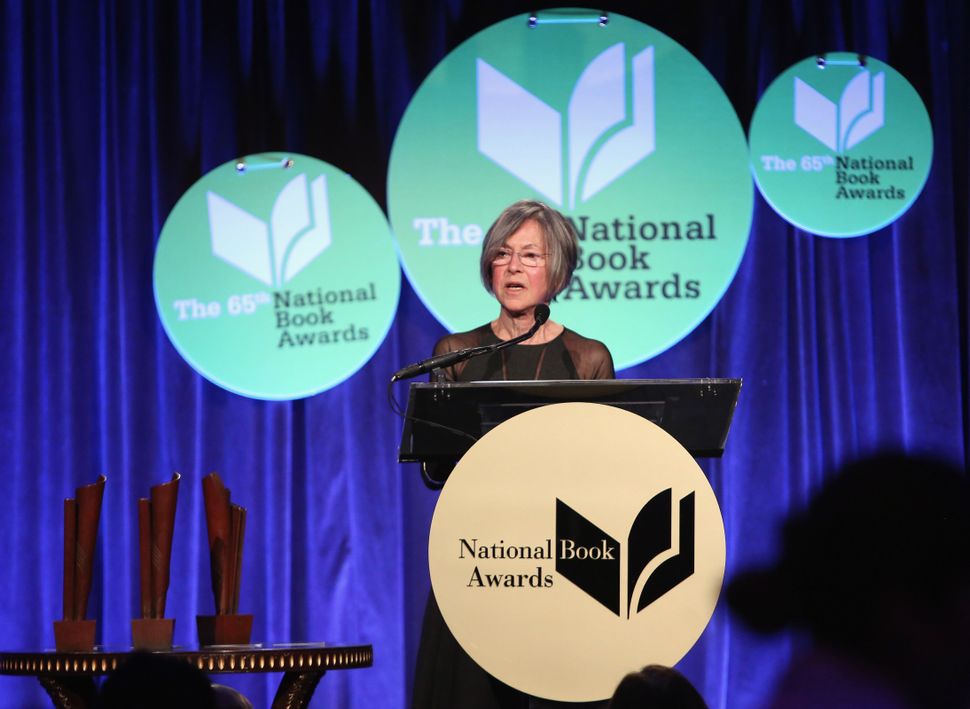
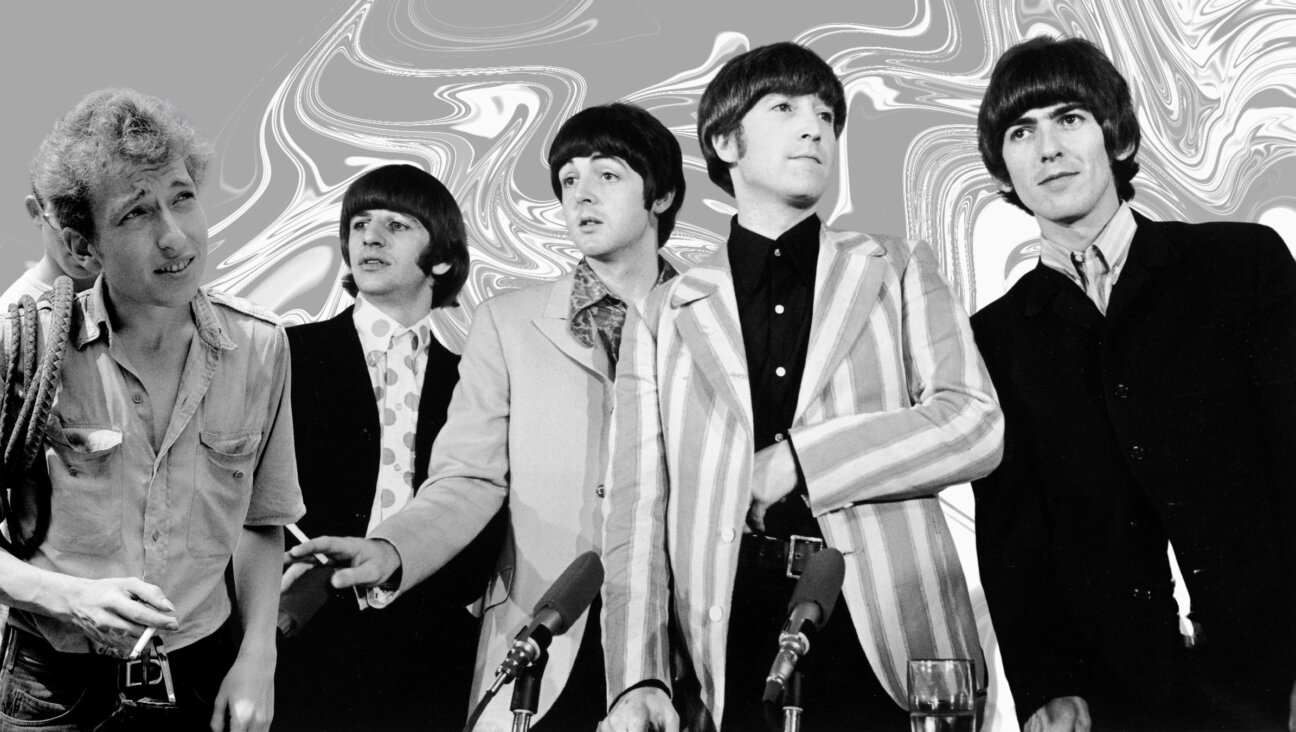
Image by Robin Marchant/Getty Images

By Talya Zax October 6, 2016
If you asked why National Poetry Day was important, the great Jewish American poet Howard Nemerov would refer you – perhaps politely, perhaps not – to the world outside. In the brief poem “Because You Asked About the Line Between Prose and Poetry,” he positions his readers in a scene in which rain turns to flakes of snow. “There came a moment that you couldn’t tell/And then they clearly flew instead of fell,” he writes.
In honor of poetry’s unique ability to twist perspective, making the seemingly mundane magical, here are a few of our favorite poems by Jewish American poets. Like Nemerov’s, each piece celebrates poetry and questions its power.
Adrienne Rich: “Twenty-One Love Poems [Poem II]”
Rich, known for her insight into the luxury and brutality of love and language, explores the intersection of the two: “You’ve kissed my hair/to wake me. I dreamed you were a poem,” she writes, “I say, a poem I wanted to show someone.”
Philip Levine: “Gospel”
In “Gospel,” the speaker explores a quiet earth, full of grimness touched by wonder, observing, at the poem’s opening, “The new grass rising in the hills/the cows loitering in the morning chill.” The Detroit-born Levine had an unusually evocative sense for the moments when words fall short. “How weightless/words are when nothing will do,” he concludes the poem.
Louise Glück: “The Untrustworthy Speaker”
“Don’t listen to me; my heart’s been broken,” Glück begins “The Untrustworthy Speaker.” “I don’t see anything objectively.” It’s a bold introduction to a poem that calls into question the ability of the mind to accept and interpret tumultuous emotions, prowling through the speaker’s most painful memories. In it, she provides an unexpected, oblique explanation of poetry’s significance. “A wound to the heart/is also a wound to the mind,” she concludes. Poetry, for each can be a salve.
Talya Zax is the Forward’s culture fellow. Contact her at [email protected] or on Twitter, @TalyaZax
It’s our birthday and we’re still celebrating!
We hope you appreciated this article. Before you go, we’d like to ask you to please support the Forward’s independent Jewish news.
This week we celebrate 129 years of the Forward. We’re proud of our origins as a Yiddish print publication serving Jewish immigrants. And we’re just as proud of what we’ve become today: A trusted source of Jewish news and opinion, available digitally to anyone in the world without paywalls or subscriptions.
We’ve helped five generations of American Jews make sense of the news and the world around them — and we aren’t slowing down any time soon.
As a nonprofit newsroom, reader donations make it possible for us to do this work. Support independent, agenda-free Jewish journalism and our board will match your gift in honor of our birthday!
Support our mission to tell the Jewish story fully and fairly.