Yiddish Cabaret in Israel Brings Odessa To Tel Aviv
Graphic by Angelie Zaslavsky
By Aviya Kushner January 5, 2018
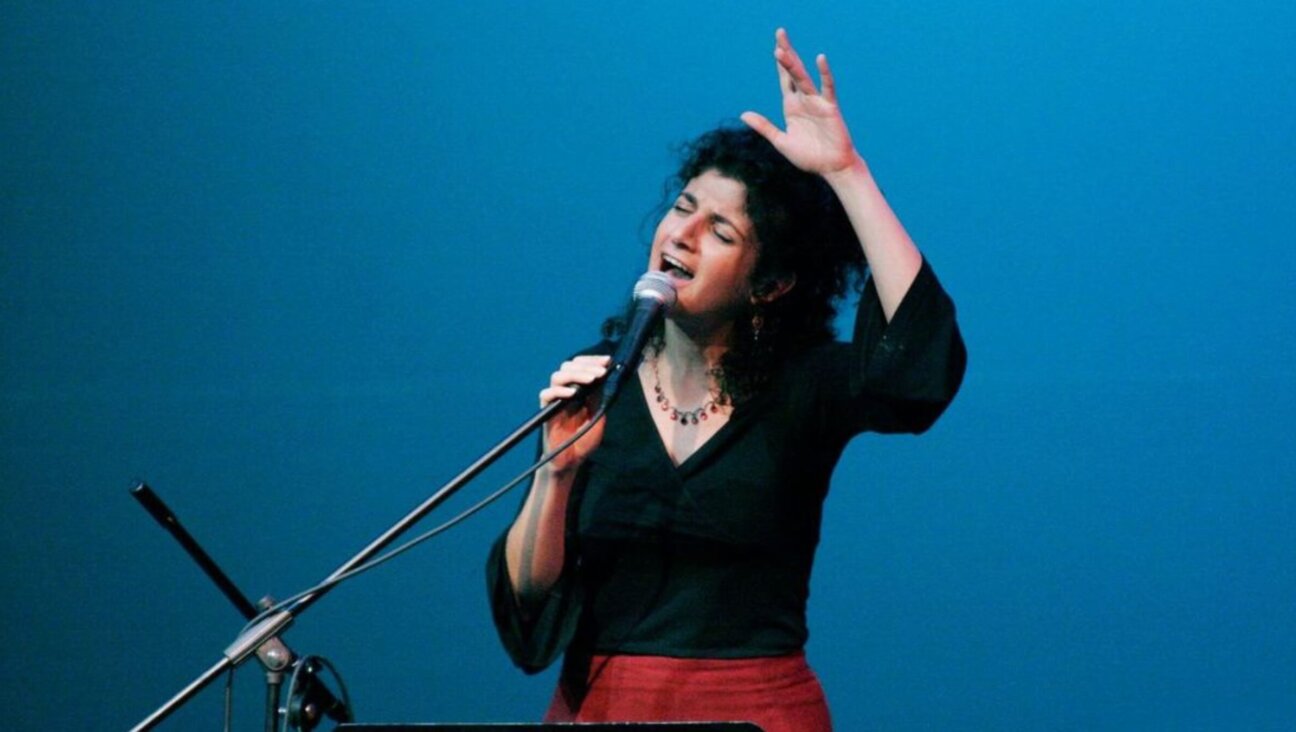
Recently, a sold-out crowd packed the Sholom Aleichem House in Tel Aviv for Yiddish cabaret. The crowd swayed and sang to Yiddish songs, including one about a young woman who reaches Buenos Aires and sleeps in the train station, and thinks of her dear mother, who she left back home.
The entranced, standing-room-only crowd seemed to know all the words.
Most of the event was in Yiddish but some parts were in Hebrew. Excerpts from Sholom Aleichem’s epistolary novel, translated into Hebrew, were read aloud. The letters, written by a fictional husband and wife, depict a husband who makes his way to Odessa and doesn’t succeed that much in his wild business efforts.
In one letter, he describes selling Londons. Yes — the city, plural. Not exactly a winning business strategy.
Vodka and herring rounded out the experience of returning to Odessa, home to many Jewish writers and thinkers. Ze’ev (Vladimir) Jabotinsky was an Odessa native; the poet Chaim Nachman Bialik and the writers Mendele Mocher Sforim and Ahad Ha’am were drawn to Odessa’s cultural scene and made their home there.
In addition to songs and staged readings, several professors helped put Yiddish literature in context. The Israeli poet Hamutal Bar-Yosef spoke about how Yiddish influenced Isaac Babel, and explained how classic Yiddish characters made their way into his early fiction.
The evening ended with a sing-along of Saul Tchernichovsky’s poem “Ani Ma’amin” or “I Believe” — sung in an Ashkenazi accent.
Aviya Kushner is The Forward’s language columnist and the author of The Grammar of God (Spiegel & Grau, 2015.) Follow her on Twitter @AviyaKushner
This is a moment of great uncertainty. Here’s what you can do about it.
We hope you appreciated this article. Before you go, we’d like to ask you to please support the Forward’s independent Jewish news this Passover. All donations are being matched by the Forward Board - up to $100,000.
This is a moment of great uncertainty for the news media, for the Jewish people, and for our sacred democracy. It is a time of confusion and declining trust in public institutions. An era in which we need humans to report facts, conduct investigations that hold power to account, tell stories that matter and share honest discourse on all that divides us.
With no paywall or subscriptions, the Forward is entirely supported by readers like you. Every dollar you give this Passover is invested in the future of the Forward — and telling the American Jewish story fully and fairly.
The Forward doesn’t rely on funding from institutions like governments or your local Jewish federation. There are thousands of readers like you who give us $18 or $36 or $100 each month or year.
Support our mission to tell the Jewish story fully and fairly.