What’s In The Iraqi Jewish Archive, Anyway?
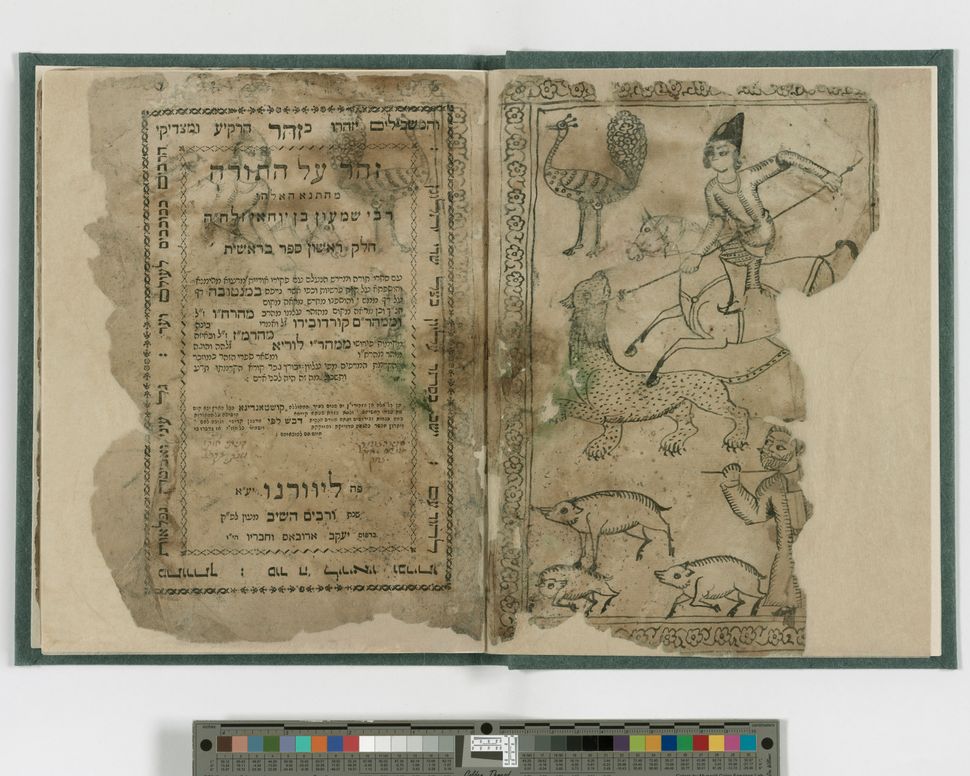
The 1815 Zohar from Livorno, after its restoration. Image by U.S. National Archives

By Talya Zax July 19, 2018
The Iraqi Jewish Archive, as the Forward explored in a recent series of articles, has significant symbolic meaning.
To Iraqi Jews and their descendants, exiled from their home country starting in 1950, the archive, a trove of artifacts brought to the United States for restoration in 2003, represents the rich communal life and history they were forced to leave behind.
To Iraq, the archive is an important memorial to the many minority communities decimated under the dictatorship of Saddam Hussein.
As the world faces the global refugee crisis, the question of how to distribute items of cultural significance following catastrophic conflict is becoming increasingly important. The foreign policy matters touched by a dispute over the archive’s return to Iraq, currently scheduled for this September, may affect Israel, the Palestinians and the entire community of Middle Eastern Jewry and their descendants.
But what, exactly, is in the archive? See the slideshow above, and learn.
This is a moment of great uncertainty. Here’s what you can do about it.
We hope you appreciated this article. Before you go, we’d like to ask you to please support the Forward’s independent Jewish news this Passover. All donations are being matched by the Forward Board - up to $100,000.
This is a moment of great uncertainty for the news media, for the Jewish people, and for our sacred democracy. It is a time of confusion and declining trust in public institutions. An era in which we need humans to report facts, conduct investigations that hold power to account, tell stories that matter and share honest discourse on all that divides us.
With no paywall or subscriptions, the Forward is entirely supported by readers like you. Every dollar you give this Passover is invested in the future of the Forward — and telling the American Jewish story fully and fairly.
The Forward doesn’t rely on funding from institutions like governments or your local Jewish federation. There are thousands of readers like you who give us $18 or $36 or $100 each month or year.
Support our mission to tell the Jewish story fully and fairly.