What’s In The Iraqi Jewish Archive, Anyway?
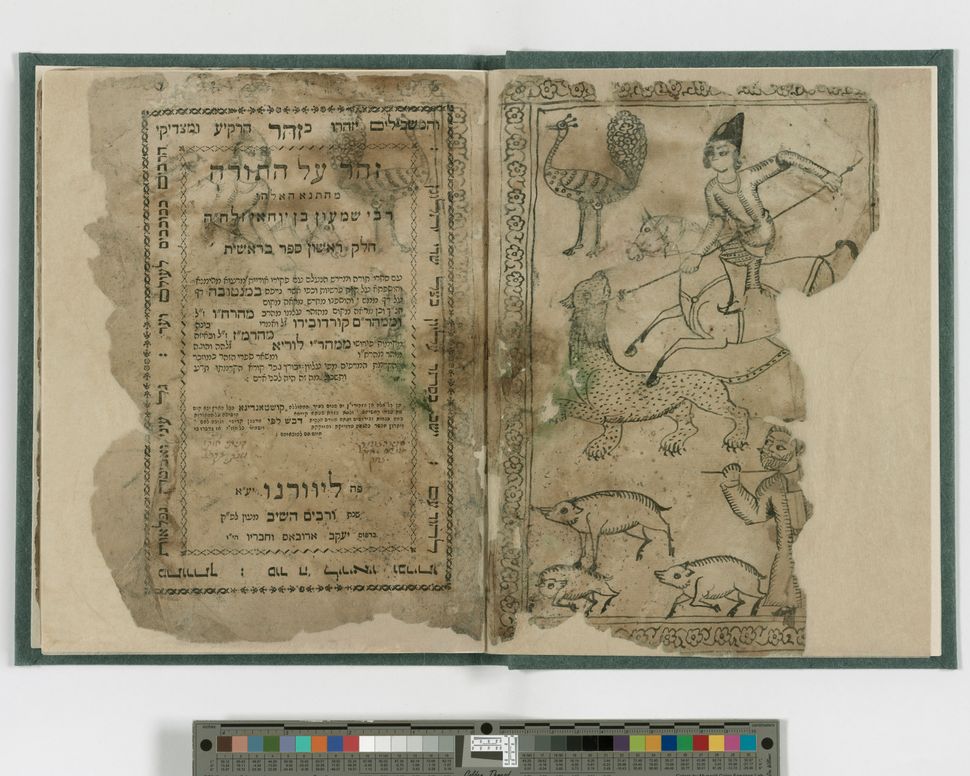
The 1815 Zohar from Livorno, after its restoration. Image by U.S. National Archives

By Talya Zax July 19, 2018
The Iraqi Jewish Archive, as the Forward explored in a recent series of articles, has significant symbolic meaning.
To Iraqi Jews and their descendants, exiled from their home country starting in 1950, the archive, a trove of artifacts brought to the United States for restoration in 2003, represents the rich communal life and history they were forced to leave behind.
To Iraq, the archive is an important memorial to the many minority communities decimated under the dictatorship of Saddam Hussein.
As the world faces the global refugee crisis, the question of how to distribute items of cultural significance following catastrophic conflict is becoming increasingly important. The foreign policy matters touched by a dispute over the archive’s return to Iraq, currently scheduled for this September, may affect Israel, the Palestinians and the entire community of Middle Eastern Jewry and their descendants.
But what, exactly, is in the archive? See the slideshow above, and learn.
I’m personally matching all gifts to the Forward, up to $36,000. Can I match your gift now?

Hello, fellow Forward reader! I’m Joel Brown, a Forward reader and supporter for more than 15 years, and currently the chair of the board of directors.
I’m an avid Forward reader because it ticks so many of my essential boxes: excellent journalism, Jewish focus and diverse viewpoints. In today’s political climate, what I most appreciate is the Forward’s independence — made possible by the generosity of its membership.
The Forward is committed to bringing you unbiased, nuanced Jewish news. From my position as board chair, I see an exciting future as we expand our position as the definitive independent voice of contemporary American Judaism.
— Joel Brown, Forward board chair
Support our mission to tell the Jewish story fully and fairly.