Righteous gentiles in the Holocaust were no ‘ordinary thing’
‘This Ordinary Thing’ recounts the stories of those who hid their Jewish friends and neighbors
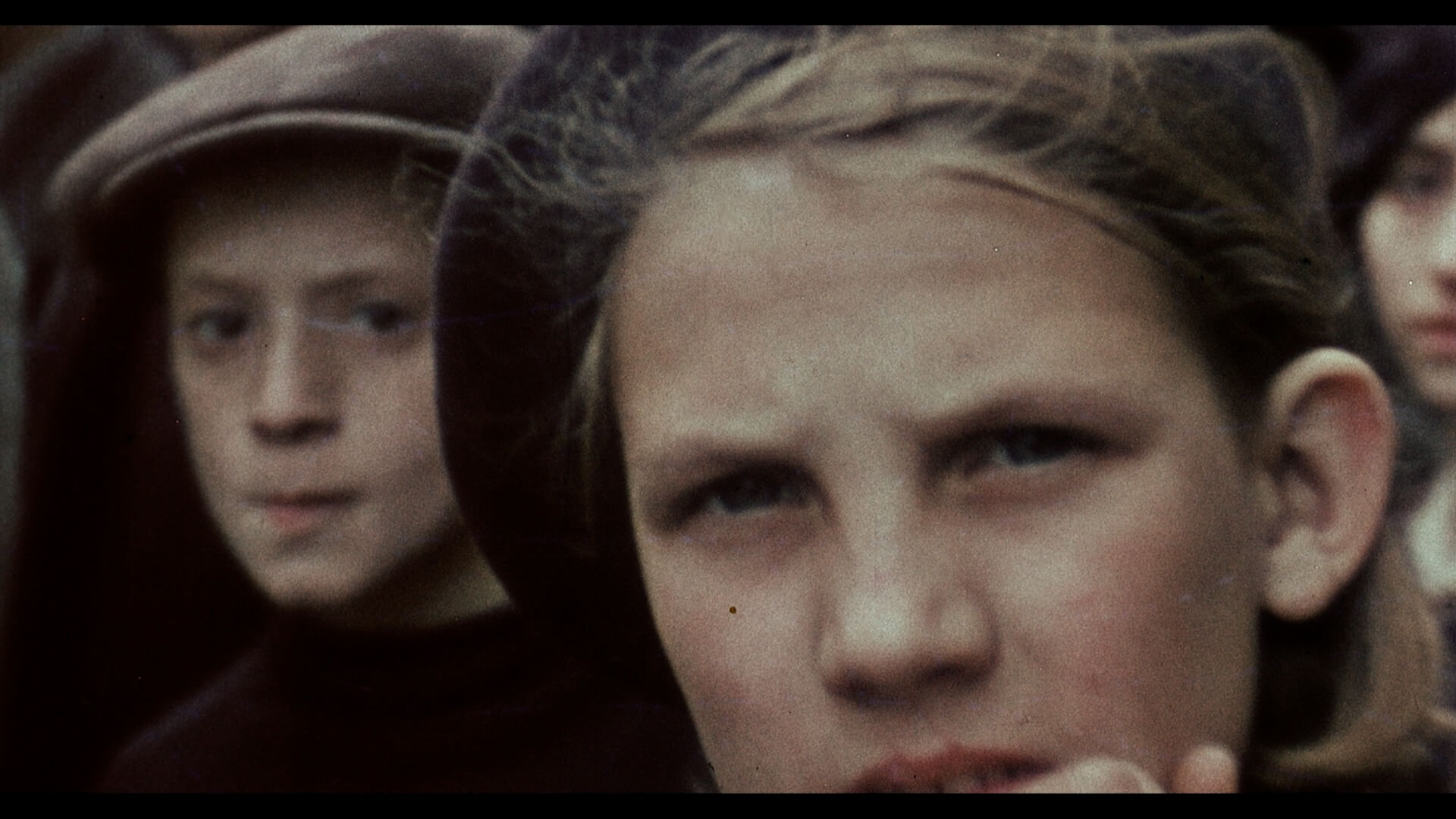
A still from the documentary Courtesy of Series of Dreams
Admittedly, Holocaust movies are often problematic. So much of the material is familiar and repetitive. Many audiences have grown inured to the subject if not downright turned off, for whatever reasons. Documentary maker Nick Davis says he did not want to make another Holocaust film, at least not one that we had seen before. He has succeeded. Instead of focusing on the relentless atrocities and victims, his film, This Ordinary Thing shines a light on the often forgotten heroes of the era.
It tells the story of gentiles who helped save Jews across Europe during The Holocaust. Narrated by an all-star cast — including F. Murray Abraham, Helen Mirren, Jeremy Irons, Ellen Burstyn, Jeannie Berlin, Eric Bogosian, Lily Tomlin, and Stephen Fry — the film combines archival footage with the testimonies of more than 40 individuals who, at great personal risk to themselves and their families, worked to rescue Jews.
This was no collective endeavor. As told in this film, none of these people had histories as resistance fighters, although they may have become partisans later. They rose to the occasion, that’s all. Those they hid were desperate neighbors, friends and sometimes strangers who showed up at their doorsteps begging for help.
In some instances they sheltered Jews for years in tight unlit quarters without plumbing; elsewhere, they adopted Jewish children and passed them off as their own; in one situation, a housekeeper prostituted herself to appease and silence her employer who discovered she was hiding Jews in his home. In another, a housewife was hiding Jews underneath and between the cushions in her large, bulky sofa. And when Nazi soldiers stormed the house, eyeing the sofa, she challenged them to shoot it up, adding that when they found nothing, but succeeded in ruining her furniture, they would have to buy her new fabric and pay for reupholstering. The soldiers, who may or may not have believed her, left the home.
If caught, any one of these brave souls could have been shot on the spot or hung; some of them were. But by the end of the war, they had rescued thousands of Jewish strangers from almost certain death in the camps, ghettos or streets. Precise statistics are not known, but Yad Vasham estimates that the Jews saved number in the tens of thousands, and the museum acknowledges 28,000 saviors as “The Righteous Among the Nations.”
The 62-minute film, with haunting music by Tony-winner Adam Guettel, is understated and subtle. Set within a chronological structure, starting at the cusp of the Holocaust and continuing post liberation and beyond, these courageous figures recount matter-of-factly what they observed and experienced. Devoid of back stories, short of their names and countries of origin, they become, in the film, at once heroes and historical witnesses.
Most of our heroes are voice overs, nothing more. A few, however, were interviewed decades ago; some of these video testimonials are interwoven, as well as many black and white photos of the narrators.
Throughout the movie, the overarching questions remain unanswered. How do people like this come to exist? What makes it possible for them to step up to the plate? What, if anything, unites them?
Their motivations were all over the map. Some of the people who sheltered Jews were genuinely religious; others, less traditionally so, nevertheless held a kind of simple morality as axiomatic. One said “It’s natural: When people come to you hungry, you give them food.” Another notes, “How would you feel if, later, that person died? How could you survive?”
Many of those interviewed in the film said they were driven to act through the stunning outrage they felt in response to their fellow countrymen’s willful ignorance and, in more than a few cases, outright denial of the growing antisemitism. Hatred of Jews was pervasive and had always been endemic in their countries, which included Poland, Belgium, the Netherlands and Germany. Indeed, the majority of their gentile neighbors, some observed, couldn’t wait to be marching in lockstep with the Nazis, who offered them the perfect platform to voice their deep seated antisemitism.
But nothing could compete with the shocking scenes the gentile heroes personally witnessed that confirmed the necessity to do something, at whatever peril to themselves. The brutality was unprecedented; one witness described walking into a public square to see five bodies swinging from the gallows, including a gentile couple and the Jewish family they sheltered. Another recalled seeing a Nazi officer smashing a crying Jewish infant to the ground and then stomping on its head.
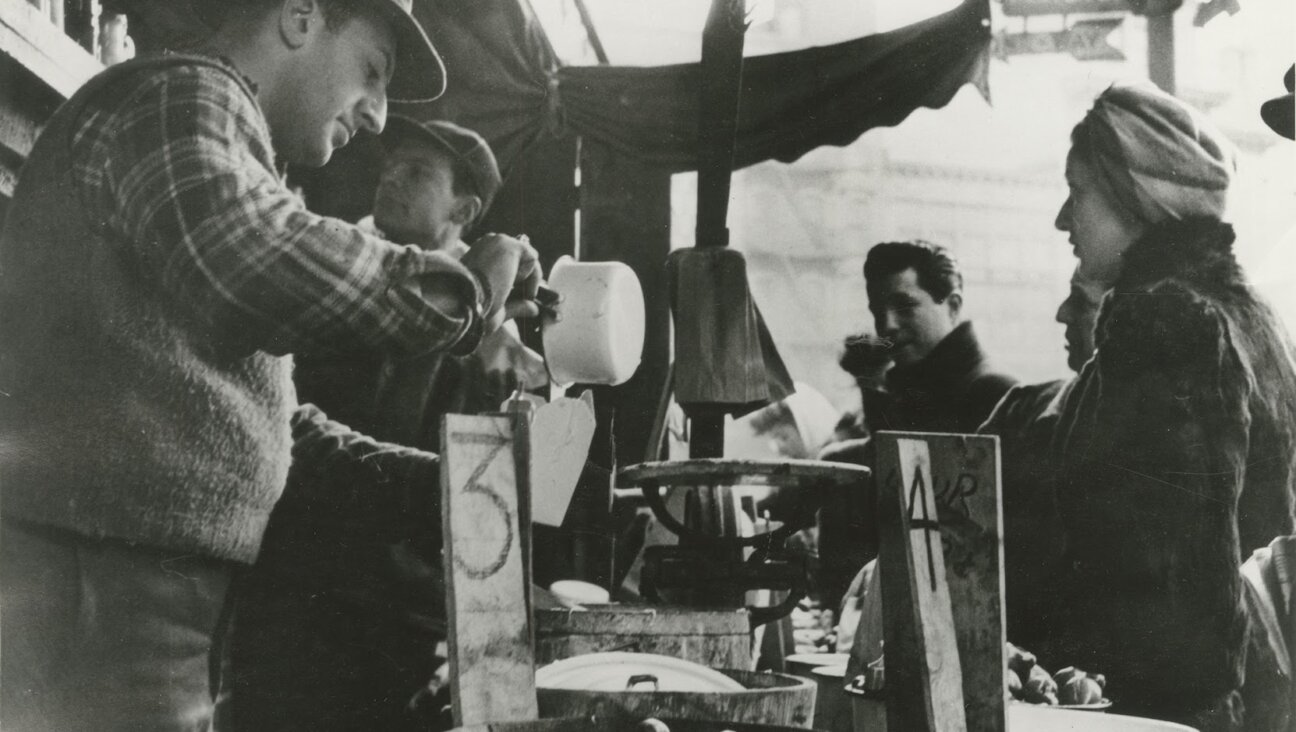
Some of the images, such as the grisly gallows scene, are projected on screen. But in most cases, the archival footage has nothing to do with the particulars that are being recounted at that moment, and in fact often border on the generic. Still, they effectively serve as potent backdrops. There are the marching Nazis and cheering crowds, Jewish owned stores with “Jude” scrawled across broken windows and abandoned Jewish homes, the owners’ possessions strewn all over the floor.
At the end of the war, most Jews and their gentile protectors went their separate ways, but not all. One Jewish man married the gentile woman who saved him; another Christian who rescued Jews reports that he converted to Judaism, including undergoing a circumcision at the age of 68. One recalls a conversation with his wife, marveling in retrospect at how they saved Jews during the war.
“I said, ‘We’d be crazy to risk our lives for those strange people.’ And my wife said, ‘Yeah. We’ll never do it again, will we?’ ‘No,’ I said, and she looked at me and we laughed. She said, ‘You know, just as well as I do, we would do the same thing over.’”
To show the timelessness of antisemitism, Davis incorporates chants from the antisemitic demonstration in Charlottesville in 2017. “Jews will not replace us.” But the snippet is unnecessary — in fact, it almost dilutes the impact of what has preceded it.
The references to current events trivialize the Holocaust and unwittingly undermine the actions of the gentile heroes. I also can’t help feeling that Davis was looking for a theme that was universal, like heroic individuals, from any era, who do the right thing despite the peril that is involved.”
While it’s tempting to look for universal resonance in the film — to attempt to answer the question, “What would I do?” — there is no application. The Holocaust story and its heroes are unprecedented, unmatched and very much of their time and place. The word “inspiring” does not cut it. I watched this one gob-smacked.
This Ordinary Thing is running at the Cinema Village.
This is a moment of great uncertainty. Here’s what you can do about it.
We hope you appreciated this article. Before you go, we’d like to ask you to please support the Forward’s independent Jewish news this Passover. All donations are being matched by the Forward Board - up to $100,000.
This is a moment of great uncertainty for the news media, for the Jewish people, and for our sacred democracy. It is a time of confusion and declining trust in public institutions. An era in which we need humans to report facts, conduct investigations that hold power to account, tell stories that matter and share honest discourse on all that divides us.
With no paywall or subscriptions, the Forward is entirely supported by readers like you. Every dollar you give this Passover is invested in the future of the Forward — and telling the American Jewish story fully and fairly.
The Forward doesn’t rely on funding from institutions like governments or your local Jewish federation. There are thousands of readers like you who give us $18 or $36 or $100 each month or year.
Support our mission to tell the Jewish story fully and fairly.