Before I became an orthodontist, I was my good friend Neil Sedaka’s saxophonist
A fond memory of the singer-songwriter who has died at 86
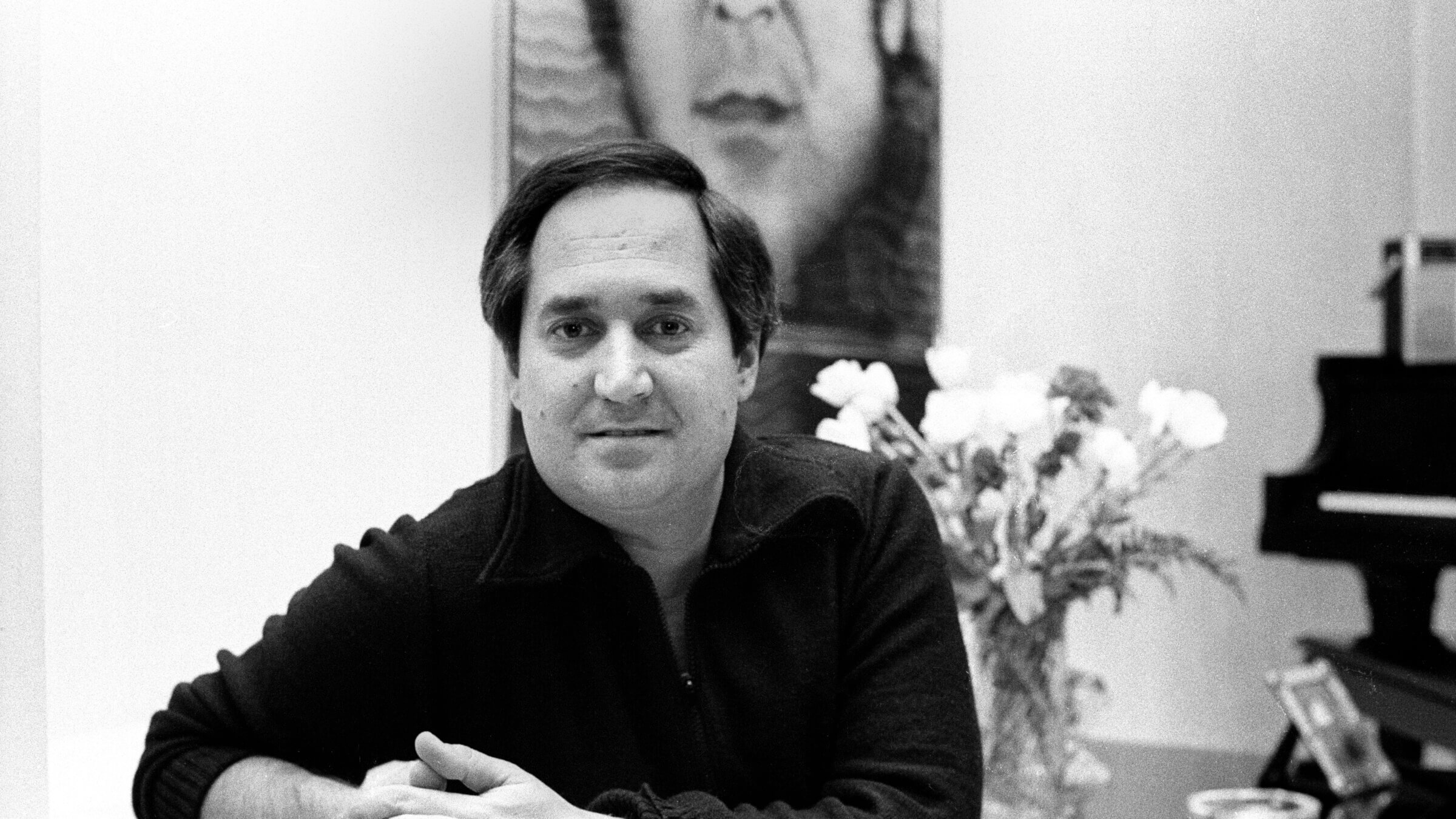
Singer and songwriter Neil Sedaka at home in New York, 1977. Photo by Anwar Hussein/Getty Images
When I first heard Neil Sedaka had died at the age of 86, I posted a Sedaka song on social media. I’m a Gen-X alternative rock fan, which is not exactly Sedaka’s lane, but it’s hard not to tip your hat to a pop culture legend. I posted “Standing on the Inside,” from 1973, and told people to wait for the chorus. Then, in the comments, my friend Beth Tichler Mindes from my Camp Tranquility summer camp days, wrote a sentence that stopped me: Neil and her dad had been in a band together when they were teens in the Catskills. She’d known Neil her whole life. I asked if I could talk to her 86-year-old father, Howie Tichler, and when I got him on the phone, he told me about the time in the spring of 1958 when he first met Neil Sedaka.
I first met Neil at the Kingsway Theatre on Kings Highway in Brooklyn. I was standing in the back near the popcorn. He was next to me, wearing a high school band sweater. I asked him what school he went to, and I told him I was a musician too. He said he was a piano player and that his band was auditioning for a saxophone player for a Catskills summer gig. I said, great, I’m in. It was that quick. He gave me an address, told me to come down to the basement there and audition.
Honestly, I was at the theater to meet girls, not to watch the movie. That’s why I was hanging out in the back.
Before the audition, I spoke to my uncle, Sid Cooper. He was a saxophonist and woodwind player with the Tommy Dorsey band and later at NBC, playing with the Tonight Show band during the Jack Paar years and into the Johnny Carson era. He made sure I was ready. I needed a rhumba, a cha-cha, a foxtrot, a jitterbug. In those days you had to know the dances.
The audition was for a four-piece band. Neil wasn’t even the leader. He was just the piano player. The job was in the Catskills, at a hotel in Monticello called the Esther Manor. Esther ran the place, and her daughter, Leba Strassberg, worked behind the front desk. Neil would later marry Leba.
I don’t remember exactly how we got there. Maybe my father drove. Maybe someone in the group had a car. But we packed everything in and drove up.
When we arrived, we were told to introduce ourselves to the owner using only our first names. Half the band was Italian. In most places in the 1950s, people were hiding Jewish heritage. In the Catskills, Italian last names apparently wouldn’t go down so well. So, Eddie Caccavale became just Eddie. Paul Delova became Paul.
There were sometimes four of us, sometimes five. The group was called The Nordanels. My name wasn’t in the title because I joined a little late. The name came from Norman, David, and Neil. N-O-R-D-A-N-E-L-S.
If it was a wedding or a bar mitzvah, we wore white tuxedos. Sometimes black. At the hotels, it depended on the night of the week.
We worked six days a week, and this is no exaggeration. Afternoons, we played poolside for cha-cha lessons. Then we’d run back to our rooms, change, and play in the lobby as guests came in for dinner. After that, we played dance music before the stage show, then read the charts for the acts — usually, a dance team, a singer, or a comedian.
I was making about $85 a week, plus room and board. I wouldn’t exactly call it a room as I slept near the chicken coops. We didn’t get tips, either — unless you count being seated at dinner with the single girls.
I was born in 1939, so you can do the math. I was 18 when I started at Brooklyn College. By 1961, I was headed to Temple University in Philadelphia for dental school.
The Catskills gig helped pay for all of it as I could save every summer. Brooklyn College tuition was $15 a year, and they even threw in the textbooks. Dental school was another story. So the band gig felt like a gift.
People think of Dirty Dancing when you say Catskills. That came later. The movie is set in 1963, at a fictional resort called Kellerman’s. But the atmosphere was already there in the late 50’s and early 60’s. It was smoky. It was loud. It was hopeful.
At Esther Manor, single girls came up with their parents for the summer, and at dinner they would sometimes seat the musicians with the guests. So there we were, night after night, at long tables with our instruments nearby. We were in heaven. So were the girls.
I did this for six or seven summers. It wasn’t a one-time gig. I kept playing through my third year of dental school. After Carol and I were married, and I graduated, that era ended. From then on, I focused on dentistry. I’m a retired orthodontist, and I practiced on Long Island for about 45 years, and now I teach at Columbia. We originally lived on Long Island near my practice. My wife became a social worker and psychotherapist and opened a practice in Manhattan, so we moved halfway to the city. Once the kids flew the coop, we moved into Manhattan.
During the pandemic, we did something that still makes me laugh. Back when everything was masks, masks, masks, Carol and I were stuck in our apartment one day, and we wrote new parody lyrics to one of Neil’s songs. The original was “Breaking Up Is Hard to Do.” We turned it into “Masking Is Not Hard to Do.” I called Neil and told him we’d written these lyrics, and I emailed them over.
“Don’t take your mask away from me.
Don’t put my health in jeopardy.
If you don’t, then I’ll be blue,
Because what I am asking is not hard to do.
Remember when you held me tight.
We can’t do that now, but that’s all right.
Thinking safe will get us through,
Because masking is not hard to do.
They say that masking up is a difficult task.”
The next day we found out he’d posted it on Facebook. During the pandemic, he was doing this daily thing where he would sing three songs, and he introduced us and said we wrote the lyrics, and then he played it.
I guess I wasn’t so shocked when I heard he died, as when I spoke to him about a week ago, he was frailer than I ever heard him. But when we talked, we were right back to music.
We always talked about gigs we did together, about musicians who were on the job, and about little details he might have forgotten. For example, the last time we spoke, just two weeks ago, he said, you know that album I recorded that wasn’t very successful, where I sang a bunch of standards? I said sure, I remember it; I still have it. And he said, who was the piano player on that gig?
Our conversations were brief on family, and then we’d get into the details of the cool things we did together. It was always a walk down memory lane.
What I truly admired about Neil was his humility. He understood the unspoken thing between musicians. He knew my limitations, and he never judged my playing. He also knew I was an orthodontist. I had patients, not jam sessions. I wasn’t able to keep up my chops the way a full-time musician could, and he never made me feel like I was anything less than part of the band.
About 15 years ago, Neil called me up and said, “I’m on tour, and I have a gig at the Shubert Theatre in New Haven. My saxophone player is stuck in Montreal. Can you come do the show with me?”
I said, “Sure, but you realize you’re asking an orthodontist to sit in with an eight-piece orchestra.”
He said, “No problem. I’ll fax you the music.” Fax. That’s how long ago this was.
So the music starts flying through my fax machine, half of it unreadable. I called Neil and said, “I’m doing the gig, but don’t expect me to be reading those charts. I’m going to do it by ear.” And he said, “Great.”
I drove up the night before because we had soundcheck the next afternoon. The band was there, Neil wasn’t even there yet, one of the other musicians was running the rehearsal. I’m standing in this magnificent old theater in the middle of New Haven, and I walked up to the guys and said, “Hi, I’m Howie Tichler. I’m really an orthodontist. So go easy on me.” And the guy says, “Neil told us everything. Don’t worry about a thing. Come on up. We’ll rehearse.”
They put me right behind Neil, so the spotlight wasn’t only on him. It was on me, too. The air conditioning was blasting, and it kept blowing my sheet music off the stand, so I’m trying to keep the pages from taking flight while also pretending I belong there.
Neil was incredibly gracious. He introduced the band and he said, “This is my friend Howie Tichler, who is really an orthodontist, and he came to help me out.”
And when I left the theater, I’m walking out with my saxophone on my shoulder, and a woman stopped me and said, “Can I talk to you for a second?” I thought she was going to compliment my playing.
Instead she asked me if she needed braces.
Right now, I’m mostly thinking about the good times. Whenever he came to Manhattan we’d meet up. We went to museums together — the Met, the Guggenheim. It wasn’t always about music. Sometimes it was just two old friends walking around looking at art.
He also came to visit us on Fire Island. Within half an hour, everyone in Fair Harbor knew he was at our house. Not because of an announcement, because of his voice. We had a little portable piano, and he’d sit down and sing. Someone walking by would hear it, stop, and then word would spread.
I actually sang on his first hit, “The Diary.” It’s a doo-wop song, and they couldn’t afford, or maybe couldn’t find, backup singers, so I became the backup singer on Neil Sedaka’s first record.
But the thing I keep coming back to isn’t the credit. It’s the sound of him in the room, that voice carrying out the window. In Fair Harbor you could hear him before you saw him.
This is a moment of great uncertainty. Here’s what you can do about it.
We hope you appreciated this article. Before you go, we’d like to ask you to please support the Forward’s independent Jewish news this Passover. All donations are being matched by the Forward Board - up to $100,000.
This is a moment of great uncertainty for the news media, for the Jewish people, and for our sacred democracy. It is a time of confusion and declining trust in public institutions. An era in which we need humans to report facts, conduct investigations that hold power to account, tell stories that matter and share honest discourse on all that divides us.
With no paywall or subscriptions, the Forward is entirely supported by readers like you. Every dollar you give this Passover is invested in the future of the Forward — and telling the American Jewish story fully and fairly.
The Forward doesn’t rely on funding from institutions like governments or your local Jewish federation. There are thousands of readers like you who give us $18 or $36 or $100 each month or year.
Support our mission to tell the Jewish story fully and fairly.