It’s Purim in Tel Aviv — but in the shelter there are few costumes in sight
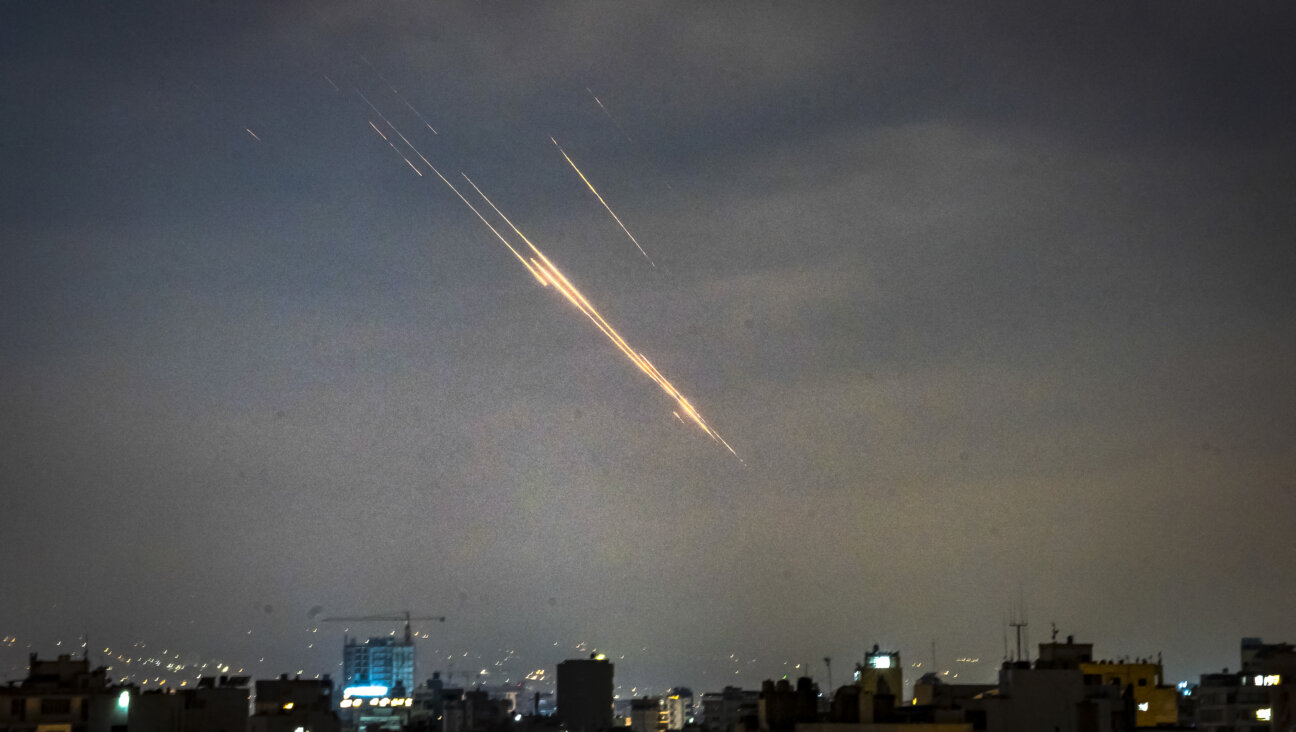
Though the war is only four days old, the sirens have already sounded more than 30 times
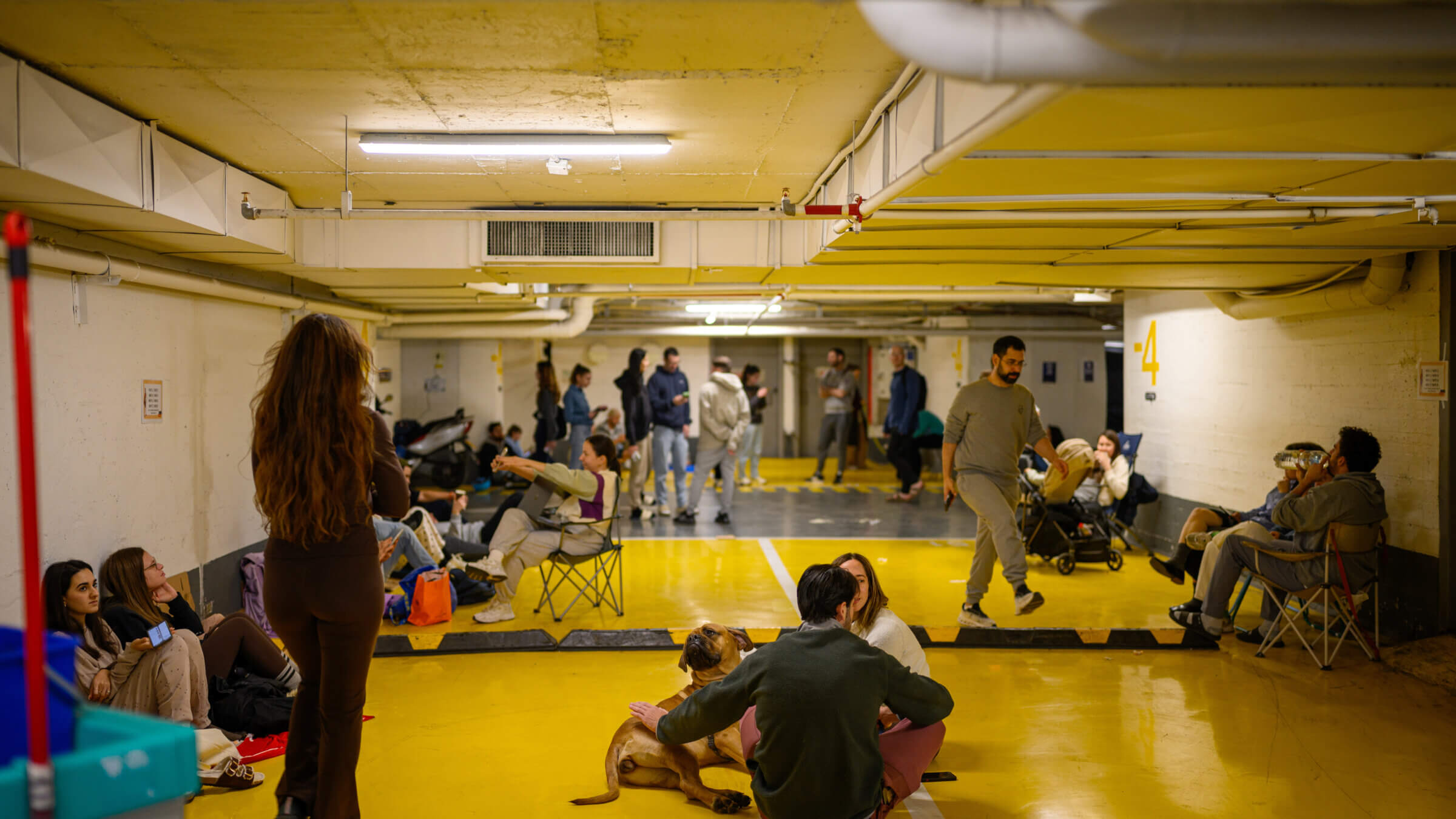
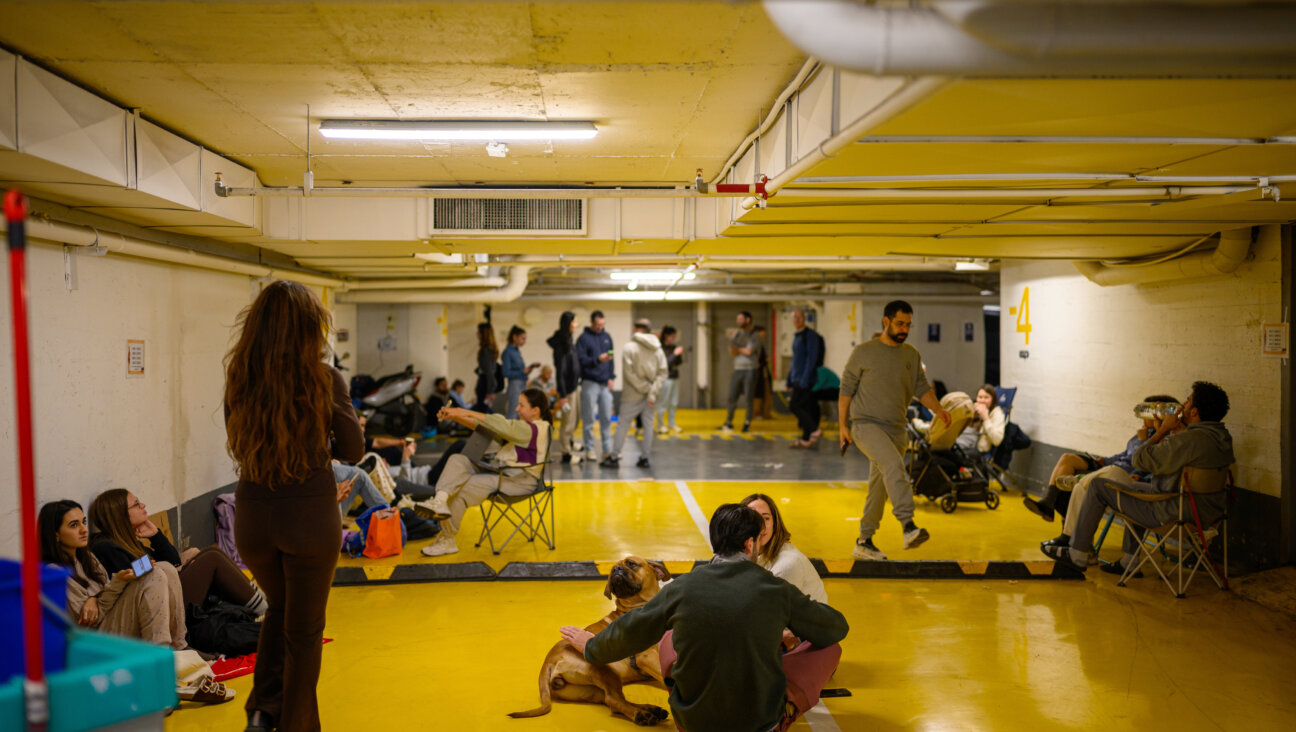
People take shelter in an underground bomb shelter amid reports of incoming missiles on Feb. 28, 2026 in Tel Aviv. Photo by Alexi J. Rosenfeld/Getty Images
An hour before my suburban Boston minyan convened to twirl groggers and shout curses at Haman during the Megillah reading, I hustled into the underground parking garage beneath an old age home across the street from our Tel Aviv rental flat. It was the 25th or 26th siren since the start of the new Iran war 48 hours earlier. According to the Israel Home Front Command app on my phone, our apartment is 1.5 minutes from the underground garage, which is about half the time you have to get to a shelter before the second, more serious siren sounds, informing everyone to get inside immediately and shut the blast door. If you fail to shut the blast door, a shock wave can hurl through the open portal and cause injuries or death. I don’t know if that 1.5 minute figure includes the time it takes to dash down the five flights of stairs.
On Monday night — 12:41 a.m. Tel Aviv time, so technically Tuesday — it was slightly less crowded in the garage than it had been the first time, 26 sirens earlier. In part this was because the cars that had been parked there that first Saturday morning were gone, removed per regulation after Shabbat. It’s also possible that some people were choosing to stay in bed, though I doubt there were many. An elderly woman with limited mobility on the second floor of our building has chosen to sit in the hall during the sirens rather than come with us across the street though we have offered to carry her (the elevator is out of the question). Each time, she waves us on and says with a smile that she’s fine.
The mood in the shelter ranges from chatty during the day to subdued in the middle of the night. During my first siren, I talked with three young women who had by chance all moved to Tel Aviv from Long Island, not far from the town where I grew up. My husband and I met a 60-ish couple from New Jersey who live down the street from our rental and have been in the country for 25 years.

It’s a mostly youngish neighborhood, close to the hot spots on Dizengoff, so there are usually a dozen babies and an equal number of dogs. Someone always gives me a chair; the white hair is the tip-off. There are two kinds of chairs in the garage — a collection of upholstered chairs in shades of sea green and blue of the type you find in a dentist’s waiting room, and another collection of stacking white plastic. The senior home above the garage has kindly set up a table with a hot water urn and tea and a canister of Elite instant coffee; also plain boxed cookies. Few partake of the cookies; if they do, they take only one.
Everyone is considerate, polite. The mood is sanguine, calm. We have befriended a couple in their 40s, the husband Israeli, the wife Canadian; she has rightly dubbed their 17-month-old the shelter mayor. In her newfound thrill in walking — whenever she is not sleeping or nursing — she toddles through the garage to find the dogs, who are typically at her level, height-wise, to play with their snouts. The dogs are patient and willing, the child joyful. For those of us without dogs or babies, both are functioning as emotional supports.
The slightly older children, ages four to, say, 10 seem the most remarkable to me. There is no whining, no restlessness, and there are relatively few games or hand-held devices. They appear to grasp that this is not the time to demand or complain. They mostly sit with, or on, their parents, or move about in their sweatpants or pajamas in sibling pairs before circling back to home base. There’s a fair amount of English — not much French or Russian in this neighborhood — and occasional incongruous loudspeaker announcements in Hebrew intended for the senior residence that are carried into the garage, including one broadcast Saturday evening to say that movie night was cancelled. This netted a big laugh in the garage.
My husband and I are among the few who bring specially-packed bomb bags — water, essential medication, snacks, a change of clothes, our computers. Others arrive as if straight from the beach. When I first packed it, weeks before the first bomb was dropped on Tehran, I asked my husband why he said we should bring our computers. After all, we’d have our phones; we weren’t going to do work in the shelter.
He looked at me curiously, as if I’d missed some important cues. In case our building is destroyed, he reminded me.
Oh.
It is now Day #4 of the war. Readiness is paramount. Showers are a three-minute affair; we sleep in our clothes. We’ve had five sirens today, two that were back-to-back. Meaning that you get the all-clear, stand up, exit, and the siren blares again. It’s also Purim, but there are few costumes in sight. I dashed to the corner grocery after the morning sirens, since, unaware of what was coming, we had not stocked up on food in advance, making it there and back with one bag of essentials in eight minutes. On the sidewalk was a lone Haredi family in costumes. In the shelter, there were two funny hats; one person had put a butterfly decoration around their greyhound’s neck. True, it’s not an especially religious crowd, though there are some kippot in the room. But even they are on their phones. In the shelter for the 31st time, there is no need for reminders of Persia of long ago.