Inside the ancient Christian theology driving modern antisemitism
Supersessionism might sound like an esoteric theological concept, but it has clear repercussions for Jews
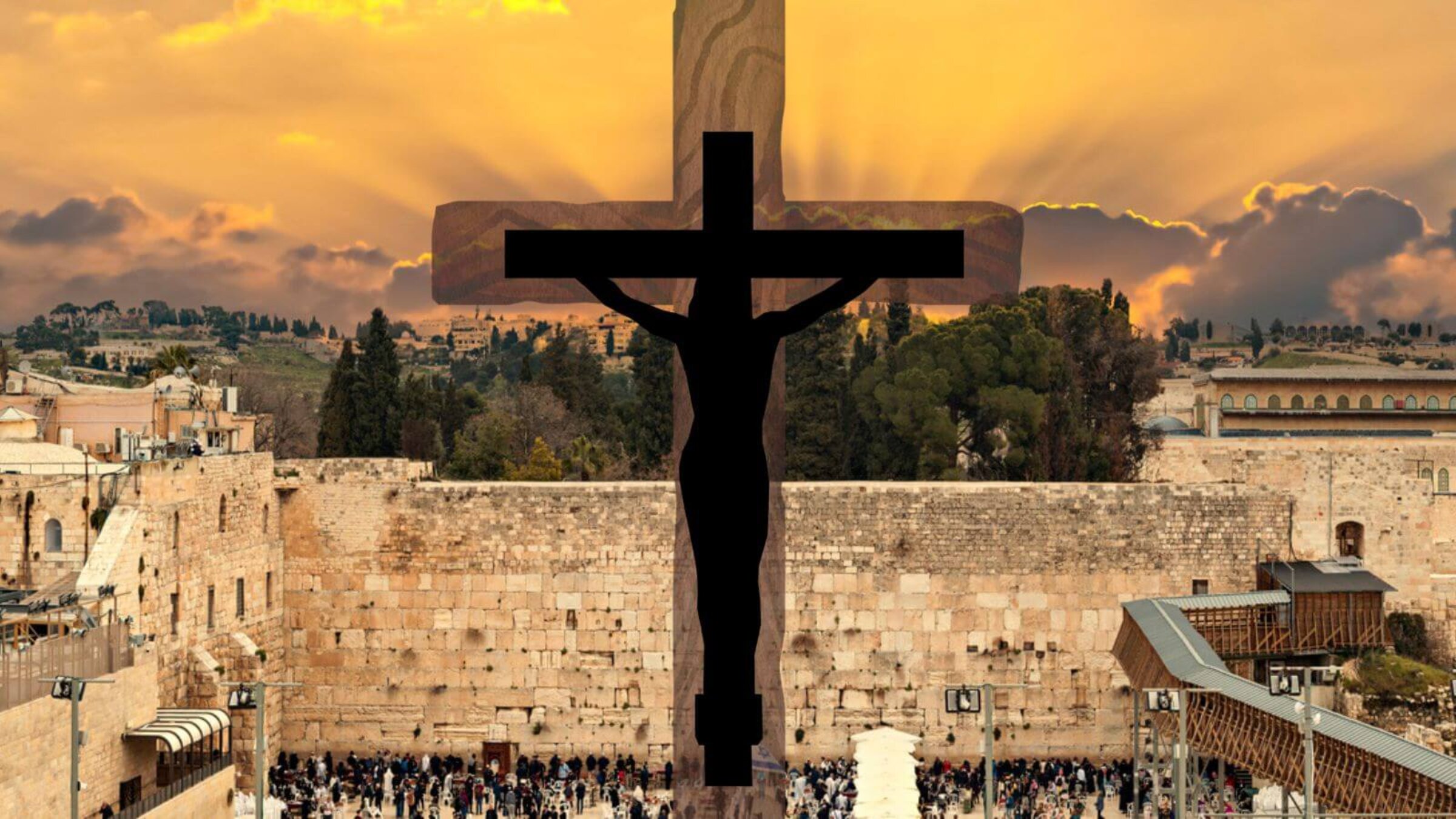
Supersessionism is the Christian belief that Jesus has made Judaism obsolete, replacing it. Image by iStock / Mira Fox

By Mira Fox March 28, 2026
Christian influencers like Candace Owens and Tucker Carlson are rallying their followers against Israel — and Jews. And to do so, they’re also weaponizing a centuries-old concept that underlies many strains of Christianity.
It’s called supersessionism, and it’s the idea that Jesus’ existence supersedes all commands, laws and beliefs that came before it. Christians often say that Jesus’ death “fulfilled” God’s commandments, meaning that everything God said to Jews in the Hebrew Bible, all of the covenantal promises and laws, are obsolete.
These views on Israel, and their theological interpretation, collide with a Christian Zionist movement that deeply supports Israel for its own scriptural reasons, believing that Jews must return to Israel to fulfill a prophecy and herald Jesus’ own return.
Yet supersessionism has become a theme in Christian opposition to Israel. We hear it in the words of Carrie Prejean Boller, a recent Catholic convert and a now-former member of the Religious Liberty Commission, a Trump administration council on religious protections. After she used a panel on fighting antisemitism as a platform to declare that her religious convictions prevented her from supporting Israel — and was removed from the commission as a consequence — she doubled down. “The Catholic Church is the True Israel,” Prejean Boller declared in a post on X. “Christians are the spiritual Semites. We are the new people of God.”
Candace Owens, a Christian podcaster who often refers to Judaism as Satanist; avowed white supremacist Nick Fuentes; and right-wing commentator Tucker Carlson have all similarly said that their Christianity prevents them from supporting Israel because Jesus has obviated the need for a holy land. “As Jesus says plainly in the Gospels, I am the Temple. I am the Temple now,” said Carlson in a recent video, explaining his religious opposition to Israel.
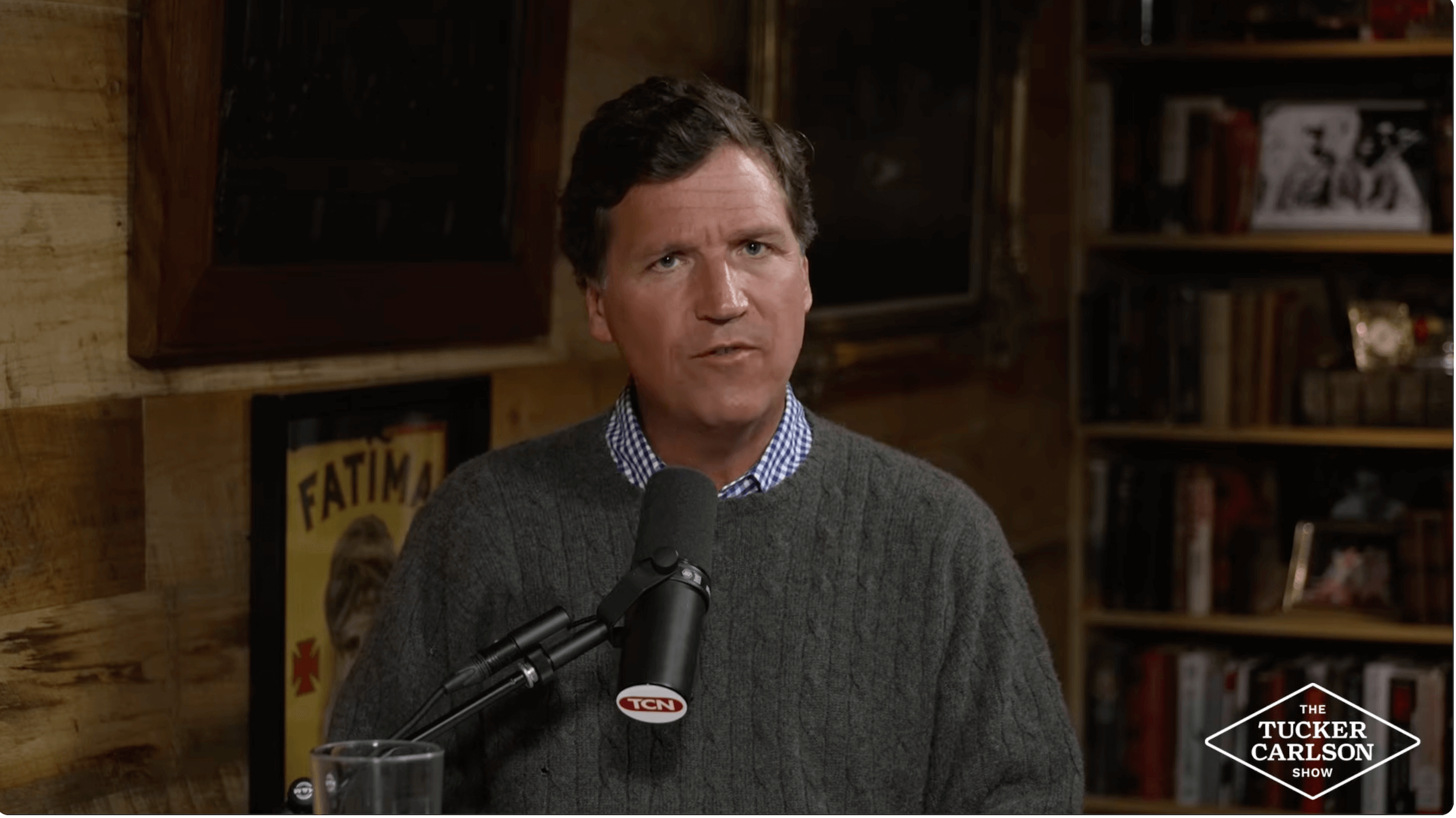
These supersessionist Christian influencers have expressed support for Gaza and criticized Israel on political and moral grounds; that part is not religious. But they have also insisted that they must oppose Israel from a religious perspective, because its very existence goes against their belief that Jesus has taken the biblical place of Israel.
In their hands, supersessionism fuels not only opposition to Israel, but explicit antisemitism — Prejean Boller has said that she is incapable of being antisemitic because, she argued, since Catholics are the true Semites, she would have to be discriminating against herself. Owens repeatedly refers to Judaism as the “synagogue of Satan,” an age-old accusation that in rejecting Jesus, Jews have rejected God and become evil.
This ancient and controversial piece of theological history is increasingly becoming a bludgeon against Israel, and Jews more broadly.
The roots of supersessionism
In the supersessionist understanding of Christianity, now, Jesus’ followers — Christians — are the chosen people of God, overriding and replacing the Jews in covenant with God.
Scholar Susanna Heschel has referred to supersessionism as a form of colonization. “Christianity colonized Judaism theologically,” she writes in an essay on supersessionism in Mel Gibson’s The Passion of the Christ, arguing that the newer religion usurped its central theological concepts while “denying the continued validity of those ideas for Judaism.”
The reasons supersessionism emerged as a dominant belief in Christianity are rooted in a complicated history. Christianity arose from Judaism, and Jesus was a Jew. So early Christians put a lot of work into differentiating themselves and their new religion from Jews and Judaism.
“Paul, you know, he did not want Christians to adopt Judaism,” Marcia Kupfer, an independent scholar who researches and writes about supersessionism, particularly in medieval art, told me over the phone. “It would mean that they are turning to the law when they should be just putting their faith in Jesus.”
Much of that differentiation involved rejecting the continued validity of Judaism. While Christians do consider the Hebrew Bible to be part of their holy texts, there’s a reason they refer to it as the “Old Testament” — because, now, it is obsolete, making anyone who continues to follow its teachings in some way backward and no longer in active relationship with God.
“It is this problem of having, in a way, consumed Judaism,” Kupfer said. “It’s part of their Bible. But it has to be preparatory, prophetic, some anticipatory stage to something more complete and true. More spiritual. So it’s at the same time taken over and rejected.”
Who believes in supersessionism?
Today, it can be tough to definitively say what movement thinks what, due, in large part, to the stratospheric rise of Christians who consider themselves non-denominational — and to the linguistics around supersessionism, which some consider to be a negative term, even as others embrace it.
“It often doesn’t get talked about as supersessionism,” said Matthew D. Taylor, a theologian and visiting scholar at the Center on Faith and Justice at Georgetown University. “I don’t know too many Christians who will come out and say: ‘I’m a supersessionist.’”
But, in general, the more doctrinally focused the church — Catholicism, Orthodox, Calvinism — the more likely it is to have historically preached supersessionism; the more experiential churches, such as the non-denominational charismatic movement, are less attached to the ideology and often lean toward endorsing Israel.
Among the sects that have historically preached supersessionism, however, the ideology has been a topic of hot debate since the Holocaust. In recent years, these churches — especially the Catholic church — have made moves to reject the ideology, due to supersessionism’s antisemitic undertones.
Rev. Russell McDougall, director of ecumenical and interreligious affairs at the United States Council of Catholic Bishops, told the Forward that “the church has repudiated” supersessionism “quite clearly,” and admonished Catholic influencers like Owens, Prejean Boller and Fuentes in a letter from the USCCB. He pointed to a 2015 Church document titled “The Gifts and Calling of God Are Irrevocable,” released on the 50th anniversary of another groundbreaking document about Jews, Nostra Aetate.
Nostra Aetate, a portion of the revolutionizing Catholic council known as Vatican II, is lauded for improving church views on Jews. It rejects the belief that the Jewish people bear responsibility for Jesus’ death, and also affirms Christianity’s roots in Judaism. But, while Nostra Aetate sought to improve Catholic respect for Judaism, it still affirms some supersessionist ideas. “Although the Church is the new people of God,” it says, “the Jews should not be presented as rejected or accursed by God.” Jews, in other words, are not hated by God — still, Christians have replaced them as God’s favored children.
The 2015 treatise grapples with this issue at far greater length. It admits that rejecting supersessionism undermines the central beliefs of the Church. “The theory that there may be two different paths to salvation, the Jewish path without Christ and the path with the Christ,” the document says, “would in fact endanger the foundations of Christian faith.” How to excise supersessionism without undermining the church, it concludes, “remains an unfathomable divine mystery.”
The idea that salvation is given by God exclusively through Jesus is so central to church teachings that rejecting supersessionism poses clear contradictions — which is perhaps why modern Christian influencers are returning to it.
The Christian movements that do not preach supersessionism — the charismatic non-denominational movements, Pentecostal Christians, and fundamentalist evangelicals such as Mike Huckabee, the current U.S. ambassador to Israel — don’t resolve the contradictions either.
Many Christian Zionists focus, in part, on a line in Genesis, 12:3, in which God says that those who love Israel will be blessed and those who oppose it will be cursed; Ted Cruz cited this verse to Tucker Carlson in explaining his support for Israel. Others reference prophetic books in the Bible that point to God’s promises around Israel. But they do not necessarily engage with other lines in the New Testament that imply support for supersessionism.
“They’re reading the Bible in a very helter-skelter way,” said Taylor of the charismatics.
Why does any of this matter?
While supersessionism is core to Christian theology, it might seem like a niche debate best left to pastors and rabbis. But, looking at statements from Carlson, Prejean Boller and others, it’s clear that it informs and justifies their politics regarding Israel and Jews at large — even though it has officially been rejected by many churches.
“They’re in many ways rebelling against the past 60 years of Catholic theology, and trying to hearken back to something that they view as more authentic,” said Taylor of the influencers. “So I think that the supersessionist piece is signaling something significant because it’s part of the broader distaste for some of the modernizing shifts within Roman Catholicism.”

Supersessionist beliefs have, for years, driven antisemitism. It is woven into centuries of artistic and cultural portrayals of Jews as backwards, lesser or even Satanic, based on the idea that Jewish practice is defunct and has rejected God. Synagoga, a symbolic representation of Judaism throughout medieval art, is often depicted as blind. The theological precept has also driven attempts to evangelize and convert Jews for centuries, something Christians might not understand as antisemitism but which many Jews see as an attempt to erase Judaism.
Many, many church leaders — Catholic and otherwise — support Israel. Christian Zionists like Huckabee or John Hagee, a preacher who runs the Christian Zionist advocacy group Christians United For Israel, are a major force in the U.S. Some of these groups lean even philosemitic, appropriating Jewish rituals such as blowing the shofar or wearing a tallit into their Christianity. (This is also seen by many Jews as a form of supersessionism and cultural appropriation.)
Still, a growing number of Christians are embracing antisemitism in the name of supersessionism. This theology undergirds the increasingly common argument that some antisemitic beliefs are a fundamental part of Christianity — and therefore that asking Christians to fight antisemitism infringes on their freedom of religion.
Former congresswoman Marjorie Taylor Greene refused to vote for the Antisemitism Awareness Act, saying it would restrict Christian beliefs. Prejean Boller, in the Religious Liberty Commission hearing on antisemitism that resulted in her removal, accused the Jews on the panel of calling all Catholics antisemites. Since then, she has repeatedly rejected accusations of antisemitism and said that they are infringing on her own religious liberty.
This debate — whether or not Christianity embraces or rejects Jews, and how either choice operates theologically — has become a core conflict in American Christianity, and among the right wing in the U.S.
“I think Israel has become a kind of battleground between these folks with the more interventionist kind of Christian Zionist,” said Taylor, “versus this more kind of isolationist, Catholic and Calvinist, supersessionist and antisemitic coalition.”
But even the more philosemitic side isn’t really embracing Jews for their own sake or on their own terms. Though politicians like Mike Huckabee and Ted Cruz cite scripture to justify their support for Israel, it’s an uneasy alliance rooted in Christianity, not Judaism.
For these Christian Zionists, Jews operate as a way to access and experience a form of Christianity that feels ancient and authentic — think Paula White-Cain, Trump’s former spiritual advisor, being wrapped in a Torah by a messianic Jewish “rabbi,” an act of supposed Judaism that no Jew would ever do. For many of them, support for Israel springs out of a scriptural hope for the end times, and the need to gather Jews in Israel to trigger the apocalypse.
“On the American far right, this bifurcation into philosemitism and antisemitism are not opposites,” said Taylor. Instead, he said, they’re “two sides of the same coin — they’re often instrumentalizing Jews for Christian purposes.”
This is a moment of great uncertainty. Here’s what you can do about it.
We hope you appreciated this article. Before you go, we’d like to ask you to please support the Forward’s independent Jewish news this Passover.
This is a moment of great uncertainty for the news media, for the Jewish people, and for our sacred democracy. It is a time of confusion and declining trust in public institutions. An era in which we need humans to report facts, conduct investigations that hold power to account, tell stories that matter and share honest discourse on all that divides us.
With no paywall or subscriptions, the Forward is entirely supported by readers like you. Every dollar you give this Passover is invested in the future of the Forward — and telling the American Jewish story fully and fairly.
The Forward doesn’t rely on funding from institutions like governments or your local Jewish federation. There are thousands of readers like you who give us $18 or $36 or $100 each month or year.
Support our mission to tell the Jewish story fully and fairly.