The Bob Ross of the Borscht Belt is finally getting a New York City show
Morris Katz’s ‘instant art’ will be on view at YIVO
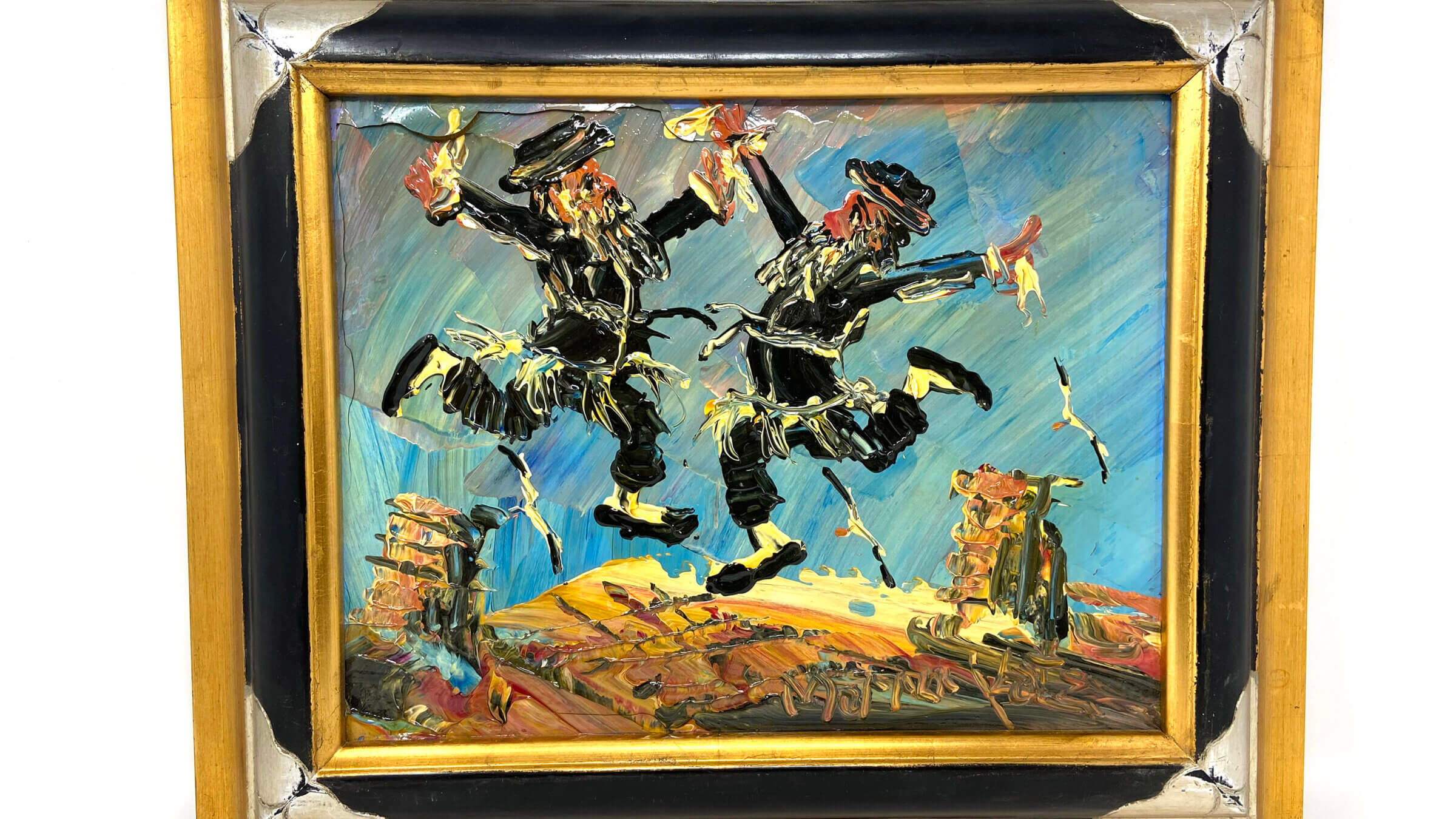
Katz made a series of Judaica paintings. Photo by the Oeuvre Family Collection

By PJ Grisar May 13, 2024
Morris Katz painted like no one else.
He would dip a palette knife into a paint can and use it like a brush, daub a canvas with toilet paper to fill in details and frame the piece to order while schmoozing with an audience. He was so quick that the Guinness Book of World Records cited him twice, as the world’s fastest painter and as the most prolific artist, the latter title taken from Picasso.
But while Katz, whose unorthodox technique and incredible speed calls to mind a more stimulating Bob Ross, was a mainstay of the Borscht Belt circuit, he is only now, 14 years after his death, getting a New York City show. Starting May 16, The Instant Art of Morris Katz will be on view at YIVO.
YIVO’s Director of Exhibitions Eddy Portnoy first encountered Katz on a kibbutz in Israel in 1989, where the dynamic, Polish-born painter set up 20 easels and filled them all while telling his life story of surviving the Holocaust and learning to paint in a displaced persons camp in Germany. Once he finished his spiel, and his Yiddish jokes with the audience, Katz auctioned off the paintings. People clamored to buy these speedy, if not exactly museum-ready, objets d’art.
“The draw was Morris Katz,” said Portnoy, “He was like a painter tummler, and I guess genuinely a performance artist.”
Katz died in 2010, but, through the ’70s and ’80s, became a well-known New York character, appearing on local television, and at Catskill resorts where he made art collectors of everyone.
“Talk to anyone who stayed in the Borscht Belt, they almost surely saw him and quite possibly have his paintings in their basement,” said Portnoy.
Katz immigrated to the U.S. in 1949. He took art classes and soon found himself losing patience in the process, developing his brush-free “Instant Art” schmearing as an alternative.
A natural showman with a thick accent, Katz has an enduring fanbase, with many young people having inherited his work from their grandparents. (My mother remembers seeing Katz, but can’t recall if it was at the Nevele sometime in the ’90s or earlier.)
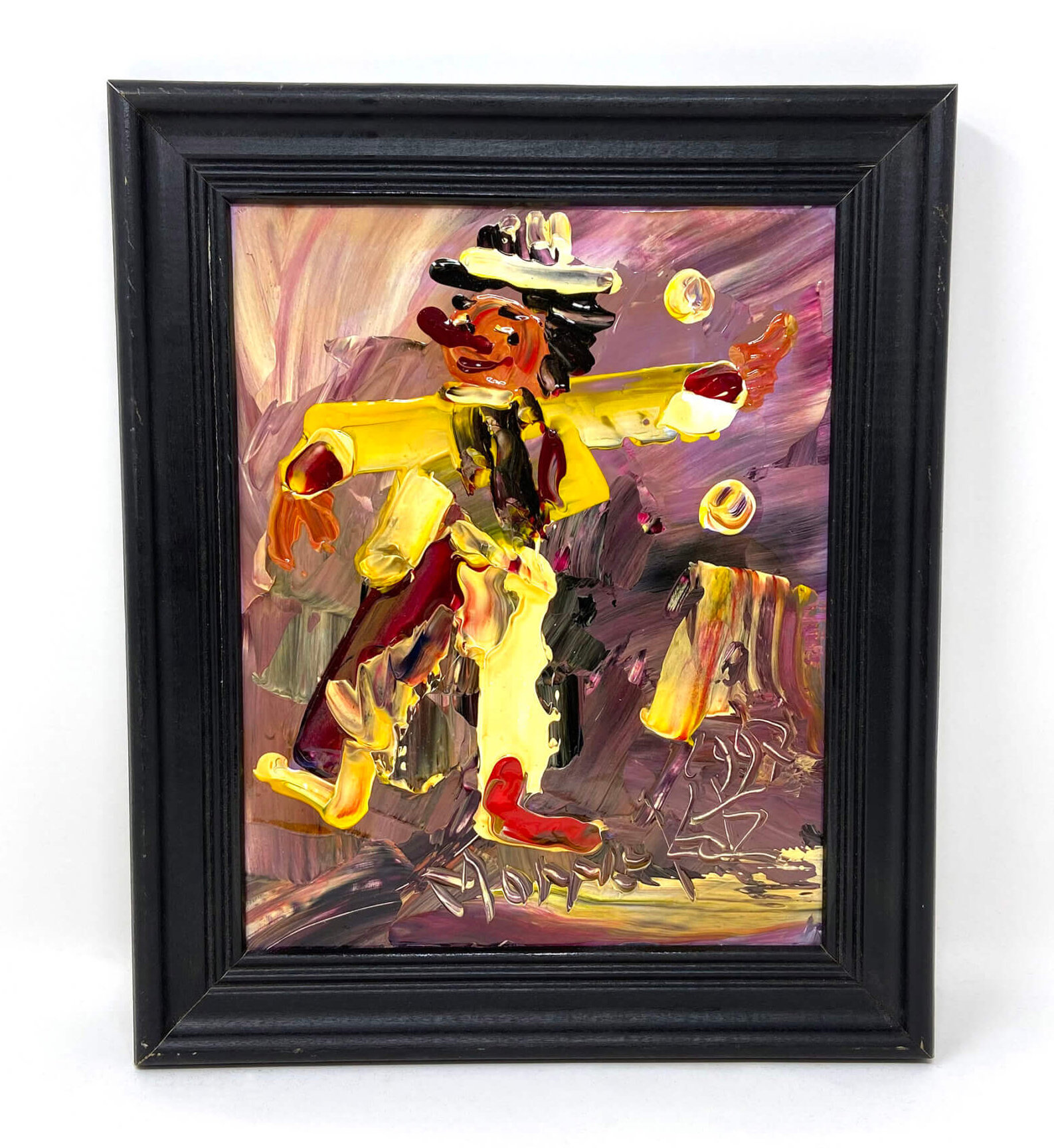
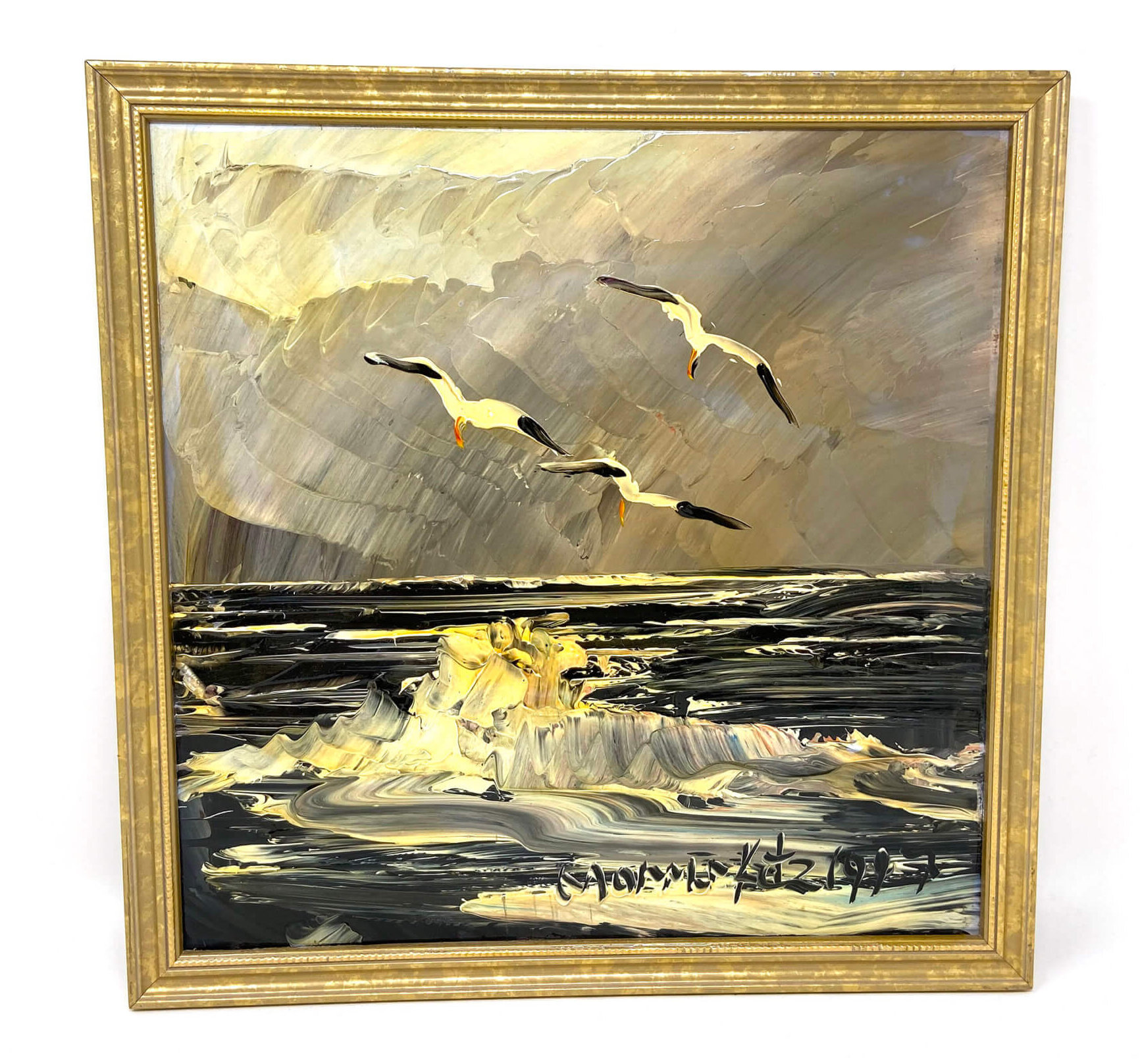
For the exhibit, which follows a previous show at the Borscht Belt Museum in Ellenville, Portnoy is hanging landscapes, seascapes and Judaica alongside clown and animal paintings, including a Morris Katz cat. There won’t be a Katz impersonator, Portnoy said, but there will be video of him cranking out work at lightning speed and charming the crowd.
At the opening reception, visitors can walk away with a 5-by-7-inch painting for a small donation. But, if you have your eyes on anything on the gallery wall, you can take it home with you.
“Everything is for sale,” Portnoy said. “As far as Morris Katz was concerned, everyone needed to walk away with a painting.”
This is a moment of great uncertainty. Here’s what you can do about it.
We hope you appreciated this article. Before you go, we’d like to ask you to please support the Forward’s independent Jewish news this Passover. All donations are being matched by the Forward Board - up to $100,000.
This is a moment of great uncertainty for the news media, for the Jewish people, and for our sacred democracy. It is a time of confusion and declining trust in public institutions. An era in which we need humans to report facts, conduct investigations that hold power to account, tell stories that matter and share honest discourse on all that divides us.
With no paywall or subscriptions, the Forward is entirely supported by readers like you. Every dollar you give this Passover is invested in the future of the Forward — and telling the American Jewish story fully and fairly.
The Forward doesn’t rely on funding from institutions like governments or your local Jewish federation. There are thousands of readers like you who give us $18 or $36 or $100 each month or year.
Support our mission to tell the Jewish story fully and fairly.