A new book explores the vibrancy of pre-war Warsaw
‘The Last Woman of Warsaw’ follows two women as antisemitism begins to rise in Poland
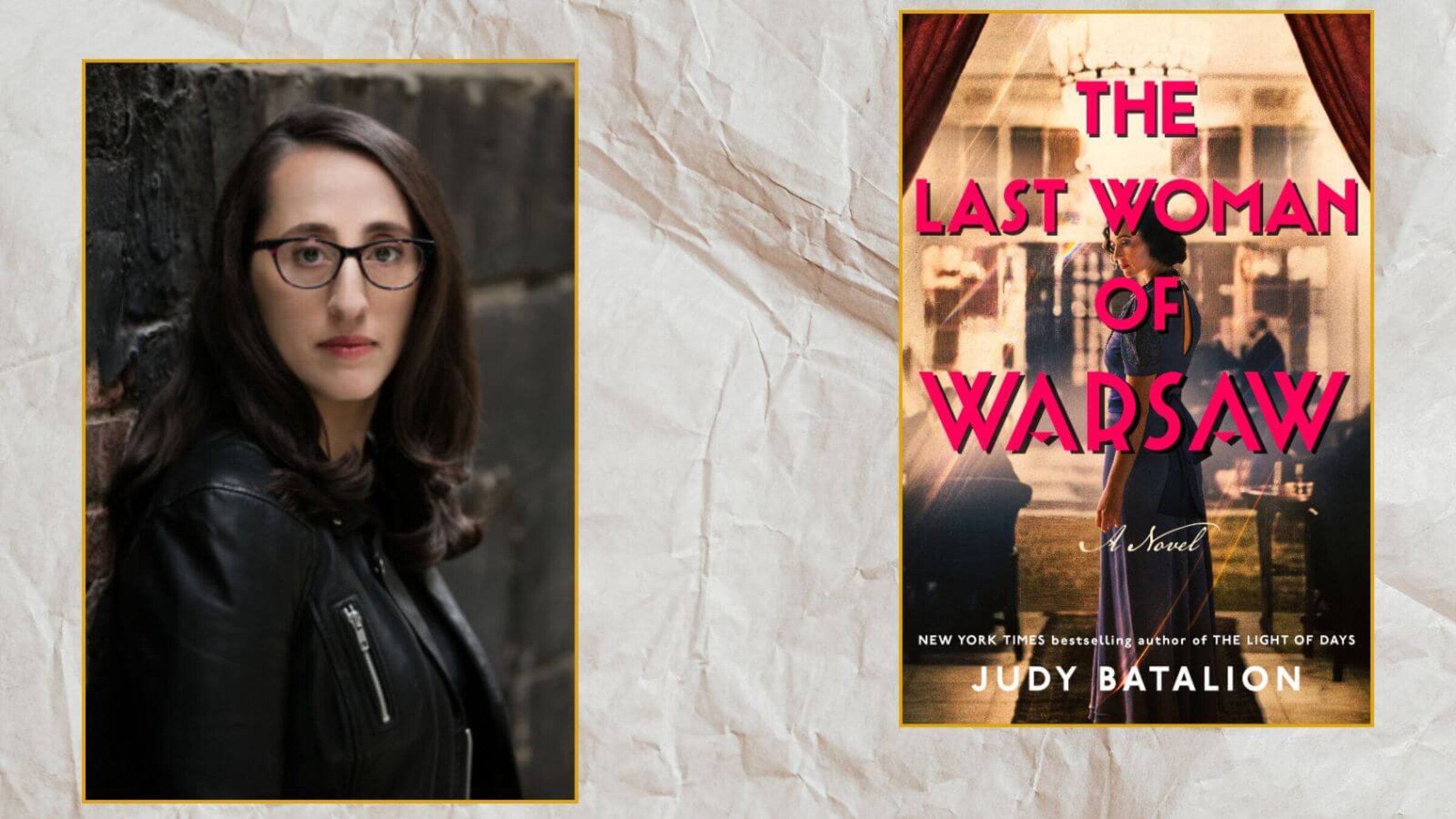
Judy Batalion Courtesy of Dutton

By Julia M. Klein April 9, 2026
The Last Woman of Warsaw
Judy Batalion
Dutton, 336 pages, $30
Don’t be misled by the title of this debut novel by Judy Batalion, nor by her previous book, The Light of Days, about the role of Polish-Jewish women in the anti-Nazi resistance.
Though the specter of the Holocaust looms over The Last Woman of Warsaw, the novel is not really Holocaust fiction. It does not portray a final female survivor of that embattled city. Its subject is instead the odd-couple friendship of two young Jewish women embroiled in the artistic and political ferment of pre-World War II Warsaw.
For Batalion, recreating the atmosphere and quotidian life of this cosmopolitan city, which once elicited comparisons to Paris, was a major aim. “In our contemporary minds, historical Warsaw conjures images of gray and death,” she writes in a lengthy author’s note. But that shouldn’t negate its more vibrant past. “Long before Vegas,” Batalion writes, “Warsaw was the capital of neons, its night skyline dotted with glittering cocktail glasses and chefs carrying platters of roasts. Much of this artistic production was Jewish.”
Even this brief excerpt shows that Batalion isn’t much of a prose stylist. But awkward locutions and diction mistakes aside — including the repeated use of “cache” when she means “cachet” — Batalion generally succeeds in immersing readers in Warsaw’s lively urban bustle and heated street politics. Here, skating on the edge of catastrophe, Polish Jews of varying ideologies and backgrounds face off against antisemitic persecution and violence.
Batalion’s handling of the historical backdrop is defter than her fledgling fictional technique. The narrative of The Last Woman of Warsaw is a plodding and repetitive affair that ultimately turns on an improbable coincidence.
The plot involves the sudden disappearance of a photography professor with communist ties and the halting efforts of the novel’s two protagonists to find and free her. The pair, whose initial antagonism mellows into friendship, are Fanny Zelshinsky, an upper-middle-class Warsaw University student, and Zosia Dror, who hails from a religious shtetl family. Her adopted surname references the Labor Zionist group that now claims her loyalty. Despite their differences, the two women have in common a desire to shake off the past and forge new lives. They also share an attraction to a single man, Abram, who can’t seem to decide between them.
When the story begins, Fanny is engaged to the perfectly nice, highly suitable Simon Brodasz, whom she’s known since her teenage years. Her mother is pushing the match. But Fanny is not in love and dreads the loss of freedom marriage entails. Her true passion is photography – in particular, fashion photography, to which she brings an idiosyncratic, modernist flair.
Zosia’s passion is political activism, and she aspires to a more prominent leadership role in Dror. Like Fanny, she is at odds with her mother, who is urging her to return to the shtetl for the festivities preceding her sister’s wedding.
What brings these women together is the arrest of the famous photographer Wanda Petrovsky, to whom both are connected. Wanda is one of Fanny’s professors, and Fanny needs her help to enter a potentially career-making exhibition. Wanda also happens to be a political activist, a leader of Zosia’s Zionist group, and Zosia hopes she’ll provide her with a visa for Palestine.
As Batalion’s narrative alternates between their perspectives, the antisemitic fervor in Warsaw mounts. Polish right-wing groups have started terrorizing Jews. Police invade clubs where Jewish comedians are mocking antisemitism. At Warsaw University, where Jewish students already have been subject to admissions quotas, the humiliation of being consigned to a “Jew bench” in class comes as a humiliating shock to Fanny.
Zosia, by contrast, has seen far worse. She and her family were victims of one of the murderous pogroms that periodically roiled the Polish countryside. She has been traumatized by the burning of her home, her father’s injuries and the refusal of her neighbors to offer refuge from the catastrophe.
In late 1930s Warsaw, Polish Jews are fighting back – with protests, hunger strikes and more. But what will any of this accomplish? Will Wanda attain her freedom, with or without the help of her protegees? Will Zosia and Fanny successfully defy their families and find meaningful lives? Which woman will Abram ultimately choose? And will any of this matter as both Poland and Polish Jewry hover on the brink of destruction?
Batalion answers these questions in an epilogue describing the fate of both women and of Fanny’s photographs, which eventually take a political turn, and in her author’s note. In the note, she reveals that all four of her own grandparents “spent their young adulthoods in interwar Warsaw.” That heritage helps account for her own passion: “to memorialize Warsaw’s golden age of creativity and the Jewish art and culture that, along with six million lives, was also decimated in the Holocaust.” A worthy endeavor, however clumsily executed.
This is a moment of great uncertainty. Here’s what you can do about it.
We hope you appreciated this article. Before you go, we’d like to ask you to please support the Forward’s independent Jewish news this Passover. All donations are being matched by the Forward Board - up to $100,000.
This is a moment of great uncertainty for the news media, for the Jewish people, and for our sacred democracy. It is a time of confusion and declining trust in public institutions. An era in which we need humans to report facts, conduct investigations that hold power to account, tell stories that matter and share honest discourse on all that divides us.
With no paywall or subscriptions, the Forward is entirely supported by readers like you. Every dollar you give this Passover is invested in the future of the Forward — and telling the American Jewish story fully and fairly.
The Forward doesn’t rely on funding from institutions like governments or your local Jewish federation. There are thousands of readers like you who give us $18 or $36 or $100 each month or year.

Support our mission to tell the Jewish story fully and fairly.