Remembering Ray Liotta’s most Jewish scene
Liotta wasn’t Jewish, but he seemed to understand Jews
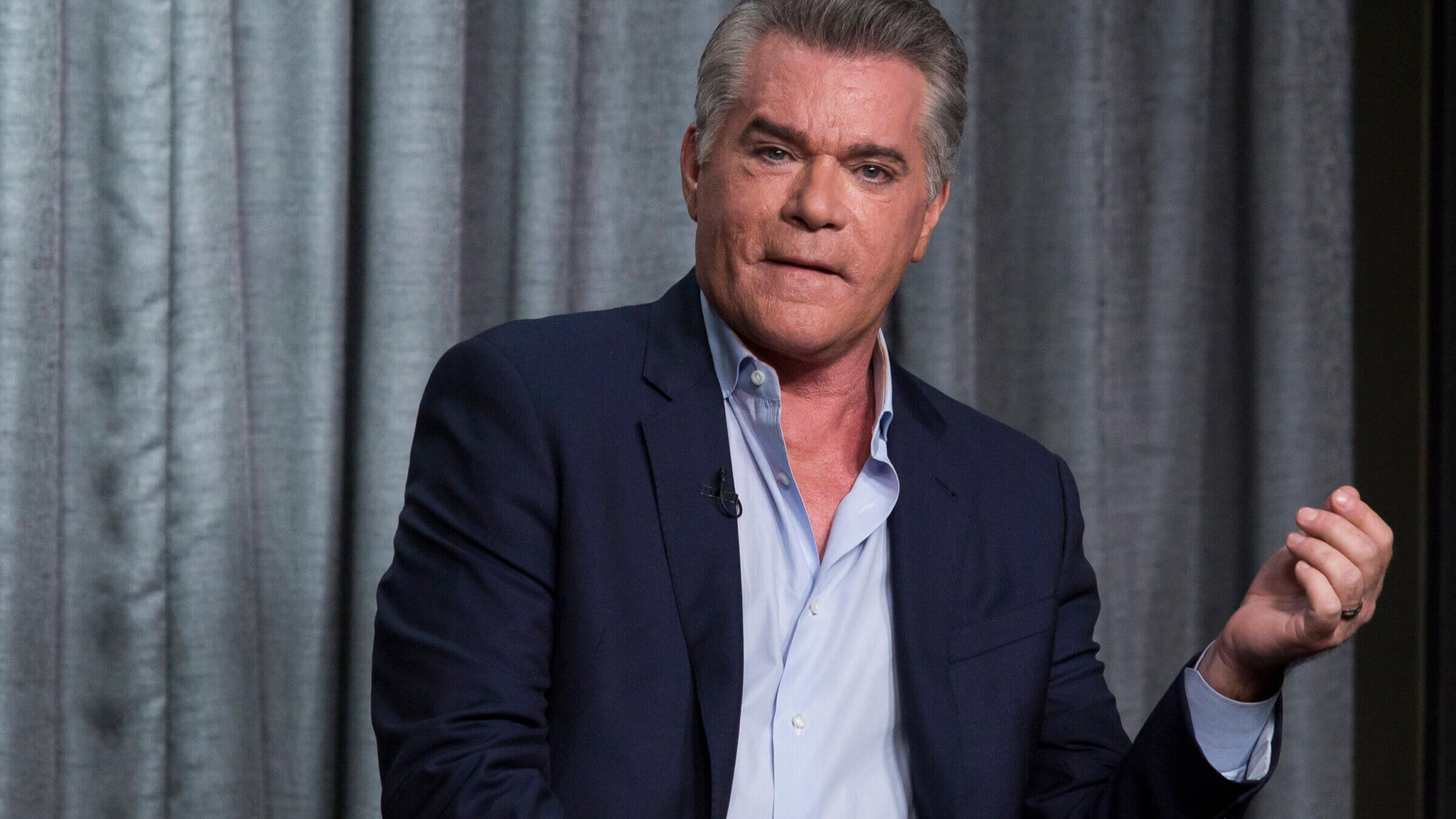
‘Goodfellas’ star Ray Liotta died Thursday at the age of 67. Photo by Vincent Sandoval/Getty Images

By PJ Grisar May 26, 2022
Ray Liotta, who made a career playing a series of cops and criminals in films like “Goodfellas” and “Cop Land,” has died at the age of 67.
The actor was known for his steely blue eyes (he played Sinatra) and his penchant for bringing unexpected vulnerability to rough-necked characters. Liotta was adopted as an infant and his biological mother was Irish. His adoptive parents were Scottish and Italian and he was raised Roman Catholic. And yet, Liotta is responsible for an indelible Jewish moment in perhaps his best-known role.
In “Goodfellas,” Liotta’s Henry Hill (who is Irish and Italian like the actor himself) is courting a young Jewish woman named Karen Friedman (Lorraine Bracco). This causes a predictable amount of tsuris later on, but in the early going, Karen, knowing her mother’s prejudices, has Henry fib, hiding his cross necklace when he arrives to pick her up. When her mom comes to the door to greet her daughter’s suitor, it seems as though Karen may have misrepresented him.
“My daughter says that you’re half Jewish,” Mrs. Friedman says.
Henry steals a quick glance at Karen before saying, “Just the good half.”
From there, we launch into the famous Copacabana tracking shot. But the line and Liotta’s delivery make the transition.
In a way, it was the truest of lies. Henry may not be Jewish, but he can’t be a made man because he’s not completely Italian. Like Jews, he is forever on the margins, unable to fully integrate. As Karen becomes Henry’s “better half,” her mother will kvetch that he does not live like a typical payer of synagogue dues. But Henry can still identify with being half in a world and half outside of it, his half-Irishness marking him, driving the impulse of those opening lines: “As far as I can remember, I always wanted to be a gangster.”
These were the sorts of roles that Liotta excelled at, existing in a liminal space that reflected his own biography, knowing his whole life he was adopted and only tracking down his birth mother when he was an adult. That resonance remained in one of his final roles in “The Many Saints of Newark,” where he literally split his identity, playing twins: one abusive and maniacal, the other a sensitive lover of jazz. (Speaking of jazz, his regular cameos as himself reached their self-aware apex in “Bee Movie.”)
Liotta’s performances were often a highlight, from comedies, mob movies and TV police procedurals to prestige dramas like “Marriage Story.”
Thankfully, we haven’t seen the last of him. Per IMDB, Liotta filmed a movie called “Cocaine Bear” set for release next year. While one might not expect nuance from such a film, if anyone could make that material work, it’s Liotta.
This is a moment of great uncertainty. Here’s what you can do about it.
We hope you appreciated this article. Before you go, we’d like to ask you to please support the Forward’s independent Jewish news. All donations are still being matched by the Forward Board - up to $100,000 until April 24.
This is a moment of great uncertainty for the news media, for the Jewish people, and for our sacred democracy. It is a time of confusion and declining trust in public institutions. An era in which we need humans to report facts, conduct investigations that hold power to account, tell stories that matter and share honest discourse on all that divides us.
With no paywall or subscriptions, the Forward is entirely supported by readers like you. Every dollar you give is invested in the future of the Forward — and telling the American Jewish story fully and fairly.
The Forward doesn’t rely on funding from institutions like governments or your local Jewish federation. There are thousands of readers like you who give us $18 or $36 or $100 each month or year.

Support our mission to tell the Jewish story fully and fairly.