In Jordan’s pick for the Oscars, a contradictory message about ethnonationalism
‘All That’s Left of You’ is a touching portrayal of a Palestinian family, but ends on a problematic note
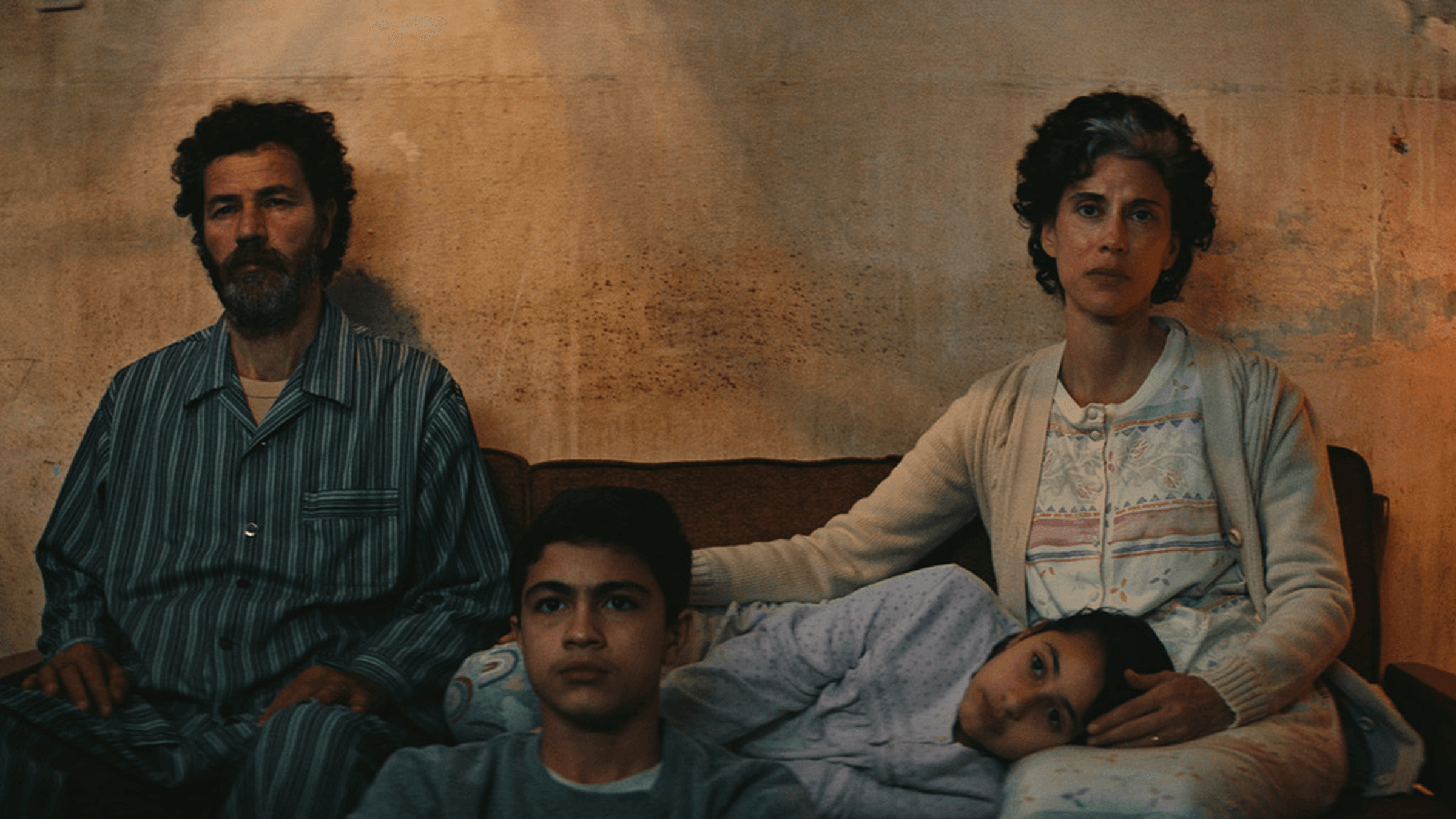
Saleh Bakri and Cherien Dabis play parents of a teenage boy shot during the First Intifada in ‘All That’s Left of You.’ Courtesy of Watermelon Pictures

By Olivia Haynie January 14, 2026
There’s a disagreement in public discourse about how to understand the First Intifada, the nature of the violence, the scale of destruction, and who is responsible. Even the date it began is a source of controversy — foreign-policy analyst Mitchell Bard points to an Israeli being stabbed to death in Gaza in December 1987; the Institute for Middle East Understanding says it was the killing of four Palestinians by an Israeli truck driver days later — but All That’s Left of You, Jordan’s entry for the Best International Feature Film at the Academy Awards, makes the claim that the real beginning was far earlier.
The film, directed by Cherien Dabis, opens in 1988 with a confrontation between Israeli soldiers and Palestinians in a refugee camp in the West Bank. Stones are thrown, shots are fired, and a teenager, Noor Hammad, is shot in the head. Suddenly, the film cuts to an old woman’s face looking straight into the camera.
“I’m here to tell you who is my son,” the woman, Hanan (played by Dabis), says. “But for you to understand, I must tell you what happened to his grandfather.”
We flash back to 1948, where the film marks the origins of the discontent that led to the First Intifada, just as a Zionist paramilitary unit descends on Jaffa. Noor’s grandfather, Sharif — then a young father — sends his family someplace safer as he faces the Israeli soldiers and is eventually imprisoned for refusing to cede his land. The second part of the film takes place after a 30-year time jump, and shows Sharif instilling a sense of Palestinian nationalism in his grandson Noor.
Noor’s father Salim instructs him to obey the laws of Israeli occupation, believing this will keep Noor out of harm’s way. But then we return to 1988 and the day Noor is shot.
All That’s Left of You is strongest in its moving portrayal of the intergenerational differences that can exist in a single family when it comes to dealing with the Israeli-Palestinian conflict. Even though the 1948 and 1978 sections occasionally meander, the timeline helps viewers understand the pressures in the region and within the Hammad family that led to a boiling point in 1988.
But the culmination of the film’s trauma-filled journey lands as a poor lesson in nationalism.
Towards the end of the film, we see an older Hanan in 2022 in a cafe in Tel Aviv — Jaffa. Hanan debates an Israeli about whether or not an organ can have a nationality, particularly in the context of an organ transfer. Ari, the Israeli, says no. Hanan asserts that yes — a Palestinian heart is always Palestinian no matter what body it occupies.
It’s a not so subtle metaphor for the belief that the land of Israel remains Palestinian in its soul, no matter who occupies it. But that feels like a case for embracing ethnonationalism to try and combat…ethnonationalism. Historically, no matter what name you call it, that patch of earth has always been home to many different people and an important marker of different cultural identities.
All That’s Left of You depicts Palestinian resilience in the face of great oppression but the message seems to be that this abuse is inherent to certain identities. Throughout the film, the characters make blanket statements about Zionists and Israelis as a monolithic force of evil. When these characters are dealing with being imprisoned, barred from their own homes, and humiliated at gunpoint, these angry generalizations are not surprising, especially if that is all they have known for three generations. But the ending argument, that an organ cannot exist without a nationalistic sentiment, does not offer a hopeful message. Up until this point, the film has demonstrated the destructive and dehumanizing effects of ethnocentric possessiveness, but it struggles to disentangle itself from the ideology it seeks to condemn. Instead, it ends up replicating it.
This is a moment of great uncertainty. Here’s what you can do about it.
We hope you appreciated this article. Before you go, we’d like to ask you to please support the Forward’s independent Jewish news this Passover. All donations are being matched by the Forward Board - up to $100,000.
This is a moment of great uncertainty for the news media, for the Jewish people, and for our sacred democracy. It is a time of confusion and declining trust in public institutions. An era in which we need humans to report facts, conduct investigations that hold power to account, tell stories that matter and share honest discourse on all that divides us.
With no paywall or subscriptions, the Forward is entirely supported by readers like you. Every dollar you give this Passover is invested in the future of the Forward — and telling the American Jewish story fully and fairly.
The Forward doesn’t rely on funding from institutions like governments or your local Jewish federation. There are thousands of readers like you who give us $18 or $36 or $100 each month or year.
Support our mission to tell the Jewish story fully and fairly.