Walter Benjamin knew what Timothée Chalamet meant about opera and ballet
The ‘Marty Supreme’ star’s comments on movies as a popular art form align surprisingly well with the German thinker’s philosophy
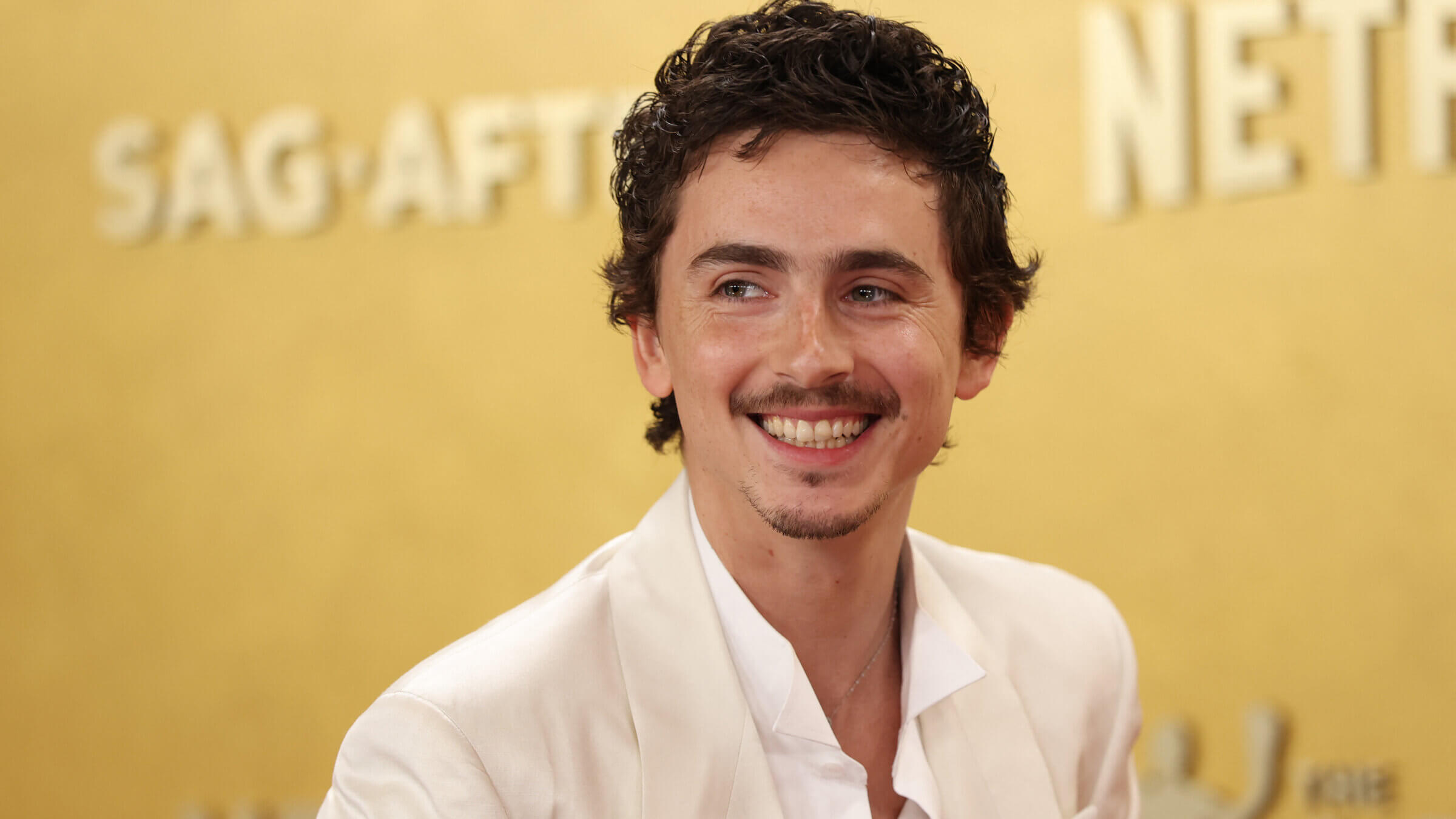
Timothée Chalamet attends the 32nd Annual Actor Awards. Photo by Patrick T. Fallon/AFP via Getty Images

By PJ Grisar March 9, 2026
When production shots of Timothée Chalamet in Marty Supreme first graced the internet, one wag, taking note of the glasses, mustache and sweater vest, had an alternate project in mind.
“First look at Timothée Chalamet on SPIRITU MUNDI,” the post went, “a Walter Benjamin biopic focusing on his personal entanglements with other notable figures.”
The resemblance was there, but after an 11th-hour scandal in the leadup to Chalamet’s could-be Oscar win, it could be more than skin deep. The remark that got Chalamet in trouble came during a CNN and Variety-hosted conversation between the Dune star and pensive Lincoln pitchman Matthew McConaughey.
“I don’t want to be working in ballet or opera or things where it’s like ‘keep this thing alive’ when nobody cares about this anymore,” Chalamet said before kinda (sorta) backtracking.
The reprisals from the fine arts were swift. The Seattle Opera introduced the promo code “TIMOTHEE” for discounted seats to their production of Carmen. Ballet dancers called him out on the gram. But Chalamet’s comments, even without accounting for his own family’s connection to the New York City Ballet, are more nuanced in context. And that brings us back to Benjamin.
Chalamet was discussing the need to keep the cinema experience alive, and offered that Generation Z may be the future, citing an article that they now outnumber millennial moviegoers. What he may have meant to convey, though he couldn’t quite articulate it, was the utility of film as a populist art form, as opposed to the mediums of ballet and opera, which have a higher barrier to entry.
In Benjamin’s 1935 essay The Work of Art in the Age of Mechanical Reproduction, he makes the argument that film in particular excels at something works like paintings can’t do: “Meet the beholder or listener in his own particular situation.”
With film being accessible, not ephemeral or reduced to a singular, rarefied artifact with a cult-like “aura,” the result is a “tremendous shattering of tradition which is the obverse of the contemporary crisis and renewal of mankind.”
Benjamin thought that when the ritualistic was stripped from a work of art, it could be used for political ends. Filmgoing was part of a progressive mass movement and led to “apperception,” synthesizing new ideas and experiences into existing ones, via distraction (zerstreuung in the German). It was, to him, with its reliance on montage, an ideal vehicle for a fractured age.
It’s interesting to consider this theory in an era of smartphones and at-home streaming. These are the newest incarnations of mass availability. In a sense, Chalamet’s argument is retrograde, wanting to preserve something outmoded and at risk of the same obsolescence as ballet and opera (recall how the Met Opera, just east of Chalamet’s old stomping grounds at LaGuardia High, has proposed selling its Chagalls to stay liquid; meanwhile they beam their offerings to movie theaters).
The nature of cinema has shifted, and the present cultic significance of an IMAX 70 mm run of something like Oppenheimer would seem to capture a new aura Benjamin didn’t anticipate. But then, Benjamin was a man of contradictions himself. He was sad at the loss of aura even as he celebrated the possibility of photography and film and had his own widest reach on the radio.
The Zoomers Chalamet is speaking of include the kids who dressed up in suits in a phenomenon called “Gentleminions” to see a screening of a Despicable Me spinoff film. They and the legions who came to The Minecraft Movie to scream at the phrase “chicken jockey” could rightly be said to be acting ritualistically, but it is of course collective, and the beleaguered movie theater employees who had to sweep up the deluge of popcorn could tell you these audiences were almost certainly distracted.
“The film makes the cult value recede into the background not only by putting the public in the position of the critic, but also by the fact that at the movies this position requires no attention,” Benjamin wrote.
I should note that Chalamet got onto his opera and ballet tangent to begin with after McConaughey asked him if audiences today have a more limited attention span.
Chalamet seemed to bring up the surge in Gen Z attendance as a counterpoint, but the two are hardly mutually exclusive. You can still go to the movies and be, what Benjamin called, “an examiner, but an absent-minded one.”
Certainly this absent-mindedness is possible at the ballet and the opera — I direct you to the program origami from Citizen Kane. Benjamin was discussing static paintings like Picassos, and nothing so Dionysian as those live mediums. But they are not mass-produced and are more inaccessible now than in 1935, when they were still popular entertainment.
Film continues to have the ultimate edge in an age of distraction, both for creating something communal and prompting movement forward. It’s by now no means the most popular way to get a message out into the world, but the very uproar at Chalamet’s comments are a proof that film still matters.
As The New York Times’ dance critic Gia Kourlas acknowledged, “If a dancer said that a film didn’t matter, it would be like a tree falling in the woods.”
But enough of all this fuss. Give us the Chalamet Benjamin biopic, and let that angel of history be the new “chicken jockey.”
This is a moment of great uncertainty. Here’s what you can do about it.
We hope you appreciated this article. Before you go, we’d like to ask you to please support the Forward’s independent Jewish news this Passover. All donations are being matched by the Forward Board - up to $100,000.
This is a moment of great uncertainty for the news media, for the Jewish people, and for our sacred democracy. It is a time of confusion and declining trust in public institutions. An era in which we need humans to report facts, conduct investigations that hold power to account, tell stories that matter and share honest discourse on all that divides us.
With no paywall or subscriptions, the Forward is entirely supported by readers like you. Every dollar you give this Passover is invested in the future of the Forward — and telling the American Jewish story fully and fairly.
The Forward doesn’t rely on funding from institutions like governments or your local Jewish federation. There are thousands of readers like you who give us $18 or $36 or $100 each month or year.
Support our mission to tell the Jewish story fully and fairly.