The Lilith Fair Returns; Feminists Shrug

Graphic by Angelie Zaslavsky

By Sarah Seltzer November 6, 2009
The 1990s era music festival Lilith Fair — like The Sisterhood’s fellow Jewish women’s magazine Lilith — derives its name from the Jewish medieval myth about the first woman on earth, exiled because of her refusal to submit to Adam’s rule. A nebulous character who shows up in various cultural myths, the Lilith figure has become both a proto-feminist heroine and a demonic femme fatale.
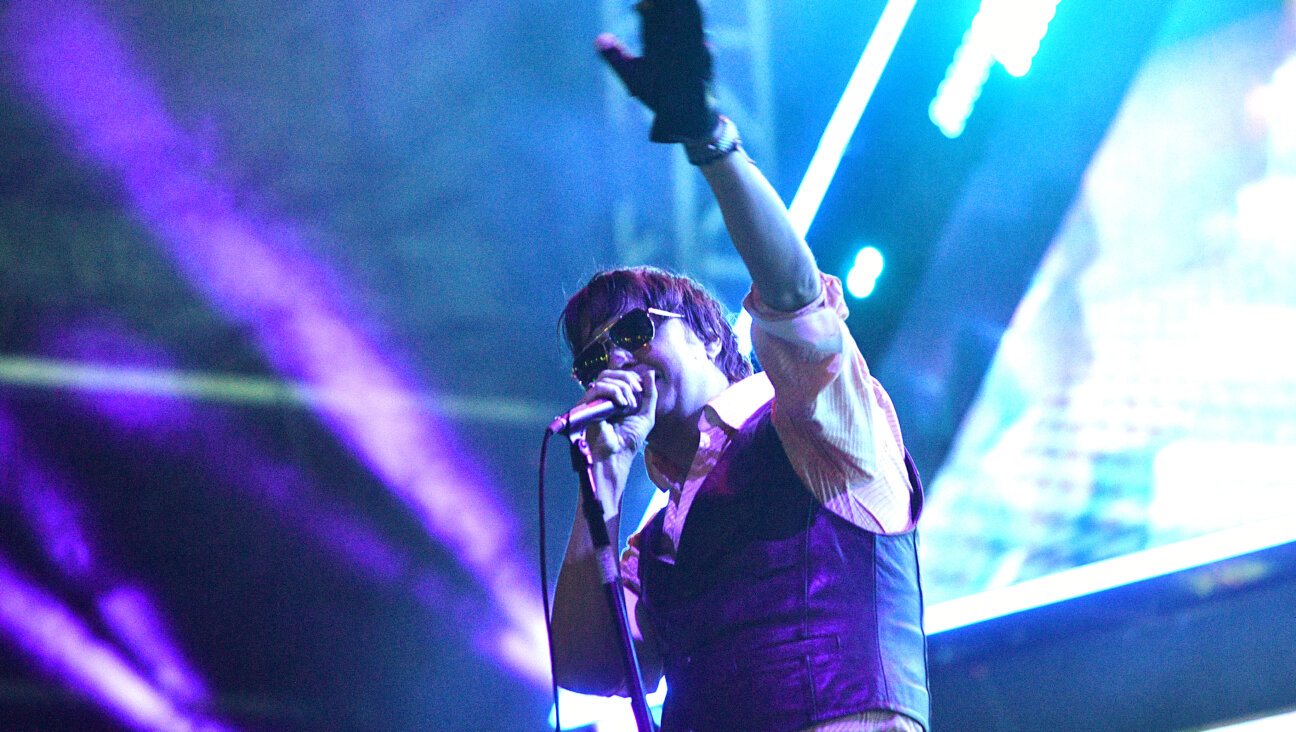
In keeping with its lightning-rod namesake, the music festival has attracted its share of controversy and derision, dismissed as a stereotypical touchy-feely estrogen festival of bad music. Recent news that Lilith Fair was coming back for a 2010 tour brought a chorus of shrugs in the blogosphere, mostly from feminists dismissing music from the likes of Jewel, Sarah McLachlan and Paula Cole as over-earnest molasses-pop, the kind of earth-mother stuff that gives the women’s movement a bad name tempered by brief nods to the fact that the actual musical acts at the festival varied from Christina Aguilera to Casandra Wilson to Joan Baez to Missy Elliot.
But I have to disagree: I was exposed to those artists in middle school. During those socially conformist years, top 40 radio was embraced by every single kid in my age group, from the future punk devotee to the future folkie to the future hip-hop head. The idea that one should look at Jewel through an ironic lens wasn’t even considered; instead, my fellow sensitive 13-year olds and I gathered around her lyrics sheet and talked about how deep she was.
During those perilous years, young women like me were extremely lucky to have so many strong women dominating the charts, landing huge magazine covers, and attracting unbelievably massive crowds to their festival. The Lilith Fair artists, who largely wrote their own songs with clever, socially-conscious lyrics and hot hooks, were legit superstars. Believe me, at age 13, I would not have been buying their albums if they hadn’t been. In fact, I think their surging popularity, equaling or eclipsing that of their male counterparts — groups like the Wallflowers and Counting Crows, which were also earnest and sappy — contributed to the bad rap that has dogged their legacy until today.
The truth is that McLachlan and Co. didn’t give feminism a bad name; instead, sexism gave them a bad name. The cultural establishment was willing to coddle the message of the Lilith Fair crew to a certain extent, but only as a momentary trend. And when Paula Cole showed up at an awards show with unshaven armpits — that took things a step over the line and the backlash kicked in. Soon thereafter, the Spice Girls invaded with their plastic perversion of the “girl power” ethos. An era ended, and I, for one, still mourn it. I welcome McLachlan and her cohorts back to the touring circuit.
It’s our birthday and we’re still celebrating!
We hope you appreciated this article. Before you go, we’d like to ask you to please support the Forward’s independent Jewish news.
This week we celebrate 129 years of the Forward. We’re proud of our origins as a Yiddish print publication serving Jewish immigrants. And we’re just as proud of what we’ve become today: A trusted source of Jewish news and opinion, available digitally to anyone in the world without paywalls or subscriptions.
We’ve helped five generations of American Jews make sense of the news and the world around them — and we aren’t slowing down any time soon.
As a nonprofit newsroom, reader donations make it possible for us to do this work. Support independent, agenda-free Jewish journalism and our board will match your gift in honor of our birthday!
Support our mission to tell the Jewish story fully and fairly.