How I found freedom in a Passover Seder, an amp and a red Fender Duo-Sonic guitar
A $150 musical instrument and a gig at a cafeteria led me out of my personal Egypt
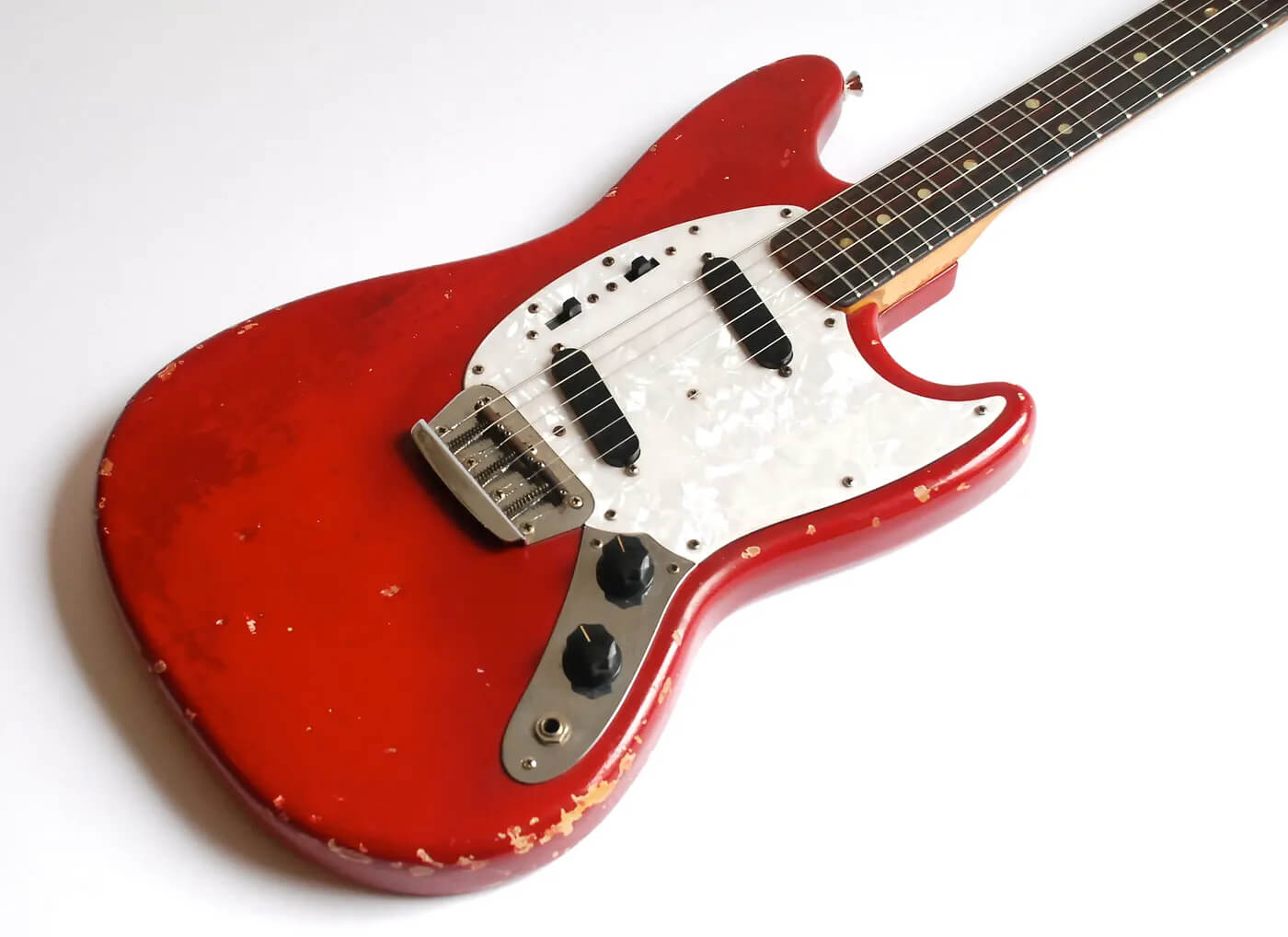
For the author, this red Duo-Sonic possessed the power of a religious totem. Courtesy of Peter Himmelman
This is the second in a series of essays by Peter Himmelman exploring the intersection of Judaism, creativity, and rock ‘n’ roll.
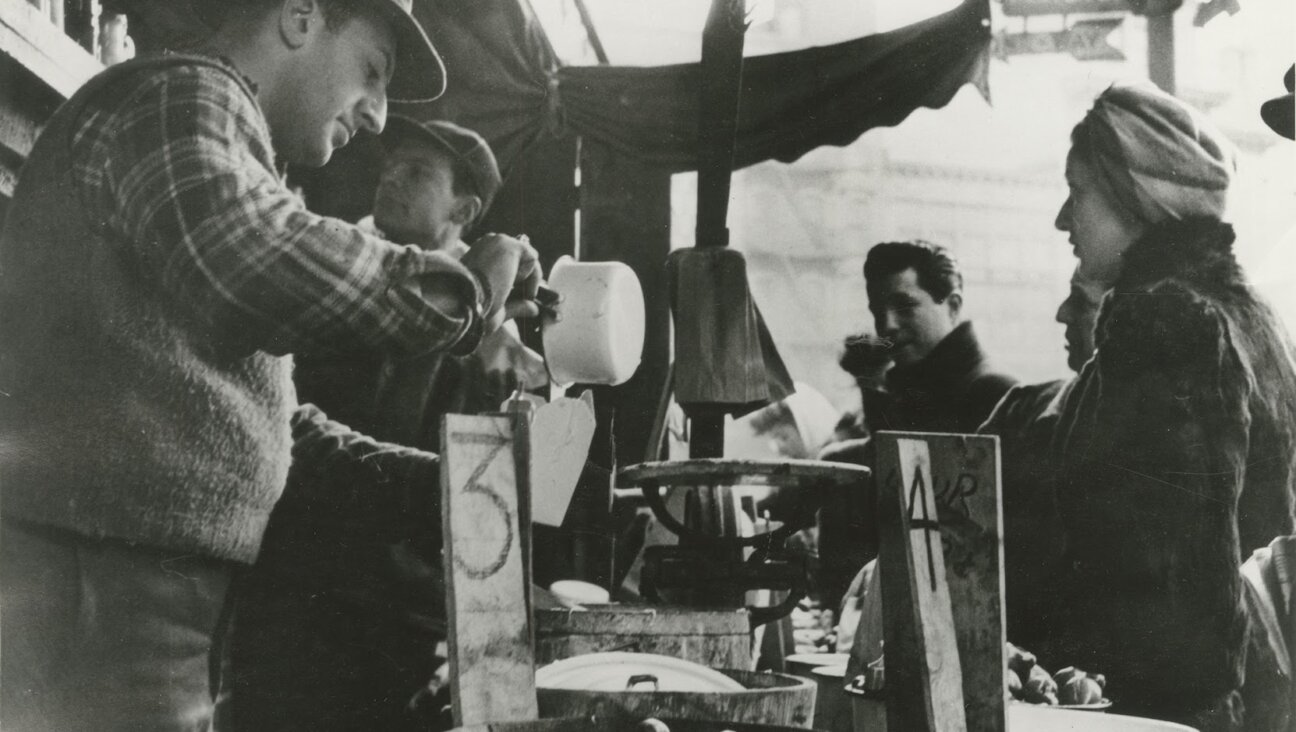
Passover at my cousin Doug’s house was always a strange blend of ritual, impatience and barely contained chaos. None of us was particularly religious, but we knew the drill: Read the Haggadah, dip the bitter herbs, eat a boatload of matzo, and laugh along as Uncle Sonny delivered his annual denunciation of religion. We rushed through the Seder with the urgency of people trying to outrun a bullet train. Everyone wanted to get to the oleshkas, the tzimmis, and my Grandma Min’s gefilte fish.
At some point during the adult drone that followed — politics, real estate, digestive-related medical complaints — I slipped away from the table in search of Doug’s electric guitar: a red Fender Duo-Sonic. Sleek, curved, impossibly alluring. The first time I saw it, Doug, then 17 or 18, played a halting version of “Hey Joe” for my sister and me. But it wasn’t only the sound that hooked me; it was the shape of the thing. I was 13, only a few months after my Bar Mitzvah, and the guitar felt like contraband, akin to the pot I would soon be smoking. I stared at it with the same stunned focus I reserved for an occasional glimpse of the bare backside of a Playboy centerfold.
The Haggadah asks: Why is this night different from all other nights?
For me, the answer was simple: It was the night I transformed from a pimply suburban teen into something mythic. If daily life — compulsive worry about my untamable Jewy hair, god-awful grades, and a steady stream of unrequited urges — felt like Egypt, then that red Duo-Sonic was my personal Moses.
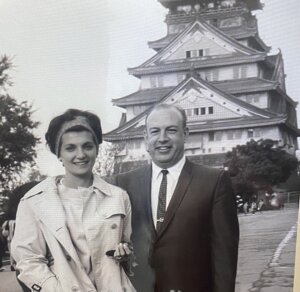
A few weeks after Passover, my father — a serial entrepreneur who once marketed his own brand of car battery, opened the first Suzuki motorcycle shop in Minneapolis, and launched an eight-track cassette store he called Tape-O-Rama — bought Doug’s Duo-Sonic guitar and his Princeton Reverb amplifier for $150. He was as thrilled about it as I was. I remember him standing in my room, sleeves rolled up, trying to look like he knew what he was talking about. It was endearing and a little sad when he pointed at the amp’s knobs — treble, bass, tremolo, and reverb — and suggested I set them all to five.
“Let’s make ’em all the same, Pete.” He said. “Even Steven.”
My dad knew less than zero about rock, but as always, he wanted to help with something that mattered to me.
The guitar changed my life. Not instantly, but decisively. The first time I played with another kid my own age, my drummer friend Andy Kamman, an impressive musician even as a fifth-grader, I felt something shift. It wasn’t like school band, where I played the alto sax while the band director hovered over us, selecting songs notable only for their excruciating lameness. This was fully ours. No supervision. No rules. No permission required. I pulled my Duo-Sonic and the Princeton amp down the street in my Radio Flyer and set it up in Andy’s basement.
When he and I started playing, it felt shockingly intimate — frightening at first. Not that I knew what a sexual encounter was, but that’s what it felt like: two separate things — guitar and drums; two separate people — me and Andy — merging into a kind of oneness. I had no idea that this sudden unanimity would become an aspiration, not only in music but in all things. Music was simply the clearest expression of that spiritualized coming-together.
I’d play a riff; he’d shift the rhythm; I’d shift again. Words I hadn’t planned poured out. It was as close to conception as I’d get for a while. That transcendent aspect of music — its weird mixture of beauty, ego, and power — was already becoming clear.
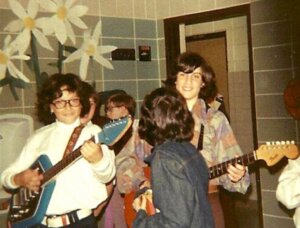
By sixth grade we had a band: me on lead guitar and vocals, Andy on drums, Steve Grossman on bass, and Aron Goldfarb on rhythm guitar. We were rehearsing for the Peter Hobart Elementary Spring Concert in Andy’s basement and the whole neighborhood seemed to show up. We had a makeshift PA — one microphone duct-taped to his brother’s stereo — and we played our three originals on repeat. Most of them barely counted as songs. “Sorrowland” was two lines of lyrics and a four-chord progression. “Down by the River” had two chords and one line clearly stolen from Creedence Clearwater.
Our masterpiece was “Exit,” which I wrote during Drug Prevention Week. Every kid had to make a filmstrip warning against marijuana. Mine consisted entirely of dinosaurs I’d rubbed from National Geographic onto overhead projector sheets. I told the class that pot would make you hallucinate brontosauruses, which — completely contrary to the purpose of the curriculum — made drugs sound irresistible.
“Exit” was about a boy who tried to touch his girlfriend’s breast before she was ready and, to soothe his rejection, turned to pot. Its last verse closed with these lyrics:
Your hopes are down and you pick up a J,
it ain’t gonna help you anyway.
But you strike a match and you let it burn
now your mind is ready to turn…
I hit the tremolo pedal on the line “strike a match,” making my voice wobble in druggy vibrato. Everyone went nuts.
With all the attention, the band drama kicked in. Aron, our rhythm guitarist, kept insisting he sing lead — even though we had only one microphone and it was plugged directly into the stereo’s single input. “Hey, Goldfarb, stop being such a dickfarb,” I said into the mic. It got a big laugh. I repeated it until the phrase turned into a song. I strummed some chords and chanted “Goldfarb’s a dickfarb,” over a riff stolen from “Exit.” The room roared. Aron turned red, threw down his gorgeous sunburst Vox Teardrop — an absurdly expensive guitar his parents bought him before he could even play — and stormed upstairs.
Things began to snowball. Kids at the school drinking fountain hummed my guitar riffs. Laura Bloomenthal finally noticed me. And then: incredible news. Mrs. Perhofsky called my house to ask if our band would perform for residents of the Saint Paul Cerebral Palsy Center. $25 plus unlimited orange pop and Fritos. I was ecstatic — and terrified. I had a problem with inappropriate laughter. Not cruelty — just a tendency to laugh when I wasn’t supposed to. A waitress once spilled pancakes at Uncle John’s Pancake House, and I burst out laughing for no good reason. I worried this gig might trigger the same response.
We practiced nonstop: our originals, Creedence’s “Who’ll Stop The Rain,” a few Beatles songs. My nerves tightened with every rehearsal.
The center’s cafeteria was huge. We set up our amps and waited. Then the audience poured in — dozens of people reaching toward us, smiling, stomping, yelling with unbounded eagerness. One guy’s head was long and cylindrical, strapped to the back of a metal wheelchair. A pretty teenage girl with no hands drew a beautiful picture with a crayon held between her toes. An older woman with skin so thin I could see every vein greeted us warmly and made us feel at ease. When we started to play, the place exploded. People pounded on tables, shouted, danced and laughed. Andy played better than I’d ever heard him. We all did.
I felt something then I couldn’t name, a sense of having stepped into the world, of finally being part of something important. I was so overwhelmed I almost cried then and there. I probably would have, if I hadn’t been afraid the guys would laugh at me. After our originals and the Creedence numbers, they demanded more. So we played everything again. We cracked open my Beatles songbook and sight-read our way through half its pages.
I didn’t laugh. I didn’t feel the need. Not even close.
Without question, it was the best day of my life so far.
Freedom is like that.
This is a moment of great uncertainty. Here’s what you can do about it.
We hope you appreciated this article. Before you go, we’d like to ask you to please support the Forward’s independent Jewish news this Passover. All donations are being matched by the Forward Board - up to $100,000.
This is a moment of great uncertainty for the news media, for the Jewish people, and for our sacred democracy. It is a time of confusion and declining trust in public institutions. An era in which we need humans to report facts, conduct investigations that hold power to account, tell stories that matter and share honest discourse on all that divides us.
With no paywall or subscriptions, the Forward is entirely supported by readers like you. Every dollar you give this Passover is invested in the future of the Forward — and telling the American Jewish story fully and fairly.
The Forward doesn’t rely on funding from institutions like governments or your local Jewish federation. There are thousands of readers like you who give us $18 or $36 or $100 each month or year.
Support our mission to tell the Jewish story fully and fairly.