An 82-year-old Jewish recording legend on his film directing debut: ‘I could have been good at this’
in ‘Heart & Soul,’ Kenny Vance pays tribute to the doo-wop legends who inspired his career
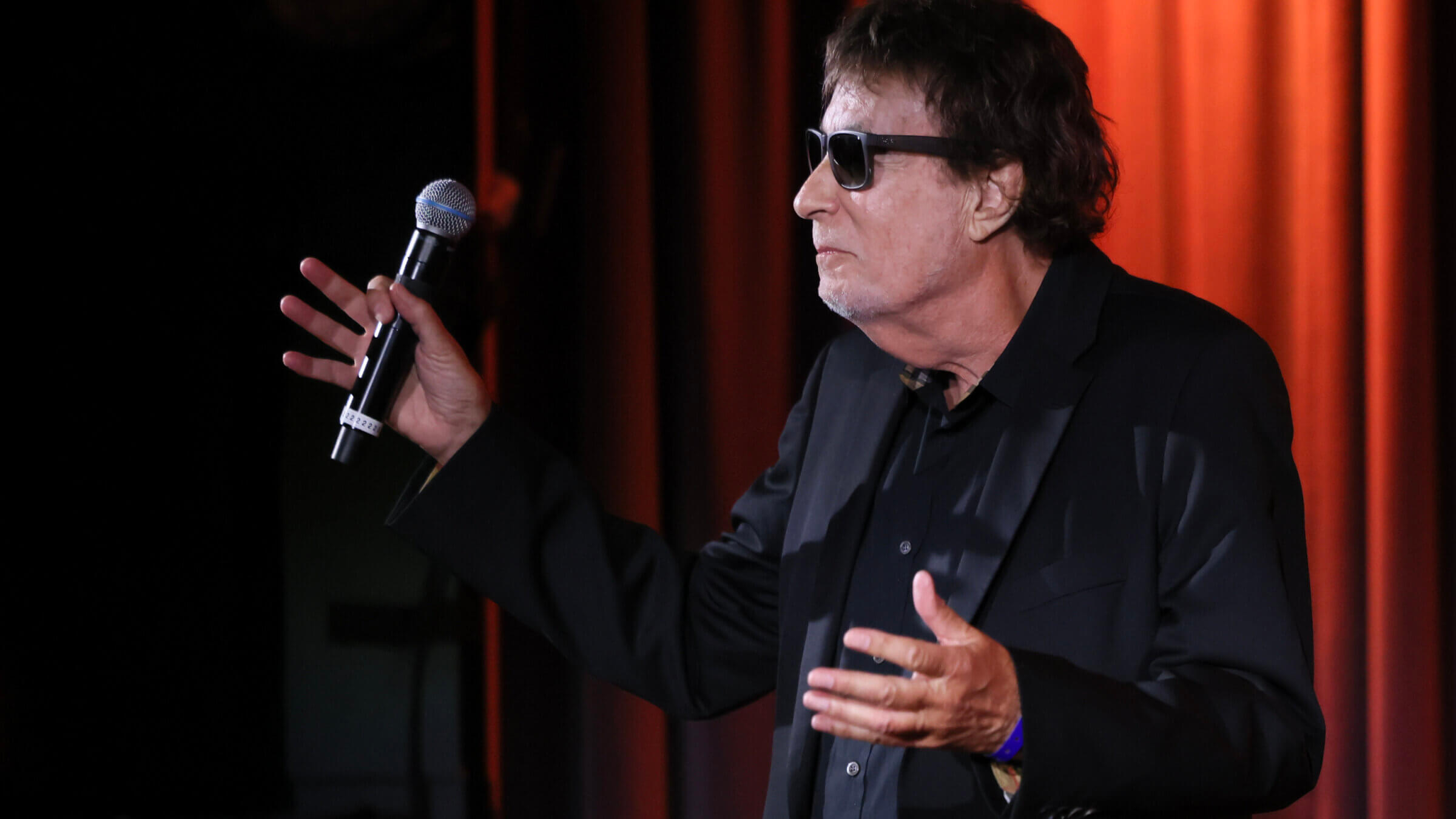
Kenny Vance at an L.A. screening of Heart & Soul. Photo by Rodin Eckenroth/Getty Images for The Recording Academy
Kenny Vance (born Kenneth Rosenberg), 82, was not quite ready to use my word “omen,” but he acknowledged that in some oblique way the destruction of his home in the Rockaways, compliments of superstorm Sandy, played a role in shaping his award-winning documentary, Heart & Soul: a Love Story.
The evocative and elegiac film pays homage to the groundbreaking and, in Vance’s view, unsung rock and doo-wop performers of the 50s. It interweaves archival footage with Vance interviewing some of its lead players, including Eugene Pitt (the Jive Five,) Arlene Smith (the Chantels) and Jimmy Merchant (Frankie Lymon and the Teenagers).
Vance is best known as the 1961 co-founder of the Billboard chart-topping group Jay and the Americans (whose signature songs included “Mia Cara,” “Come a Little Closer” and “This Magic Moment”) and, more recently, Kenny Vance and the Planotones, whose musical calling card is “Looking for an Echo.”
During his 60-plus year career, Vance has served as the musical director on Saturday Night Live (1980-’81), composed movie scores and appeared as an actor in Animal House, Eddie and the Cruisers and American Hot Wax as well as in a host of Woody Allen films, usually playing musicians or music producers.
Writing and directing a film seemed like the natural next adventure for Vance, particularly in the wake of the storm that devastated the home he had lived in for 40 years.
“The walls were all gone and most of the ceilings were gone, though the kitchen remained without a stove or fridge — looting,” he told me at the Upper East Side coffee shop where we met. “Still, I was able to climb up to my office above the kitchen to retrieve dozens and dozens of CDs wrapped in plastic bags that I had stored in my desk drawers. I took what was salvageable back to the FEMA hotel where I was staying in Staten Island and went through all of it.
“Making the film was meant to be. It was fated as if fueled by an omen,” Vance said, gently mocking my earlier word suggestion.
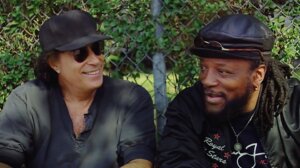
Tall, clad in black, and sporting sunglasses throughout our indoor meeting, he came across as very reserved, bordering on shy, yet also, paradoxically and by turns, talkative, free-wheeling and free-associative in his commentary.
Recalling his artistic mentors, many of whom appear in the film, he said, “They had a sensuality and spirituality that entered you. It’s not something you can easily describe. But as time went on, these great vocalists were seen as almost comic. They were the world of the TV show, Happy Days. But that was never what they were about.”
Their cultural significance cannot be overestimated either, Vance said. For the first time, Black and white teenagers were dancing in the same space.
“They created a youth culture that never existed before. They inspired the movies that were being made and the clothing that was worn and we’re still feeling their impact today,” he said.
Vance found that the artists he wanted to interview were eager to tell their stories, though some expressed disappointment and anger at the trajectory of their lives while others looked back nostalgically. Some voiced both sentiments.
It took close to ten years to get the film off the ground. The subject matter just didn’t resonate with investors or the festival circuit. But for Vance, it was a story that needed to be told and seen. The time was long overdue for these performers to be the stars of a film before it was too late. “They were always movie stars,” said Vance.
‘The writing was on the wall’
When I asked the Flatbush, Brooklyn native if singing had always been his career choice, he found the very concept of a “career choice” mildly amusing. His life evolved extemporaneously, at least that’s the way he made it sound.
While his mother sang on the radio and was at one time the girlfriend of Irving Fein, who would go on to manage both Jack Benny and George Burns, Vance did not grow up wanting to be a singer.
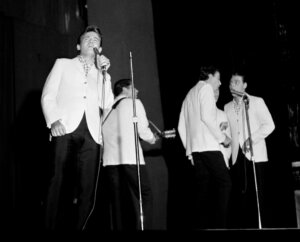
The seminal moment for him, and the scene that opens the film, happened in the 1950’s when he was a teenager attending a mega-show filled with screaming fans at the Brooklyn Paramount Theater, which was known for its legendary shows hosted and promoted by DJ Alan Freed.
“I knew I wanted to be part of that,” Vance said.
In short order, he became a member of a local band, singing in the school hallways, on neighborhood stoops and even in the subways.
“No, we were not buskers,” he said. “We just went down into the subways for their echo. But when we made eye contact with other riders, there was just a connection and we all felt it. There was a simplicity, an essence, and everyone wanted to be part of it. That was spiritual. There was a band on every street corner. That couldn’t happen today.”
At 15, he launched his first vocal group, and ultimately, after a number of band iterations, Vance forged Jay and the Americans, which enjoyed a string of hits. The band performed on The Tonight Show with Johnny Carson, opened for The Beatles and played the closing act following The Rolling Stones at Carnegie Hall.
“They wanted to move The Rolling Stones out of the theater unobserved, thinking if we were on stage that would keep the audience engaged, but it didn’t work that way,” said Vance. “The audience understood what was happening and when we started to sing they were running out of the theater screaming to catch up with the Rolling Stones. In the end, we were performing for an empty house.”
Vance knew this was the death knell for Jay and the Americans and groups of that ilk. They continued to perform and produce hits, but they couldn’t compete with the new breed that appeared on every major TV show and generated unprecedented press coverage. In 1974, Jay and The Americans dispersed.
“The writing was on the wall,” Vance said. “The Beatles wore Nehru suits,” We wore dickies and sweaters.”
Vance managed to thrive doing, among other things, TV jingles to earn extra money.
He produced the soundtrack for Animal House, which sold sold more than one million copies, and the one for Eddie and the Cruisers, which went triple platinum when the movie became a cult hit. In the film American Hot Wax, he played the role of “Professor La Plano” who led a fictional band, the Planotones, which inspired Vance in 1992 to create the very real Kenny Vance and the Planotones. His son, Ladd, is a band member. “We do duets and when we sing he shares a unique version of me. And to share that with him is a unique gift,” Vance told me.
‘How could these rock guys be Jews?’
I asked Vance if he were starting out today, whether he would have kept the name Rosenberg. He said that Vance has been his last name for so long he couldn’t imagine another. “Vance was cool,” he said. “We were all Jews in Jay and the Americans. But everyone assumed we were Italian. Congratulations!”
He told me he rarely discusses his connection to Jewishness — when he was growing up, his family was largely secular, though he did have a Bar Mitzvah.
For him, Jewishness is about “doing the ethical thing,” he said. “I love that. I get it. But I’m not observant. ‘I feel like a hypocrite,’ I told a friend who said, ‘if you get it, you’re not a hypocrite’”
From time to time, though, he does attend Chabad services for what he sees as their essence, purity and authenticity.
“The Lubavitch consider us orphans from the true information” he said. “Orthodox, Conservative and Reform are man-made concepts. Did Moses belong to one of those three denominations? He was an authentic Jewish person. It was his essence. I love the Talmud. When I attend services, I study the commentaries of that week’s Parsha.”
Though he never experienced heavy duty antisemitism, being Jewish on occasion made him feel like an outsider, most pointedly, he said, in the deep south during the Jim Crow days.
“After one show, a bunch of us had gathered in one of our hotel rooms, including several cops, all with guns and sitting there in their undershirts. They were playing cards with some of the guys from the band. We were in a relaxed situation and one of them said, ‘Hey, what are you?’ and one of the guys said, ‘We’re the Chosen.’ I thought I was going to die when he said that, but then the cops started laughing. I didn’t realize it at the time, but the fact that we would be Jews was so far off the radar, they thought it was a joke. How could these rock guys be Jews? It was absurd. I knew we had entered a different reality.”
‘I started to cry’
As we left the restaurant and walked down the street, Vance told me that he’d never imagined that he’d ever be a filmmaker, but now he thinks that his debut documentary may just be his most potent legacy.
“When they showed it on PBS, I started to cry in the middle of it,” he said. “I was so happy to see Eugene Pitt, Wally Roker and Arlene Smith starring in a movie that was on TV. They are stars on screen.”
“I could have been good at this,” he said wistfully, then added, “I’ve been told I belong in The Guinness World Records as the oldest director making a debut.”
Heart & Soul is available on DVD and on various streaming platforms including Fandango and Plex.
This is a moment of great uncertainty. Here’s what you can do about it.
We hope you appreciated this article. Before you go, we’d like to ask you to please support the Forward’s independent Jewish news this Passover. All donations are being matched by the Forward Board - up to $100,000.
This is a moment of great uncertainty for the news media, for the Jewish people, and for our sacred democracy. It is a time of confusion and declining trust in public institutions. An era in which we need humans to report facts, conduct investigations that hold power to account, tell stories that matter and share honest discourse on all that divides us.
With no paywall or subscriptions, the Forward is entirely supported by readers like you. Every dollar you give this Passover is invested in the future of the Forward — and telling the American Jewish story fully and fairly.
The Forward doesn’t rely on funding from institutions like governments or your local Jewish federation. There are thousands of readers like you who give us $18 or $36 or $100 each month or year.

Support our mission to tell the Jewish story fully and fairly.