Russian Non-Jews Can Begin Conversion Before Immigrating to Israel

Moscow Image by Getty
Russian non-Jews who are preparing to immigrate to Israel have been given the option of beginning their conversion to Judaism in Moscow.
This option came with the launch last week in Russia of the Maslul project, which is a joint initiative of several organizations for facilitating the conversion process for prospective immigrants even before they land in the Jewish state.
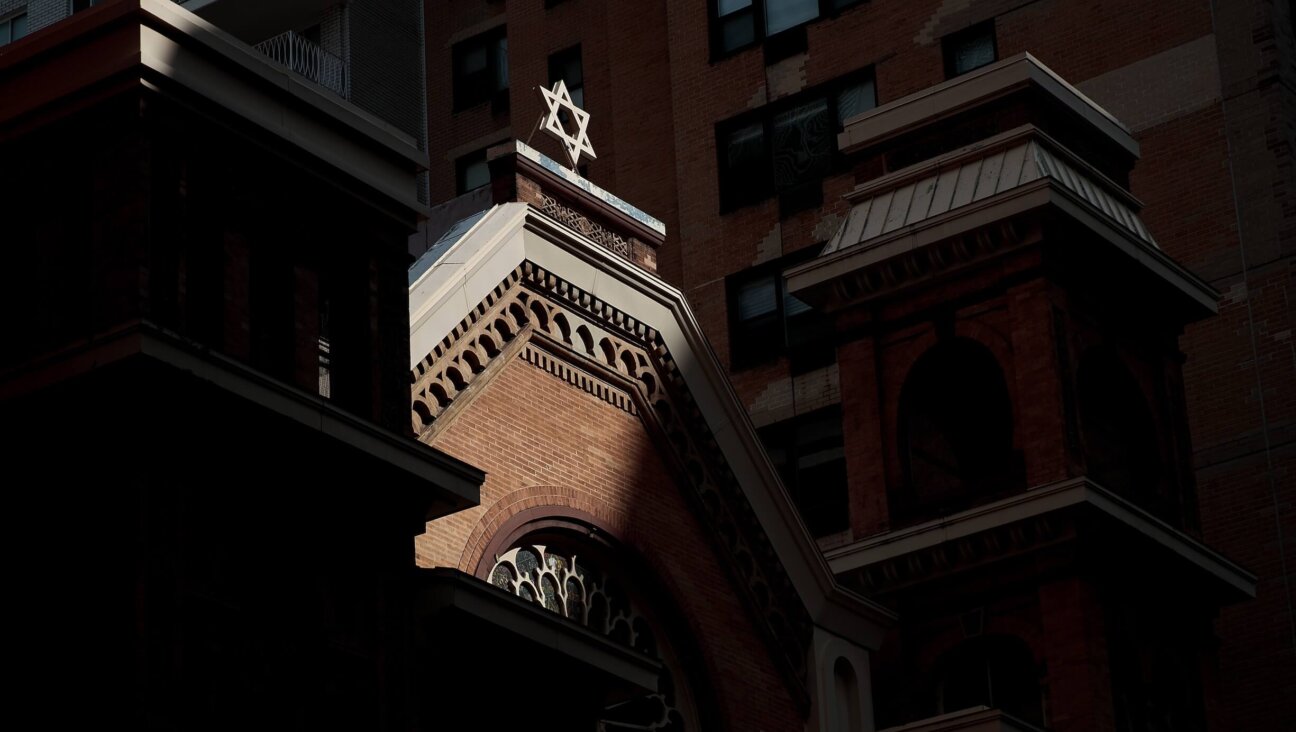
Started last year in Ukraine, the Maslul course, which was born out of a partnership between the Triguboff Institute, the Jewish Agency for Israel and the Australian branch of United Israel Appeal, will operate in Russia from Moscow’s Choral Synagogue Jewish community center, headed by the city’s chief rabbi and president of the Conference of European Rabbis, Pinchas Goldschmidt.
In Moscow, a team of six people will locate eligible nominees for the project and run the educational program, which meets the curriculum of the Jewish Agency’s National Institutes for Identity and Conversion — a state-recognized entity. In Ukraine, Maslul operates a program for several dozen people, with 10 instructors. Conversion students get accredited for material covered in Maslul programs outside Israel and may complete the process in Israel.
Israel’s Law of Return for Jews gives citizenship to some people who have family ties to Jews but are not Jewish themselves according to Halacha, or religious Jewish law, and therefore can not marry under Jewish law. Israel has hundreds of thousands of citizens, mostly from former Soviet countries, who identify culturally as Jewish but are unable to marry as such in Israel because they are not recognized as Jewish.
This and other problems lead to a feeling of estrangement, according to Benjamin Ish-Shalom, the National Institute’s chairman. Many olim who are not familiar with Judaism “find themselves bewildered once they come across it after their aliyah,” he said.
Non-Jews who begin their conversion after immigrating to Israel, or making aliyah, have difficulties completing their conversion because of the hardships of immigration, Shalom Norman, the Harry O. Triguboff Israel Institute of Conversion Policy, said, adding that Maslul was designed to solve this problem.
This is a moment of great uncertainty. Here’s what you can do about it.
We hope you appreciated this article. Before you go, we’d like to ask you to please support the Forward’s independent Jewish news this Passover.
This is a moment of great uncertainty for the news media, for the Jewish people, and for our sacred democracy. It is a time of confusion and declining trust in public institutions. An era in which we need humans to report facts, conduct investigations that hold power to account, tell stories that matter and share honest discourse on all that divides us.
With no paywall or subscriptions, the Forward is entirely supported by readers like you. Every dollar you give this Passover is invested in the future of the Forward — and telling the American Jewish story fully and fairly.
The Forward doesn’t rely on funding from institutions like governments or your local Jewish federation. There are thousands of readers like you who give us $18 or $36 or $100 each month or year.
Support our mission to tell the Jewish story fully and fairly.