1,000 Ethiopian Jews Will Be Brought To Israel, Leaving 7,000 Still There

Welcome to Israel: Israeli relatives welcome Ethiopian Jews arriving in Tel Aviv. Image by getty images
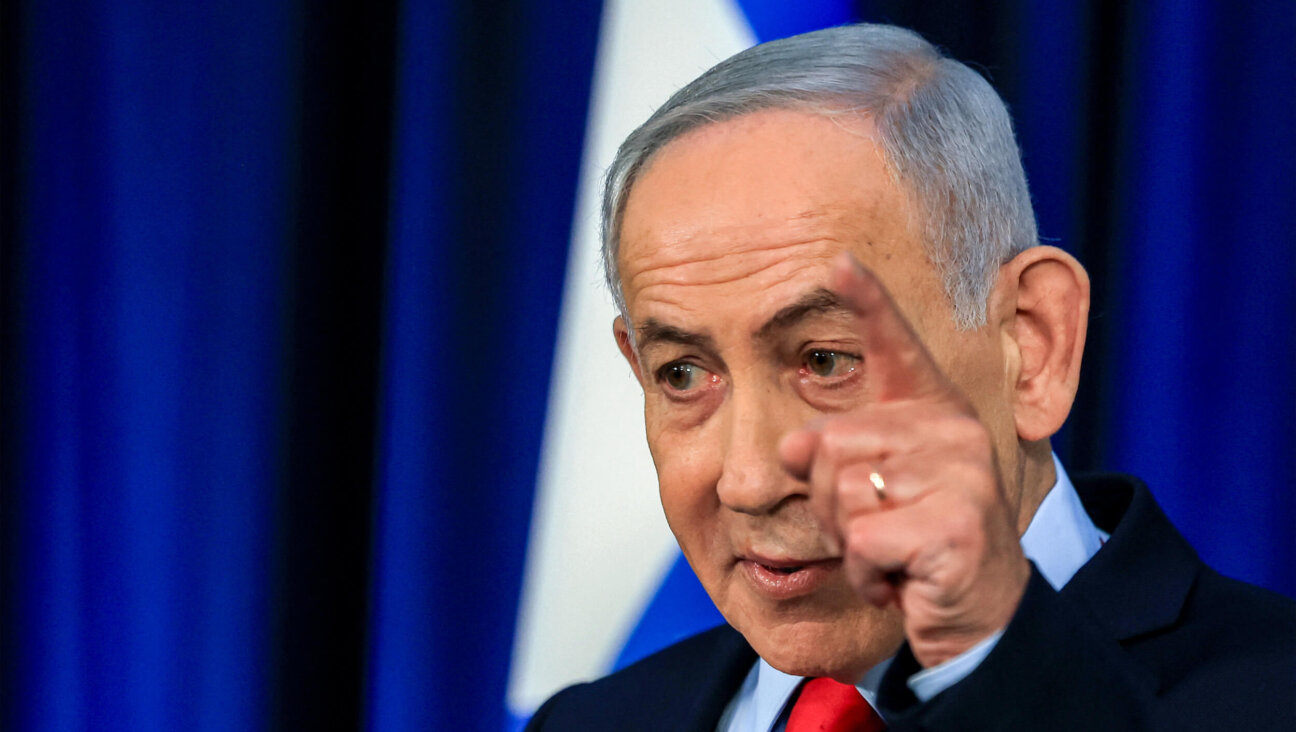
JERUSALEM (JTA) — Israel’s Prime Minister Benjamin Netanyahu announced that he has decided to bring some 1,000 Ethiopian Falash Mura who have children living in Israel to the country.
There are some 8,000 Falash Mura in Ethiopia awaiting permission to immigrate to Israel, most of whom have some family members in Israel.
The Falash Mura claim links to descendants of Jews who converted to Christianity generations ago under duress but now seek to return to Judaism. They must get special permission to immigrate to Israel due to their uncertain Jewish status.
“This is not a simple decision due to other ramifications that we have regarding members of the Ethiopian community; however, I am determined to do this and I add that this is in wake of 1,300 Falash Mura who have already come to Israel,” Netanyahu said at the meeting.
In 2013, Israel’s Interior Ministry approved the immigration of the remaining Falash Mura, and the Knesset in November 2015 unanimously approved a plan to bring some of them to Israel following a public campaign launched by the nation’s Ethiopian community and volunteer organizations. But the plan did not deal with the finances, which include the long-term costs of acclimating the immigrants.
An agreement to find money in the budget for the aliyah of the Falash Mura was signed in April 2016, and in 2017 some 1,300 Falash Mura arrived in Israel. The 2019 state budget, which was approved by the Knesset in March, does not include funds for Ethiopian immigration.
An organization representing Ethiopian-Israelis said that Netanyahu’s announcement is a disappointment to the community.
“In 2015, the government passed a unanimous decision to bring the remainder of Ethiopian Jewry to Israel, numbering approximately 8,000 individuals. Today’s decision leaves 7,000 individuals behind and is a harsh deviant from the commitment that the prime minister is yet to fulfill. Ethiopian-Israelis who have siblings and children still waiting to immigrate in Ethiopia, responded to this decision with much sorrow, upon understanding that another year would go by separated from their families,” Alisa Bodner, spokesperson of the Struggle for Ethiopian Aliyah, said in a statement. “The government’s foot-dragging of this issue year after year, has caused intense suffering for families who have been separated from one another, in some cases for over 20 years.”
This is a moment of great uncertainty. Here’s what you can do about it.
We hope you appreciated this article. Before you go, we’d like to ask you to please support the Forward’s independent Jewish news this Passover. All donations are being matched by the Forward Board - up to $100,000.
This is a moment of great uncertainty for the news media, for the Jewish people, and for our sacred democracy. It is a time of confusion and declining trust in public institutions. An era in which we need humans to report facts, conduct investigations that hold power to account, tell stories that matter and share honest discourse on all that divides us.
With no paywall or subscriptions, the Forward is entirely supported by readers like you. Every dollar you give this Passover is invested in the future of the Forward — and telling the American Jewish story fully and fairly.
The Forward doesn’t rely on funding from institutions like governments or your local Jewish federation. There are thousands of readers like you who give us $18 or $36 or $100 each month or year.
Support our mission to tell the Jewish story fully and fairly.