Hackers disrupt Rev. Warnock’s MLK Shabbat sermon hosted by Atlanta synagogue

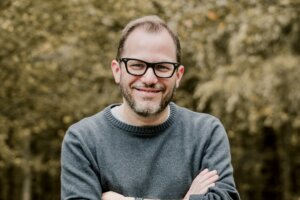
Rev. Raphael Warnock Image by Getty
By Benyamin Cohen January 17, 2021
Hackers disrupted the Rev. Raphael Warnock’s sermon at a virtual Shabbat service on Friday in honor of Martin Luther King Jr. Day, blocking viewers from hearing him and triggering problems at other synagogues across the country.
Some congregants of The Temple, the synagogue that has hosted the annual event for more than a decade, assumed that a spike in interest had crashed the website. After all, Warnock’s recent election – who is the pastor at Martin Luther King’s historic Ebenezer Baptist Church in Atlanta – helped give the Democratic Party control of the United States Senate.
But the broadcast’s disruption was caused by people with malicious intent.
Kent Alexander, the synagogue’s president, emailed the congregation on Saturday with the news. “To the many of you who tried to log on through the Temple website but could not, and missed the service, we apologize and want to offer an explanation.”
“Our website service provider informed our executive director, Mark Jacobson, last night that ‘malicious user agents’ had continuously loaded the Temple website with the objective of shutting it down,” Alexander continued. “In doing so, they blocked access not only to The Temple, but to every other synagogue client website across the country. Eventually, access was restored for all, but The Temple was last. Our site was down for over an hour into the service. Mark was told this was the largest-ever attack affecting the provider’s network of client synagogues.”
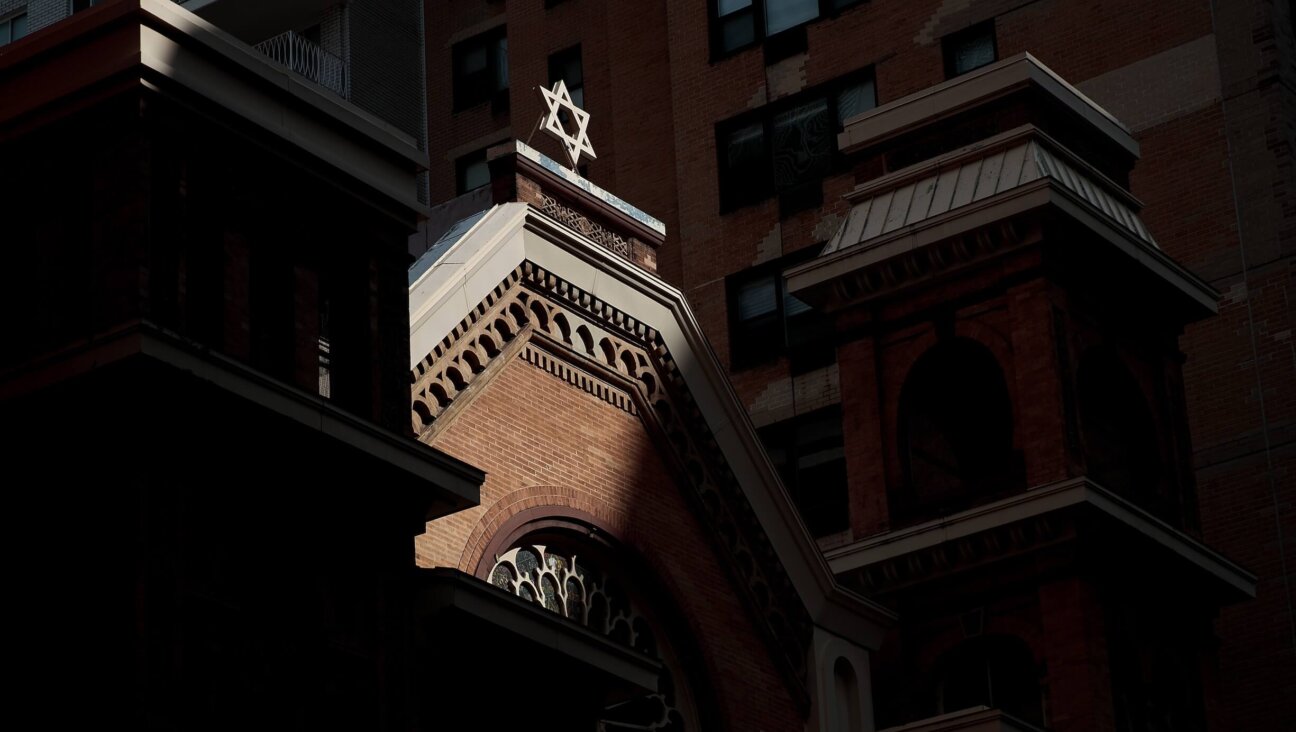
The Temple, founded in 1860 shortly before the Civil War, is Atlanta’s oldest synagogue. It moved to its current Midtown location, overlooking the city’s iconic Peachtree Road, in 1931. During the 1950s and 1960s, the Reform congregation became a hub of civil-rights advocacy. In the early-morning hours of Oct. 12, 1958, a bomb was set off at the synagogue, causing severe damage to the building. Five white supremacists linked to the KKK were arrested for the attack, but none were ever convicted.
In the wake of the bombing, the city’s leading civil-rights leaders – including King, who was a close friend of the synagogue’s spiritual leader, Rabbi Jacob M. Rothschild – offered support to the congregation. A full account of the attack was written by Melissa Fay Greene in the book “The Temple Bombing,” a finalist for the National Book Award. In it, Greene quotes from a speech that the rabbi gave to honor Dr. King. “He has earned his place as the moral leader of our social revolution,” Rothschild said.
This year, many local rabbis and others spoke out in solidarity with The Temple after Friday night’s hack. “There is still much work to be done fighting the hate of antisemitism and racism,” Rabbi Adam Starr of the Atlanta-based modern-Orthodox Ohr Hatorah, wrote on his Facebook page.
Billy Planer, a native Atlantan who leads civil-rights tours for Jewish groups called Etgar 36, was shocked by the news. “What happened to them is sad and pathetic,” he said. “Yet, let’s not lose sight that the reason this happened is that the work that these two historic congregations do to bring love, light, and connection in this world is winning, and on the right side of history.”
Alexander said the authorities are conducting an investigation of the hack.
Warnock’s entire MLK Shabbat sermon can be viewed below:
This is a moment of great uncertainty. Here’s what you can do about it.
We hope you appreciated this article. Before you go, we’d like to ask you to please support the Forward’s independent Jewish news this Passover.
This is a moment of great uncertainty for the news media, for the Jewish people, and for our sacred democracy. It is a time of confusion and declining trust in public institutions. An era in which we need humans to report facts, conduct investigations that hold power to account, tell stories that matter and share honest discourse on all that divides us.
With no paywall or subscriptions, the Forward is entirely supported by readers like you. Every dollar you give this Passover is invested in the future of the Forward — and telling the American Jewish story fully and fairly.
The Forward doesn’t rely on funding from institutions like governments or your local Jewish federation. There are thousands of readers like you who give us $18 or $36 or $100 each month or year.
Support our mission to tell the Jewish story fully and fairly.