Former Obama White House Jewish liaison reappointed to role under Biden

By Jacob Kornbluh August 5, 2021

White House Liaison to the Jewish Community Chanan Weissman (second to right) at the White House Hanukkah Party on Dec. 14, 2016. Image by University of Maryland Alumni Association
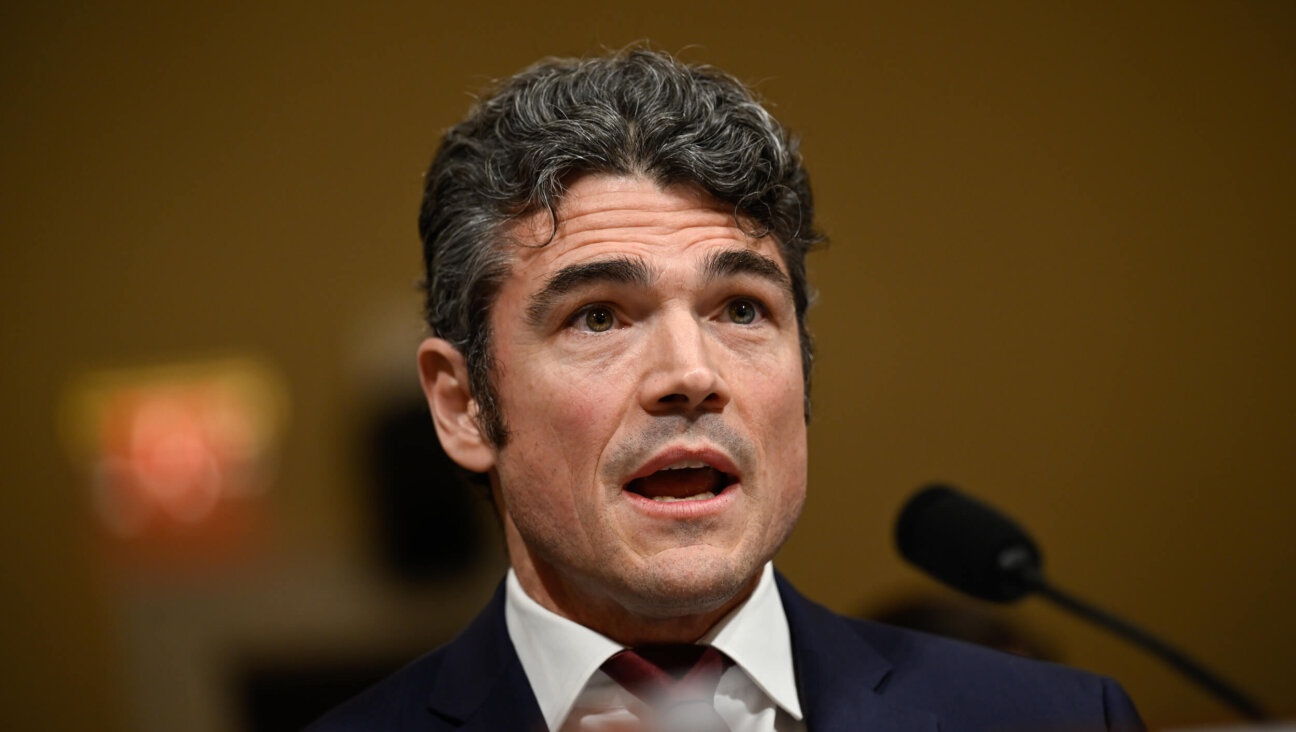
Weissman, 37, currently a staffer on the National Security Council, served as Jewish liaison in the last year of former President Barack Obama’s second term and prior to that was a spokesperson for the State Department’s Bureau of Democracy, Human Rights and Labor. He remained in government during the Trump administration, returning to the State Department to head the Internet Freedom and Business & Human Rights Section. On the NSC, he is director for technology and democracy.
The Jewish liaison, dating back to the Kennedy administration, is charged to maintain relations with the American Jewish community . Since 2001, the liaison has also managed the guest list to the White House’s annual Hanukkah receptions.
Former President Donald Trump did not fill the position. His son-in-law, Jared Kushner, deeply tied to the Orthodox Jewish community in the tri-state area, took the lead in handling Jewish relations with his staff.
Weissman, who earned his master’s degree from Georgetown University’s School of Foreign Service and his bachelor’s degree from the University of Maryland, is the third Orthodox Jew to hold this position and the only to do so in a Democratic administration. Tevi Troy, a historian and author, served under George W. Bush; and Marshall Breger, a law professor at the Columbus School of Law, was the liaison under Ronald Reagan.
“The job is representing the views of the Jews to the White House and representing the views of the White House to the Jews,” said Troy, author of “Fight House,” a book about rivalries at 1600 Pennsylvania Avenue.
Last month, the Biden administration faced criticism from representatives of major Jewish groups for lack of outreach to the Orthodox, Conservative and Reform movements. Troy said that while there are Jews in senior positions in the West Wing, including White House chief of staff Ron Klain, a dedicated liaison is still necessary.
“The Jewish community is probably more well organized, more knowledgeable about the issues than we’ve ever been in the past,” Weissman said during a panel discussion at the Jewish Federations of North America’s General Assembly in 2016. “As a result, it’s important to develop as many relationships as possible with all these different various organizations.”
Weissman added then that in the short time as liaison he reached out to important interlocutors within the Jewish community regardless of their views on the policies and positions of the administration.
“Whether you agree with them or not, there needs to be a conversation,” he said. “And don’t allow your political differences to prevent you from building those bridges.”
Matt Nosanchuk, who preceded Weissman for the first three years of Obama’s second term and who recruited him as his replacement, said Weissman is “a superb choice to fill this important role.”
This is a moment of great uncertainty. Here’s what you can do about it.
We hope you appreciated this article. Before you go, we’d like to ask you to please support the Forward’s independent Jewish news this Passover.
This is a moment of great uncertainty for the news media, for the Jewish people, and for our sacred democracy. It is a time of confusion and declining trust in public institutions. An era in which we need humans to report facts, conduct investigations that hold power to account, tell stories that matter and share honest discourse on all that divides us.
With no paywall or subscriptions, the Forward is entirely supported by readers like you. Every dollar you give this Passover is invested in the future of the Forward — and telling the American Jewish story fully and fairly.
The Forward doesn’t rely on funding from institutions like governments or your local Jewish federation. There are thousands of readers like you who give us $18 or $36 or $100 each month or year.
Support our mission to tell the Jewish story fully and fairly.