State Supreme Court sides with mother in dispute over son’s yeshiva education
A new ruling directs the city and state to finish their probe of how secular subjects are taught at a Williamsburg yeshiva.
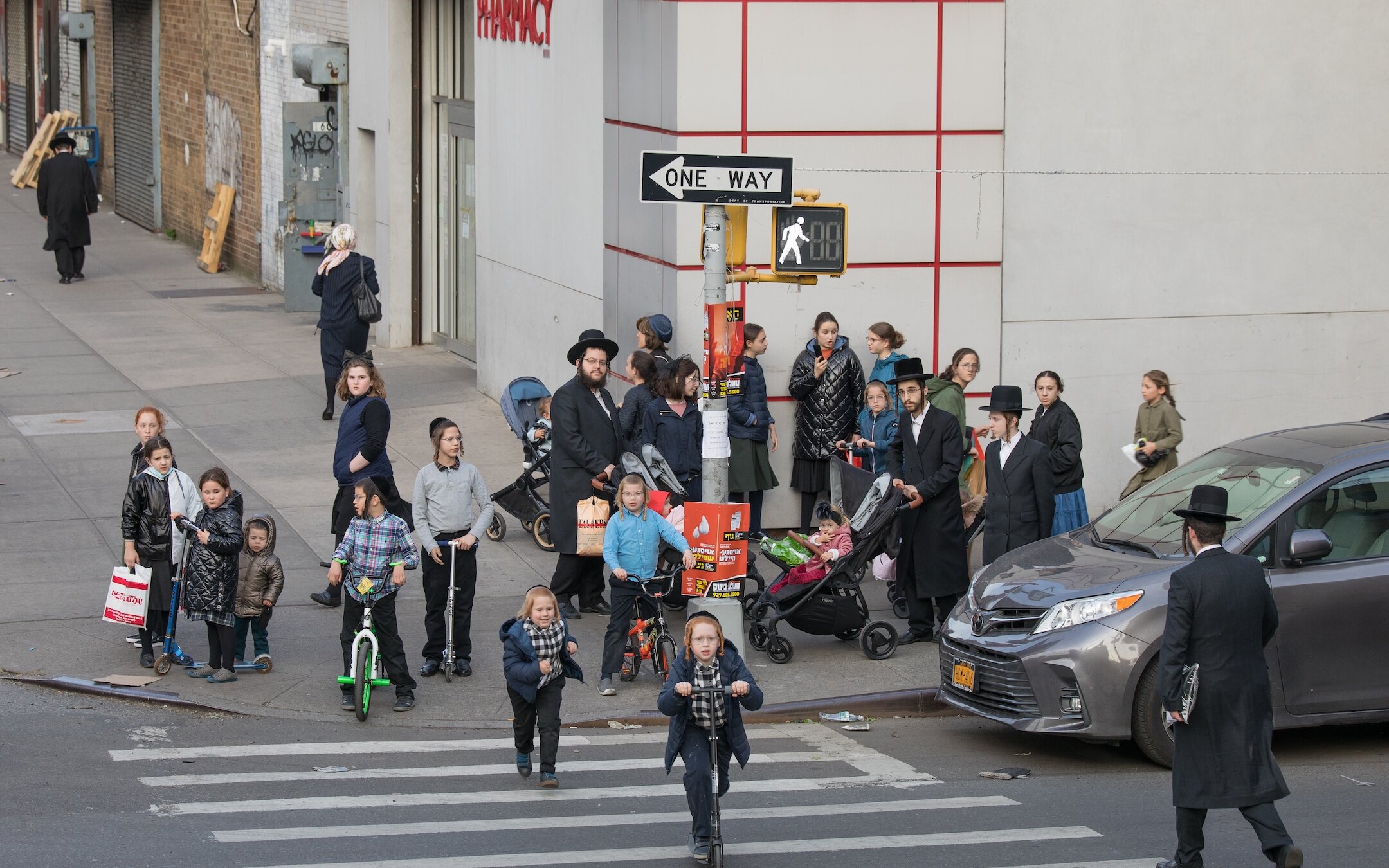
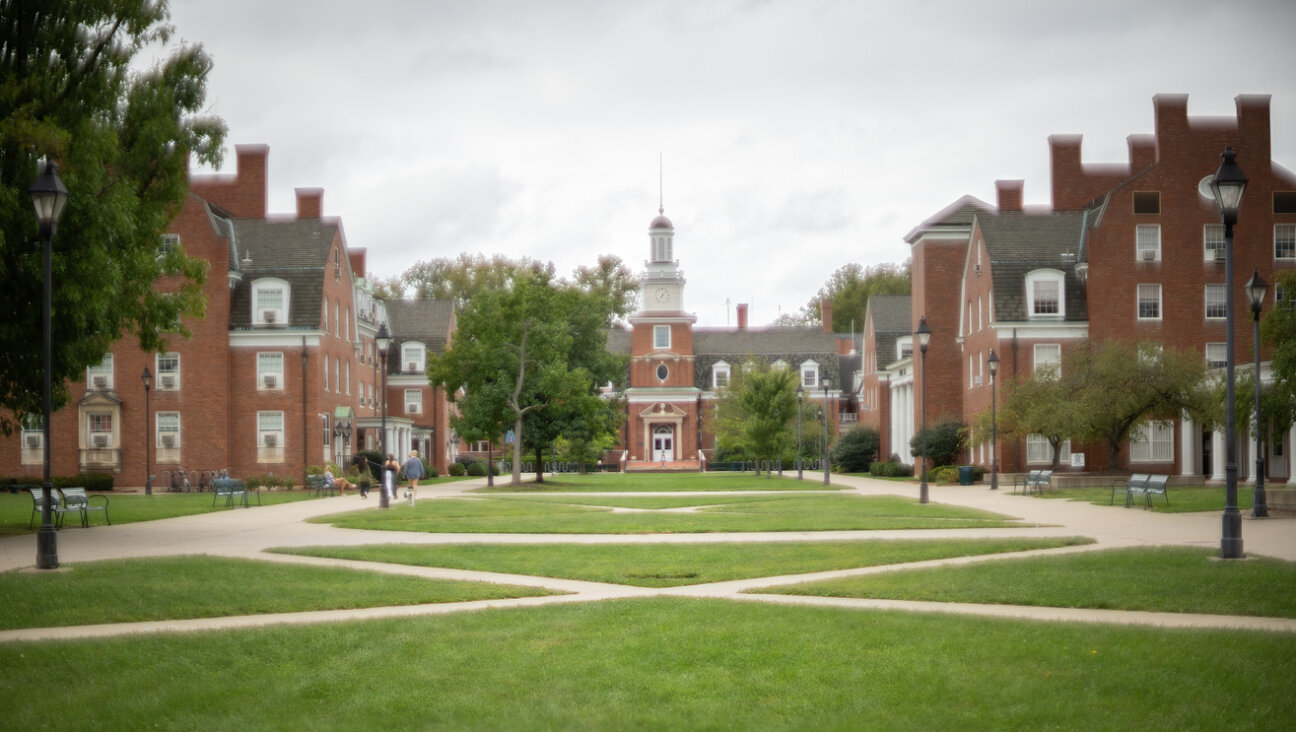
Families walk on the streets of Williamsburg May 12. (Avi Kaye)

By Julia Gergely June 9, 2022
(New York Jewish Week) — A New York State Supreme Court justice ruled in favor of an Orthodox Jewish mom who said her son was denied an adequate secular education at his Brooklyn yeshiva.
This week’s ruling directs the state’s Education Department and the city’s Department of Education to complete a long-stalled investigation into the school, Yeshiva Mesivta Arugath Habosem in Williamsburg.
Proponents for improving secular education at yeshivas hailed the ruling. They said it provides momentum in their efforts to get the New York State Education Department to implement proposed regulations meant to ensure that all students receive the education to which they are entitled under the law.
The yeshivas and their advocates say their right to establish their own curricula is a religious liberty issue.
The case heard by the Supreme Court was brought in 2019 by Beatrice Weber, a member of Brooklyn’s Hasidic community, who claimed her youngest son, then 9 years old, wasn’t receiving a “substantially equivalent” — that is, equivalent to public schools — education under the law. A lower court directed her back to a family court. Justice Adam W. Silverman’s ruling on June 7 upheld her appeal.
Weber received assistance from Yaffed, an activist group that is seeking to improve secular education at the Jewish parochial schools. Yaffed helped match her with a lawyer and file the petition.
“We hope this does send a clear message to the city that they must complete their investigation and produce their findings and be transparent about how they’re going to remediate these issues,” Naftuli Moster, founder and executive director of Yaffed, told the New York Jewish Week.
Silverman ruled that the city’s investigation into Weber’s son’s yeshiva, which has been ongoing since 2015, must come to a conclusion within the next four months. This is the first time a judge has formally ordered the city agency to conclude its investigation, according to David Shapiro, Weber’s lawyer.
Critics and defenders of the yeshivas have been weighing in on a new set of proposed guidelines released in March that would direct private schools to show that they meet secular curriculum standards; the public comment period ended May 31. Agudath Israel of America, which represents haredi Orthodox Jews, urged its members to fight the proposed oversight. “We cannot allow the government to come in and unreasonably control how and what we should be teaching our children,” Rabbi Chaim Dovid Zwiebel, Agudah’s executive vice president, said in a statement.
Weber acknowledged that ruling may have come too late to ensure that here son gets a “substantially equivalent” secular education at his yeshiva, where, she said, only one hour a day is allotted towards secular subjects.
This article originally appeared on JTA.org.
This is a moment of great uncertainty. Here’s what you can do about it.
We hope you appreciated this article. Before you go, we’d like to ask you to please support the Forward’s independent Jewish news this Passover. All donations are being matched by the Forward Board - up to $100,000.
This is a moment of great uncertainty for the news media, for the Jewish people, and for our sacred democracy. It is a time of confusion and declining trust in public institutions. An era in which we need humans to report facts, conduct investigations that hold power to account, tell stories that matter and share honest discourse on all that divides us.
With no paywall or subscriptions, the Forward is entirely supported by readers like you. Every dollar you give this Passover is invested in the future of the Forward — and telling the American Jewish story fully and fairly.
The Forward doesn’t rely on funding from institutions like governments or your local Jewish federation. There are thousands of readers like you who give us $18 or $36 or $100 each month or year.
Support our mission to tell the Jewish story fully and fairly.