Israeli gunshot ‘likely’ killed Shireen Abu Akleh, US concludes after analyzing bullet
The bullet was too damaged to definitively settle the question of who shot the Al Jazeera journalist in May, the U.S. analysts concluded
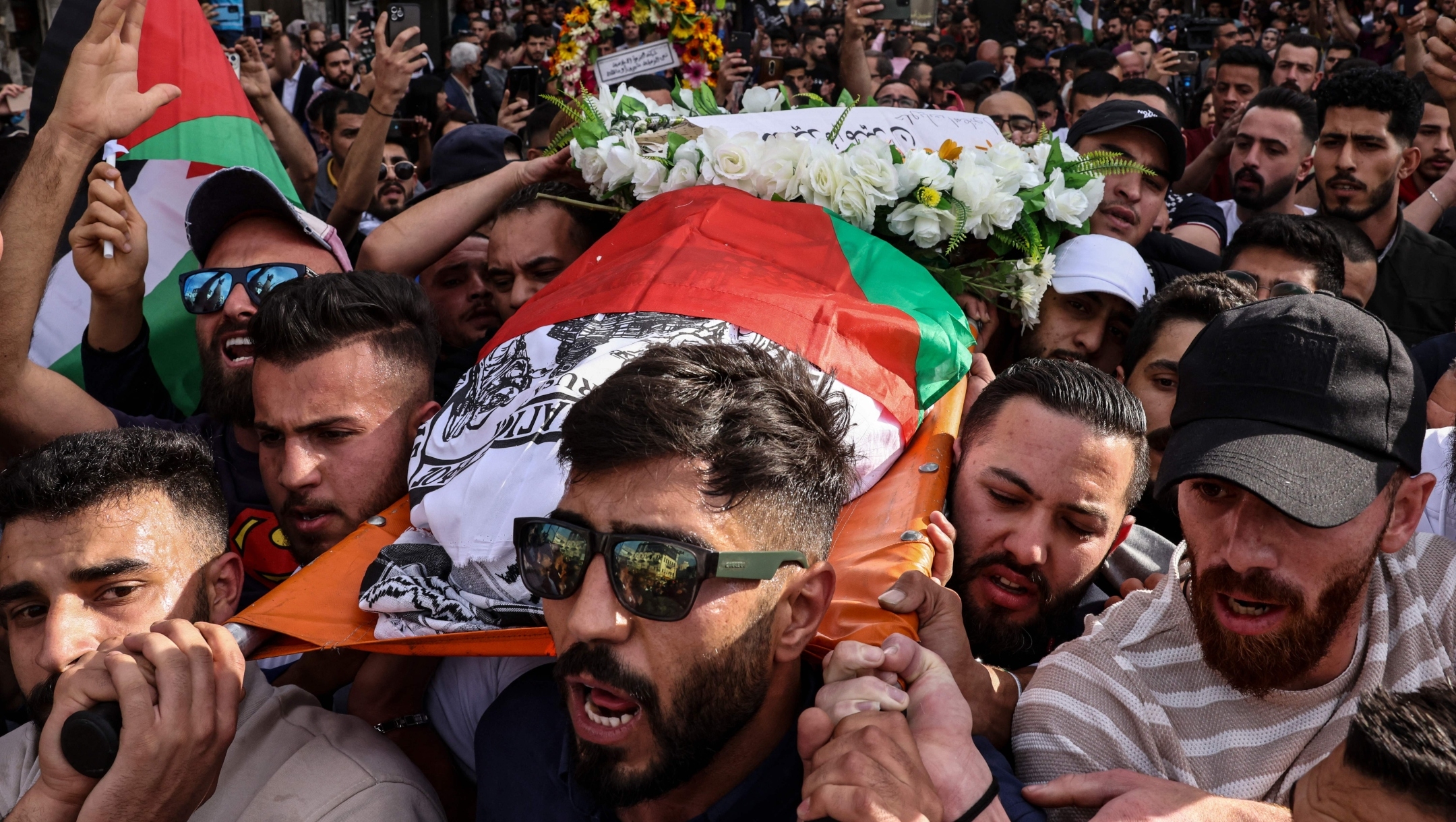
Palestinians carry the flag-draped body of veteran Al-Jazeera journalist Shireen Abu Akleh as it is carried toward the offices of the news channel in the West Bank city of Ramallah, May 11, 2022. (Ronaldo Schemidt/AFP via Getty Images)
(JTA) — The U.S. State Department has concluded that an Israeli soldier likely shot and killed Al Jazeera journalist Shireen Abu Akleh, after examining the bullet that killed Abu Akleh in the West Bank in May.
But the American analysts said they could not make a definitive conclusion because of the condition of the bullet, which Palestinian authorities had held since the May 11 shooting. They also said their analysis found no evidence that the shot had been fired intentionally.
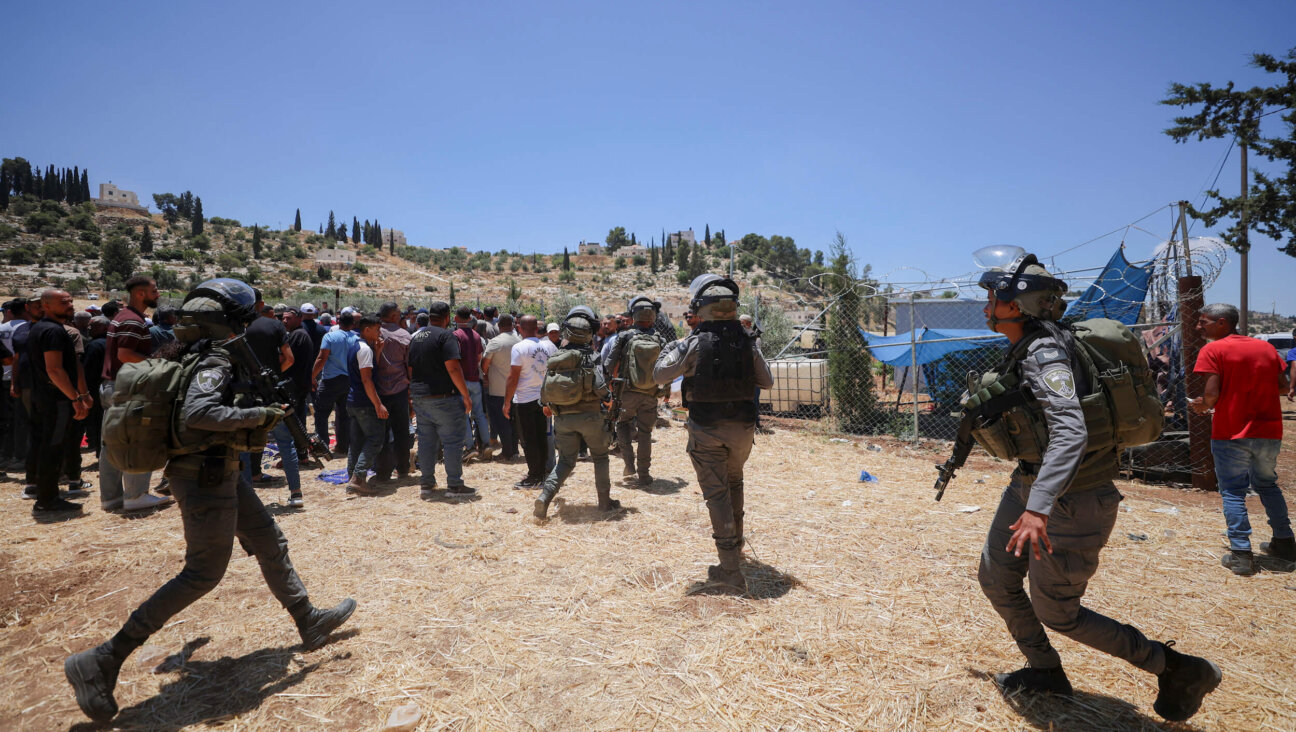
Abu Akleh, a Palestinian-American journalist, was killed while reporting from Jenin, a West Bank city where the Israeli army, known as the IDF, was carrying out an operation. Israeli and Palestinian officials immediately traded blame, although Israeli leaders soon shifted to allowing for the possibility that an Israeli soldier had shot Abu Akleh, but said that without the bullet, it would be impossible to say for sure.
The Palestinians would not release the bullet to Israeli investigators, so while multiple third-parties had concluded that an Israeli gunshot was the most likely scenario, no one had analyzed it before Israeli forensic experts did so with at least two American observers on Sunday.
The U.S. security coordinator for Israel and the Palestinian Authority “could not reach a definitive conclusion regarding the origin of the bullet,” the State Department’s statement read. “Ballistic experts determined the bullet was badly damaged, which prevented a clear conclusion.”
But by summarizing the investigations conducted in the Palestinian Authority and Israel, the coordinator “concluded that gunfire from IDF positions was likely responsible for the death of Shireen Abu Akleh.”
The coordinator “found no reason to believe that the gunshot was intentional but rather the result of tragic circumstances during an IDF-led military operation against factions of Palestinian Islamic Jihad on May 11, 2022, in Jenin, which followed a series of terrorist attacks in Israel,” said the statement, which concluded by extending condolences to Abu Akleh’s family.
Abu Akleh’s killing and the investigations into it have heightened tensions between Israel and the Palestinian Authority ahead of the first visit to Israel and the West Bank by U.S. President Joe Biden, who is scheduled to kick off his regional visit July 13. He is also scheduled to visit Saudi Arabia.
Responding to the U.S. analysis, Israeli and Palestinian officials continued to blame each other for Abu Akleh’s death.
“We need to remember that the parties responsible are first and foremost terrorists operating out of a civilian population,” Israeli Defense Minister Benny Gantz said in a statement about the U.S. State Department’s conclusion.
Nabil Abu Rudeineh, the deputy prime minister of the Palestinian Authority, said in a statement reported by Haaretz, “Israel bears the full responsibility for the assassination of Shireen Abu Akleh. We will not go along with any attempt to disrupt the procedures of the Palestinian investigation and will continue to monitor on the clear assumption that Israel is responsible for the murder and must bear the consequences.”
This article originally appeared on JTA.org.
I’m personally matching all gifts to the Forward, up to $36,000. Can I match your gift now?

Hello, fellow Forward reader! I’m Joel Brown, a Forward reader and supporter for more than 15 years, and currently the chair of the board of directors.
I’m an avid Forward reader because it ticks so many of my essential boxes: excellent journalism, Jewish focus and diverse viewpoints. In today’s political climate, what I most appreciate is the Forward’s independence — made possible by the generosity of its membership.
The Forward is committed to bringing you unbiased, nuanced Jewish news. From my position as board chair, I see an exciting future as we expand our position as the definitive independent voice of contemporary American Judaism.
— Joel Brown, Forward board chair
Support our mission to tell the Jewish story fully and fairly.