Iranian Jew’s execution reportedly delayed after prayer campaign by Jews around the world
The stay came as Iran was plunged into political turmoil when a helicopter carrying its president and foreign minister crashed
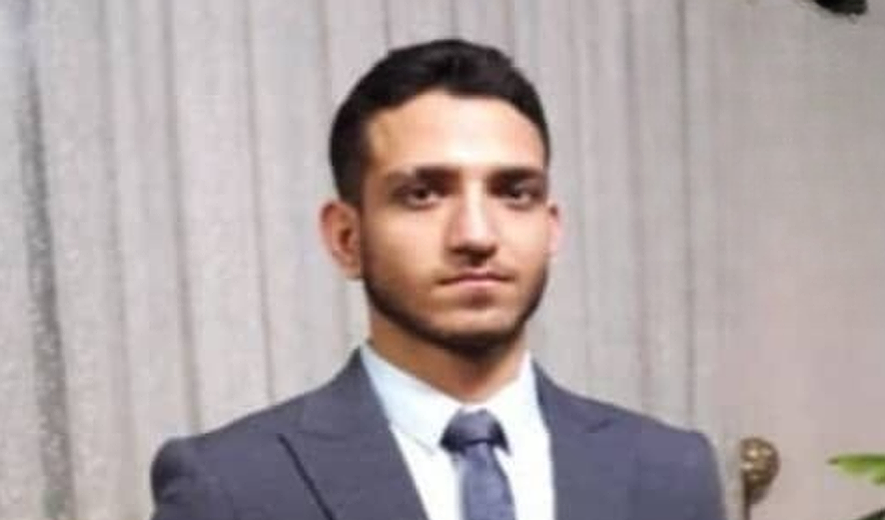
The organization Iran Human Rights shared a picture of Ervin Ghahremani, an Iranian Jew who has been condemned to execution. (Iran Human Rights)
(JTA) — An Iranian Jew who has been sentenced to death has reportedly received a one-month stay of execution after a global pressure campaign that included calls for prayer in Persian Jewish communities around the world.
The stay came as Iran was plunged into political turmoil on Sunday when a helicopter carrying its president and foreign minister crashed under unclear circumstances.
Arvin Ghahremani, 20, had been scheduled to be executed first on Saturday and then on Monday for his role in a murder during a street fight two years ago, according to the organization Iran Human Rights.
The stay of execution, which the Israeli outlet Ynet said had been communicated via WhatApp chats, followed a frenzy of advocacy on Ghahremani’s behalf by Jewish communities around the world. In the Iranian Jewish diaspora, Ghahremani’s case has been a source for calls to prayer, charity and religious devotion – actions that Judaism traditionally holds can “avert a harsh decree.”
The messages used his Hebrew name, Arvin Netanel Ben Siona. One included a desperate voice note from his mother. “I am asking everyone to help pray,” Sonia Saadati said in a tear-filled message in Farsi.
Rabbi Eliyahu Netanili, the leader of Los Angeles’ Hayyeh Torah synagogue, called for 1,000 people to recite Psalm 13, a prayer expressing faithfulness, 13 times.
Ghahremani is among the estimated 8,500 Jews who still live in Iran, following an exodus of most of Iran’s once-major Jewish population after the 1979 revolution that put Islamic leaders in charge.
A resident of the city of the western Iran city of Kermanshah, Ghahremani was reportedly involved in an altercation with a non-Jewish man to whom he had owed money. The man had pulled a knife on Arvin, according to accounts shared in the Jewish community, but the altercation ultimately resulted in the other man’s death.
In Iran, where the penal code is based in part on Islamic Sharia law, blood money to the family of the deceased is an acceptable recompense in cases of manslaughter, such as this. But according to statements spread on Telegram by Iranian Jewish leaders, the victim’s family repeatedly refused offers of payment, known as diyat, and attempts by the community to mediate the issue with Islamic leaders were unsuccessful.
The statement notes that the community had offered to fund a school or mosque named after the deceased, but the offer was not accepted.
“Currently, other measures are also being carried out in coordination with the Kermanshah Kalimian Association, and with the prayers and prayers of the congregation,” it concluded. “We hope that it will be successful.”
Iran Human Rights reports that Ghahremani’s execution was scheduled amid a spree of state killings that has included more than 100 people over the last four weeks.
This article originally appeared on JTA.org.
This is a moment of great uncertainty. Here’s what you can do about it.
We hope you appreciated this article. Before you go, we’d like to ask you to please support the Forward’s independent Jewish news this Passover. All donations are being matched by the Forward Board - up to $100,000.
This is a moment of great uncertainty for the news media, for the Jewish people, and for our sacred democracy. It is a time of confusion and declining trust in public institutions. An era in which we need humans to report facts, conduct investigations that hold power to account, tell stories that matter and share honest discourse on all that divides us.
With no paywall or subscriptions, the Forward is entirely supported by readers like you. Every dollar you give this Passover is invested in the future of the Forward — and telling the American Jewish story fully and fairly.
The Forward doesn’t rely on funding from institutions like governments or your local Jewish federation. There are thousands of readers like you who give us $18 or $36 or $100 each month or year.
Support our mission to tell the Jewish story fully and fairly.