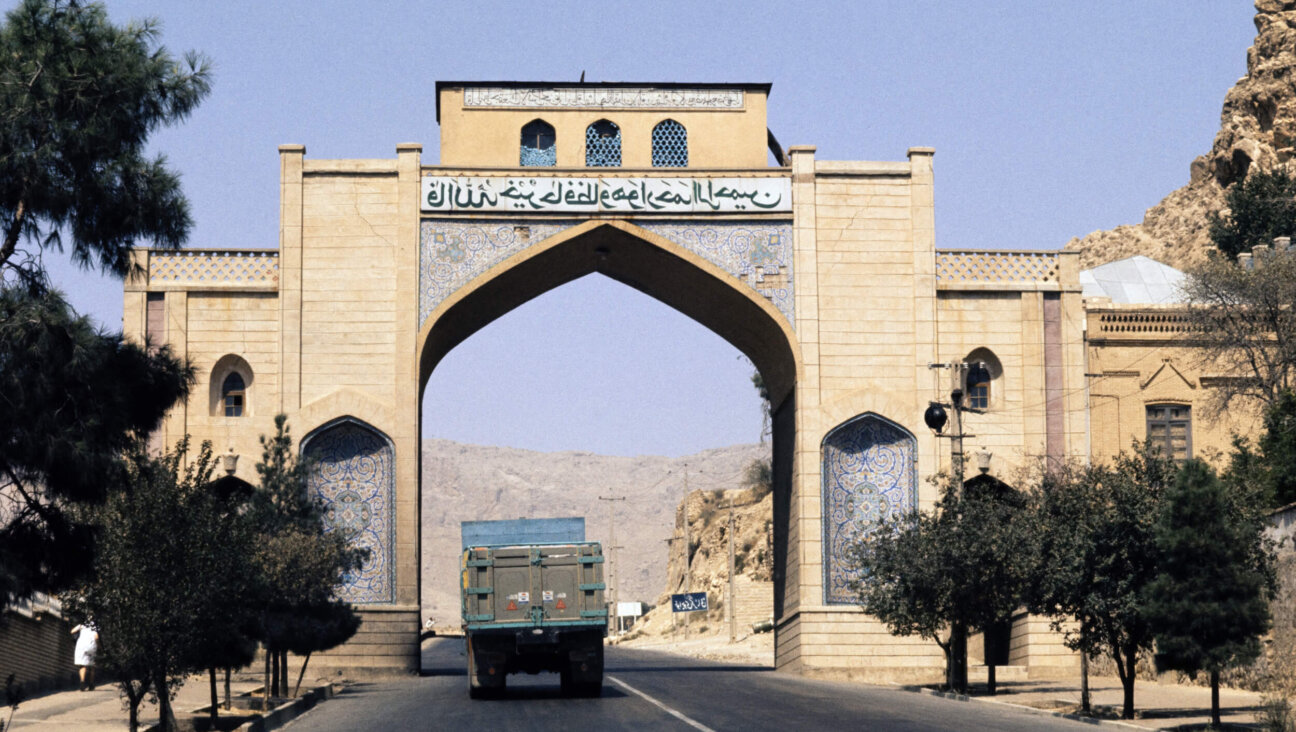
Frank Gehry, renowned architect who began life as Frank Goldberg, dies at 96
‘My grandfather read Talmud to me,’ Gehry said in a 2018 interview
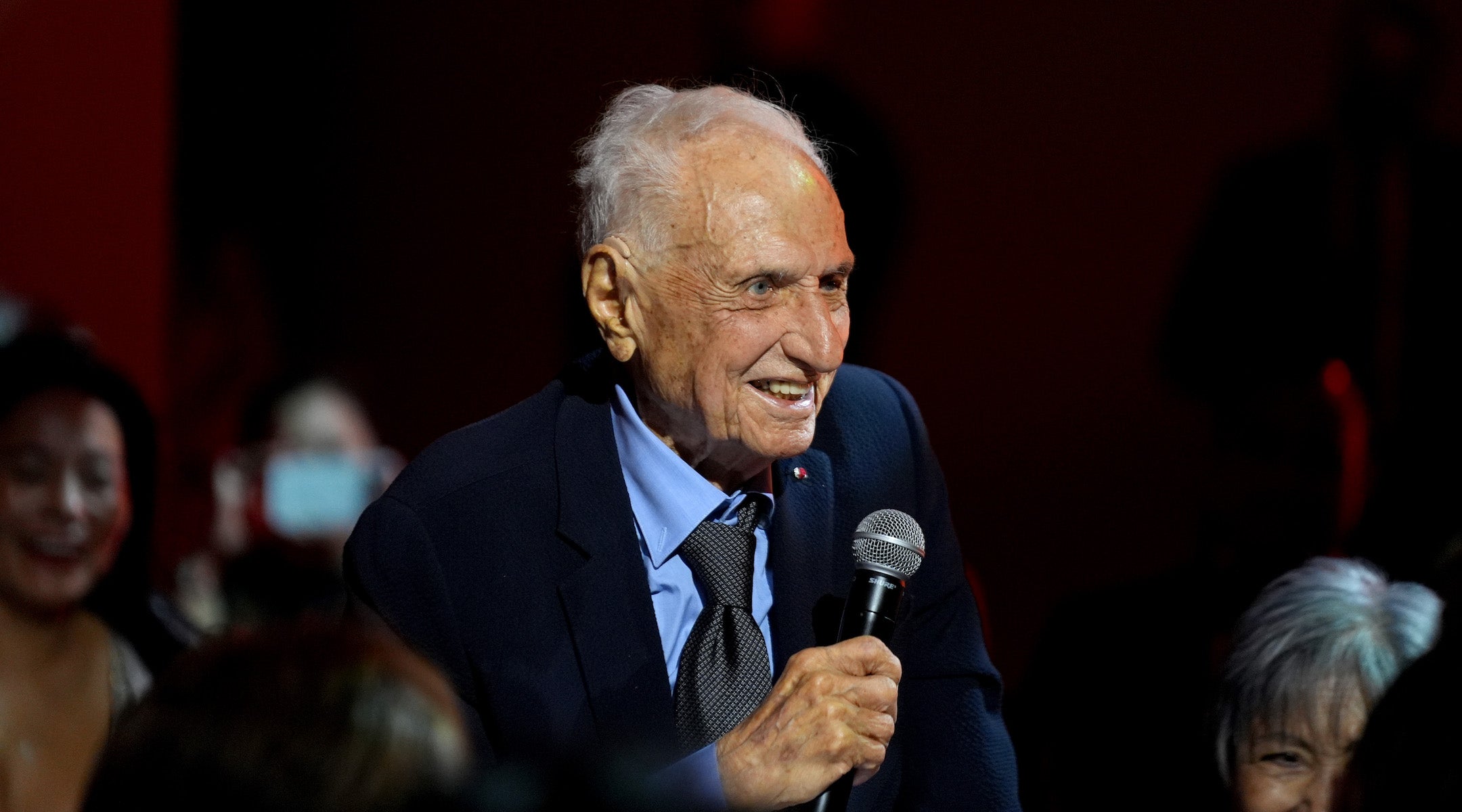
Frank Gehry speaks during the MOCA Gala 2025 at The Geffen Contemporary at MOCA on May 31, 2025 in Los Angeles, California. Photo by Presley Ann/Getty Images for The Museum of Contemporary Art (MOCA)
(JTA) — Frank Gehry, a Jewish architect who became one of the world’s most renowned innovators in his field for his contributions to modernist architecture, including the famed Guggenheim Museum in Bilbao, Spain, has died at 96.
His death following a brief respiratory illness was confirmed on Friday by the chief of staff at his firm, Meaghan Lloyd, according to the New York Times.
Gehry was born Ephraim Owen Goldberg on Feb. 28, 1929, to a Jewish family in Toronto. In 1947, Gehry moved to Los Angeles with his family and later went on to graduate from the University of Southern California’s School of Architecture in 1954.
The same year, he changed his name to Gehry at the behest of his first wife who was “worried about antisemitism and thought it sounded less Jewish.” He would later say he would not make the choice again.
Among Gehry’s most acclaimed works, which feature his signature, sculptural style, are the Bilbao Guggenheim, the Walt Disney Concert Hall in Los Angeles, the Louis Vuitton Foundation in Paris and the DZ Bank Building in Berlin.
Gehry also often returned to the motif of a fish, including two large fish sculptures in the World Trade Center in New York City and on Barcelona’s seafront. Some tied the fish motif to his recollections about his Jewish grandmother’s trips to the fishmonger to prepare for Shabbat each week.
“We’d put it in the bathtub,” Gehry said, according to the New York Times. “And I’d play with this fish for a day until she killed it and made gefilte fish.”
Gehry began to identify as an atheist shortly after his bar mitzvah. But in 2018, while he was working on ANU-Museum of the Jewish People in Tel Aviv, he told the Jewish Journal that Judaism had influenced his career nonetheless.
“There’s a curiosity built into the [Jewish] culture,” he said. “I grew up under that. My grandfather read Talmud to me. That’s one of the Jewish things I hang on to probably — that philosophy from that religion. Which is separate from God. It’s more ephemeral. I was brought up with that curiosity. I call it a healthy curiosity. Maybe it is something that the religion has produced. I don’t know. It’s certainly a positive thing.”
In 1989, Gehry won the prestigious Pritzker Prize, considered one of the top awards in the field of architecture, and in 1999 won the Gold Medal from the American Institute of Architects. In 2007, Gehry also received the Jerusalem Prize for Arts and Letters and in 2016 won the Presidential Medal of Freedom from then-president Barack Obama.
His survivors include his wife, Berta Isabel Aguilera, daughter Brina, and sons Alejandro and Samuel. Another daughter, Leslie Gehry Brenner, died of cancer in 2008.